The other day here in the FanDome, a post compared the five year stats of Curtis Granderson, Alex Rios and Shane Victorino. The post did not include Carlos Beltran and Grady Sizemore because of all the injuries those two players have dealt with over the past two years. But that's the point. Even with all the time lost, Beltran and Sizemore have the highest combined value for centerfielders in the past five years. By a lot too. And Beltran is the top dog in value among CFs the past five years. Those years have been spent with the Mets.
And yet, if you listen to the cacophony of New York fans and a lot of writers, Beltran has been a bust for the Mets and a poster boy for opulent spending that has led the Mets down the road to ruin. Not only is that unfair, it's untrue. You can point to a myriad of factors to the unraveling of the New York Mets. But you can only mention Beltran for 2010 as part of that conversation. Even his diminished playing time due to his balky knee in 2009 almost achieved the value of his salary that year.
Part of the problem is that the Mets have failed to reach their objective. They lost two late season division races to the Phillies and the last two years have been out of contention altogether. When you get a superstar like Beltran and he is listed as one of the pieces to get you to the Promised Land, and the team never gets there, the first reaction is to blame the star player. But Beltran was brilliant from 2006 to 2008. He was very, very good in 2005 (his first part year with the Mets). Yes, Beltran has earned his keep.
Consider that Fangraphs evaluation, Beltran has been worth a combined $105.1 million since he joined the Mets. And yes, that includes the last two years when he was only physically able to produce seasons worth $14 million and $3.7 million. Baseball-reference.com rates his value even higher. So what did the Mets pay for that $105.1 million in performance? Roughly $96 million. That's a nine million dollar bargain. Oh, but he has another year on his contract that will pay him $18 million in 2011. Even if Beltran can produce in a full season what he produced in a reduced 2009 (when he only played 81 games and still added $14 million of value), the Mets will still come out ahead. How many long term contracts can you say that about?
This Fan doesn't think that Carlos Beltran has been nearly appreciated as a player as much as he should have been. From a fan's perspective, there were few players on the field more graceful and sweet to watch. He was the class of his position for much of the last decade. He's driven in 1062 runs in just 12 full seasons (the last two abbreviated). He's scored 1106. He's compiled 351 doubles, 67 triples and 280 homers. He has stolen 289 bases and was only caught 39 times (an incredible 88% success rate). He needs 20 homers and 11 more steals to become one of the very few in the 300/300 club. He has almost a .500 career slugging percentage. Add to all that, he's compiled a 1.302 OPS in 22 post season games that include 11 homers and eight stolen bases (without ever being thrown out). He's been the best centerfielder of his generation.
All Carlos Beltran has to do in 2011 is play about 130 games and compile an OPS of around .800 and he will fly by the value yardstick and easily earn the paycheck he's received from the Mets over the years. The Mets have had a lot of bad things happen. The Mets made a lot of mistakes. But Carlos Beltran was definitely NOT one of them. This Fan hopes he has a great comeback season.

Tuesday, February 01, 2011

Monday, January 31, 2011
Have We Seen the Best of Joe Mauer?
Joe Mauer was pretty darn good last season. He hit .327 with an on base percentage of .402. He had a 137 OPS+ and a wOBA of .373. It seems anyone would take those numbers every year and smile a lot. But those final numbers seemed a bit of a letdown after the season he put together in 2009 with his unexpected 28 homers and the gaudy 1.031 OPS he put on the board. Mauer's 2010 campaign, after his years from 2005 through 2008, make 2009 seem more like an outlier than a season he could repeat again. In some ways, 2009 for Mauer is looking oddly reminiscent of the season Wade Boggs had in 1987 when Boggs hit 24 homers, the only season he ever hit more than eleven.
But can the Twins be thrilled with the Mauer of 2010? Well, heck yes. But with one caveat. According to Fangraphs, Mauer's 2010 season was worth $20.4 million. That's the good news. The not so good news is that starting in 2011, Mauer will be making $23 million. You would want your star player making that kind of money to at least be worth what he is making. But then again, even at his 2010 production, Mauer was the best catcher in baseball. That's worth a lot right there.
But there are certainly questions on how long Mauer can catch. He again got dinged up pretty badly in 2010. There were various reports of sundry health problems during the course of the season. The dilemma for the Twins is whether to keep Mauer behind the plate where the wear and tear can ruin his health and his value, or do you move him out of that position and put him someplace where he isn't as valuable? His batting style is valuable as a catcher but maybe not as much so as a left fielder.
Early projections are still bullish on Mauer. Bill James projects Mauer's 2011 to include 15 homers, a .338 batting average to go along with a .927 OPS. The Fans projection (not this Fan mind you) projects Mauer at .333 with 14 homers and a .901 OPS. The Twins would be happy with that and those numbers would again make Mauer the best catcher in the world.
There is one other sign of concern with Mauer. The last two years, Mauer has sunk down to 26 percent in throwing out potential steals. In Mauer's first few years, those numbers were: 39, 43, 38, 53 and 36 percent. The drop certainly could be put in the pitcher's pocket for not holding runners well. But the number is disconcerting after those numbers just listed.
Joe Mauer is going to be 28 in April and should be at the peak of his career. The Twins are banking on that being the case. If Mauer stays behind the plate, he will continue to be the best catcher in the game. And in his 28 years, he's already won three batting titles and an MVP award. The big question for this Fan is whether or not, despite his age, we've seen the best of Mauer already. This Fan sure hopes not.
Meat Tray and Intergalactic Gas - It Might Work
Casual (and no so casual) observers have sat around this off season watching the New York Yankees pass on every pitcher on the board. It's almost like once they couldn't get Cliff Lee (who, of course, signed with the Phillies), nobody else looked good enough. They passed on Webb, Duchsherer, Young, Pavano, Capuano and Francis. What's left out there doesn't inspire anyone (Millwood, Garcia, etc). And so it looks like the Yankees are looking at Sergio Mitre and Ivan Nova as their fourth and fifth starters.
The only sure thing for the Yankees is Sabathia. He'll do what he always does and put up consistent and sometimes dominating numbers. Phil Hughes at times looks unhittable and at others, vulnerable. A. J. Burnett is a huge question mark. So it's not like the top three of the rotation looks all that stable. This puts even more pressure on Mitre and Nova to somehow make it work. Let's look at the two individually and then collectively.
Mitre, or "Meat Tray" as he is unaffectionately called by Yankee fans, doesn't inspire confidence of any of those fans. Mitre is the guy the Yankees would bring in the game (in 2010) when it was the eighth or ninth inning and it wasn't a close game. His counting stats look good for 2010 but they are a mirage. His still gave up more than a homer per nine innings just like always, but on batted balls overall, Mitre gave up a .226 batting average. There is no way to sustain that kind of luck. The other thing about Mitre is that he simply doesn't strike out enough batters. His 4.83 is soft and again, it's hard to sustain that kind of strikeout rate and stay competitive.
So, yeah, Mitre had a good ERA last year at 3.33. But his FIP was 4.69 and that isn't that great. The one positive about Mitre is that he throws many more ground balls than fly balls. That's a plus in a homer heavy park. Last year, the Yankees' infield wasn't very rangy, but they didn't make any errors either. If they can repeat that kind of fielding at least, ground balls are a good thing for the Yankees.
And then there is the intergalactic gas of Ivan Nova. The gas isn't for his fastball, but the heartburn most Yankee fans feel as him being counted on so heavily. Nova had some good moments in his brief stint in 2010 and he did finish with a positive WAR. His FIP of 4.40 was lover than his actual ERA of 4.50. But the two things that are bothersome about him are his immaturity and his lowish strikeout rate. Nova displayed some negative behavior in games that did not go well in 2010 and was unhappy when getting pulled from the game. He upset one team for head hunting after that team hit a homer against him. And then there is his strikeout rate of 5.57. That's better than Mitre, but it isn't great, especially in light of giving up 3.6 walks per nine innings. The Fan would be fine with this if he showed good strikeout rates in the minors, but he didn't. He did just about what he did for the big club.
And yet Nova has an upside. He, like Mitre, throws more ground balls than fly balls and unlike Mitre, Nova has a professional history of keeping the ball in the park, which carried over into the majors. His curveball was rated his best pitch in 2010 by Fangraphs. All of his other pitches came in slightly under zero on their scale. The other element that is interesting about Nova is that he tended to breeze through the batting order the first time and then ran into trouble the second time. If he can get through the batting order a second time and get some depth to his games, then he will be effective.
The fact that Mitre and Nova are ground ball pitchers makes their rotation status a bit more palatable...much more so than if they were fly ball pitchers. But still, it's no the kind of back end of a rotation that inspires any kind of confidence.With that said, you have to wonder why the Yankees let so many high risk (but also high reward) free agent pitchers go by without offers high enough to win their services.
It's going to be an interesting year in the Bronx.
Sunday, January 30, 2011
Will Danny Valencia Continue Improbable Success?
Danny Valencia was drafted in nineteenth round of the 2006 draft. He was going to be one of those organizational picks that teams make to keep the minor league rosters full. But Valencia kept hitting and held his own with the glove. He had an .816 OPS in 2007 and an .866 OPS in 2008 and then in Double A and Triple A in 2009, he put up an .803 OPS. But even prior to the 2010 season, Baseball Prospectus stated that he had no real stand out tools and would be at best, a lower division, every day player. BP called him a two-star prospect (in a four star system). The Twins didn't feel all that strongly either and started 2010 with journeyman Joe Crede at third base. When that didn't turn out well, the Twins turned to Valencia. The 26-year old from Miami, Florida, hit the ground running and never looked back.
He now enters the 2011 season as the Twins' established third baseman. And still skeptics abound. Bill James predicts Valencia will have a .771 OPS season with only ten homers and 139 hits. The Fans projection system is even less bullish, predicting he'll finish with a .748 OPS season. Neither expect him to repeat his .799 OPS from his 85 games in 2010. Why do so few believe in Valencia? James and Fans both expect Valencia's strikeout rate to increase. Will they be right?
As we have already seen, Valencia has already beaten the odds. It's a funny thing about prospects. Despite how good Keith Law's projections and Top 100 lists are, many of those top picks will never pan out and others, drafted low in the bottom rounds turn out to be very good players. There was no part of Valencia's game that looked like it could take a dive in 2011. He fielded his position very well (5.9 rating by Fangraphs) and he hit a solid .315. His .351 wOBA falls right in line with his minor league average. Why shouldn't he be able to keep up this pace?
Valencia needs more patience at the plate. He swings at about 25% of balls outside the strike zone. The Yankees used that weakness against him a bit in the playoffs when he only batted .222. His aggressiveness leads to few walks, but not an over abundance of strikeouts. His season in 2010 projects to about 90 strikeouts over a full season, again in line with his minor league career. If he can limit his swings to the strike zone--something he can do with experience--he puts the ball in play 91% of the time he swings, which is excellent. Fangraphs gives his pitch value in the positive numbers for every pitch type besides the curve, which had a slightly negative value.
Yet, despite his fine play in 2010, when he finished with a 2.7 WAR, good for a value of $10.8 million in half a season, he isn't projected to be worth more than a 2.4 WAR for the entire season in 2011. Ah, those doubters. Valencia has proved the doubters wrong his entire baseball career. Barring injury, 2011 won't be any different.
Ten Ways Attending Baseball is Better than Football
There is nothing quite like going to a baseball game. Perhaps in northern sections, a game in April or late September can get a bit chilly. But most of the time, the weather is nice, the atmosphere is electric and eclectic and there is no better experience in sports (in one man's humble opinion). This Fan isn't knocking football. Football can be thrilling to watch, but unless you are a Buccaneer fan or a fan of a team that has a dome, it can be downright cold in there. That's just one reason going to a baseball game is better than going to a football game. Here are ten more:
1. The Seventh Inning Stretch. The origins of this wonderful custom are veiled behind the mist of time. Some claim President Taft originated the custom. Others claim some Manhattan College friar was involved. But there is evidence of the custom dating as far back as 1869. It's a time to stretch your legs, get a beverage and sing with thousands of other people the grand old song of baseball. The Chicago Cubs have perfected this tradition and there is nothing like it in sports.

2. Keeping Score. You can keep score at a football game, but Oy! there are so many players to keep track of. There are substitutions on every play with players running on and off the field. Good luck keep track of that if you are an average fan. But keeping score at a baseball game is a tradition that is as leisurely and lovely as the game itself. Every kid should learn how to do it properly and the scorecard becomes a keepsake you can have for life recording a moment and time between you and your team. Hey, some of those scorecards become valuable and collectors may buy it off you for some nice change.
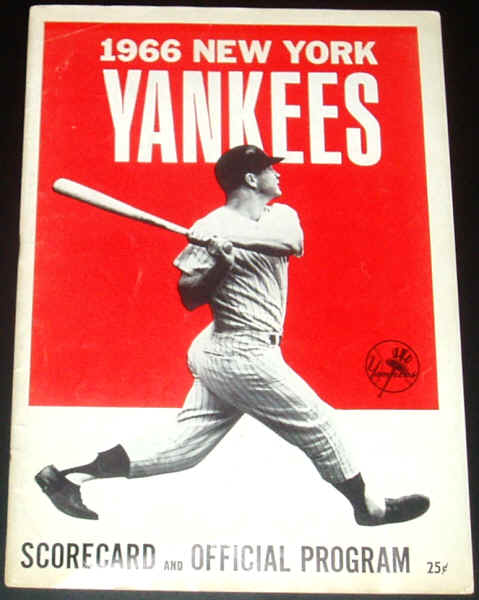
3. Vendors and the Food! Yes, the Fan knows you can get food and beverages at a football game. But have you ever tried to eat a warm hot dog when it's 25 degrees outside? It doesn't stay warm for long. And the Fan isn't sure about you, but drinking a frosty beverage is a lot more enjoyable in warm weather than it is in cold weather. And is Cracker Jacks a baseball or football tradition? Case closed. A lot of stadiums now have special food. It's an added benefit to some, but unnecessary to this writer. All you need is a hotdog and popcorn and maybe Cracker Jacks if you're not allergic to peanuts.

4. The Diamond. The baseball diamond is aesthetically beautiful a creation as there is in sports. Football gridirons can be nice. But they get torn up or frozen and it's shape is too symmetrical. It's just a long rectangle cut up into smaller rectangles. And the football dimensions are the same wherever you go. Each ballpark has different outfield dimension and only the infield is written in stone in the rule book. Plus, baseball stadiums get features that become part of the folklore. Pesky's Pole, the Green Monster, The Ivy. There is nothing like walking into a stadium in the middle of a concrete jungle and entering the field with the lights, the green, the diamond. Perfection.

5. Need to keep track of only 13 players at a time. And they are all spaced out to watch. They aren't all in a clump like in football. This is related to the scoring issue.
6. Timing. People complain about baseball being boring. For shame! There is more dead space in football than there is in baseball. You have halftime in football where nothing happens for 10 minutes. You have a touchdown, an extra point, a commercial, a kickoff and then another commercial. In baseball, there is a two minute break between each half inning. Other than that, the game is continuous.
7. Ahem. The scenery. Again, unless you are watching football in Arizona, Florida or Texas, baseball happens in warmer weather. That means people wear less clothes. That's good for both genders is it not?
8. No matter where you are sitting. the action stays the same distance away from you. In football, you could be sitting at the 20 yard line and the action could be in the red zone at the opposite end of the field. That's a bummer.
9. Foul balls. A foul ball at a baseball stadium always creates a buzz in the stands. If the ball comes anywhere near where you are sitting, everyone gets in a frenzy and it's exciting. And to actually catch one of those souvenirs, that's the ultimate in being a Fan. In football, if you are sitting behind the goal posts, you may get a stray football, but it isn't likely. If you are sitting at the fifty yard line, forget it.
10. There are no penalties. You just watched a great play in football. Wasn't that cool? Yeah, but it doesn't count because there is a yellow flag on the field. That's like giving a cookie to a kid and then taking it back. In baseball, if there is a great play, it always counts. There are no penalties in baseball.
Honorable mention: When the players fight, there are no helmets. Ball girls are pretty cool. Especially if they don't catch the ball very well. Baseball mascots are as a rule, better in baseball than in football. We'll give football the cheerleaders, when it's warm enough to enjoy them not all bundled up. Football never had a doubleheader. Organ music. The Fan loves baseball organ music. Many of the younger set probably scoff at that though.
To see the source of all pictures, simply click on them.
Saturday, January 29, 2011
Curtis Granderson Versus Shane Victorino Versus Alex Rios
Playing centerfield is a glamour position in Major League Baseball. When you think of the position, you think Mickey Mantle, Willie Mays and all the other great players that have played there. It is a position that requires speed, range, instincts and a little bat would be good when thrown in. Teams don't generally look for a slugger for centerfield. Those are reserved for the corner outfield spot. When these "rules" came about on the kind of hitter a certain player position should be, who knows. But centerfield is rarely manned by a slugger. It's the speed guys like Kenny Lofton, Willie Wilson, Mickey Rivers and the like that play there. They lead off in the batting order and steal bases. But as Mantle and Mays proved, you could bop too and still play the position. Mr. Hamilton in Texas did that in 2010 too.
It may surprise you to know that according to Fangraphs, the top two guys in value over the last five years (playing center) are Carlos Beltran and Grady Sizemore. That those two are still on top after missing significant time to injuries in the past year or two, either speaks to how good they were/are, or it speaks to how few valuable centerfielders there are in the game. It may or may not surprise you that right behind those two players is Curtis Granderson followed by Alex Rios and Shane Victorino. In fact, this piece probably started out to figure out who was the better player, Granderson or Victorino. But that wouldn't be right without including Rios as he is right between them in value for the last five years.
Among the five players we've mentioned, Granderson and Beltran are tied for the most homers with 118. Sizemore has 104, Rios has 94 and Victorino has 60. And while power certainly helps, we need to look at the bigger picture when comparing the players. Taking Sizemore and Beltran out of the picture (though it is hoped that both return in a big way in 2011), let's take a deeper look into the three remaining centerfielders.
Let's start with defense. According to Fangraphs, Rios has the honors here. His defense is rated off the charts. It's weird, not having watched Rios play very often, you can't picture him as a great fielder. And for the first couple of years of this sample, he didn't even play center as he played with Vernon Wells in Toronto. Who would have thought that Rios would be the best fielding centerfielder of this era. Victorino comes in second behind him but the gulf is wider between Rios and Victorino than it is with Victorino and Granderson. The bottom line here is that all of our guys are great fielders who help their teams defensively as well as offensively.
When it comes to offense, it's closer than you think. Let's start with Weighted On Base Average or wOBA as it is called. Granderson comes out on top at .358 over the last five years. Victorino and Rios come in together in a dead heat at .347. Would you have guessed that? The Fan wouldn't have. Granderson walks more than the other two, but he also strikes out more. Victorino steals more bases, but not much more than Rios (another surprise), while Granderson lags behind them a bit.
Granderson had a good second half in 2010. He seems to have learned to hit lefties with Kevin Long as his coach. Victorino had a bad year in 2010. Rios had a great first half but faltered in the second. There are some good young centerfielders coming in the game like Austin Jackson and Andrew McCutchen. But for the last five years, Granderson comes out on top in the value race between he and Rios and Victorino. We'll see this year if Sizemore can get back to being one of the best in the business and it remains to be seen if Beltran has anything left in the tank or if he'll even play centerfield for the Mets in 2011.
Friday, January 28, 2011
Curt Schilling And Other Thoughts: 250K 50 walks
Ever since speculation about the Hall of Fame vote started in December, Curt Schilling has been rolling around this roundish, long-haired head. Of course Schilling wasn't on the ballot this year, but his name came up a lot in posts concerning future ballots. Schilling has been in the craw since then and it probably has to do with not liking the guy. And that probably isn't fair either. The Fan doesn't even know Curt Schilling. But feelings are what feelings are. And as such, some day in the next couple of years, the Fan will have to write a post that says Curt Schilling belongs in the Hall of Fame. Ugh. It rotted to have to type that. But it's true. Schilling should get lots of support.
Yeah, Schilling only won 216 games. Even Jack Morris has him there. But Schilling took a while to get going. And once he did, he was a powerhouse. He finished with over 3100 strikeouts. He had 83 complete games and 20 shutouts and threw in 22 saves for good measure. He averaged 8.6 K/9 for his career! And as impressive as that is, he allowed only 2.0 walks per nine innings for a career strikeout to walk ratio of 4.38. Man, that's impressive. His winning percentage of .597 is impressive too. And in case anyone forgets, Schilling went 11-2 in the post season with a 2.23 ERA. Along the way he helped Arizona and Boston win franchise changing World Series titles. But there is one stat the Fan absolutely loves.
Since 1901, only six pitchers have struck out more than 250 batters in a season and yet finished that season with less than 40 walks. Only two guys did it twice: Pedro Martinez and Curt Schilling. We're going to talk about this stat a little more in a different context in just a minute. But for now, let's rest on the amazingness of it. Both Pedro and Schilling pulled this feat in back to back seasons. One time they were both over 300 strikeouts and still did it. The second time, they were both over 290 strikeouts. People think what Cliff Lee did in 2010 was pretty amazing. Well, it was amazing, but it was no where near as close to what Pedro and Schilling did in those four seasons between them. Just to close the loop on the thought, the list of six pitchers are: Schilling (2), Pedro (2), Ben Sheets (really? Yup), Ferguson Jenkins. That's it.
While searching for the statistic, the Fan started with a criteria of 250 strikeouts in a season with 50 walks or less. There were nine guys that did that including the list of six above. The other three were Randy Johnson, Christy Mathewson and Kevin Brown. The only two over 300 strikeouts were Pedro and Curt Schilling.
But that list brings up another thought. Between 1901 and 1971, only two pitchers had ever struck out more than 250 and walked less than 50. From 1998 to 2004, it was done seven times--once in 1998 (Brown), once in 1999 (Pedro), once in 2000 (Pedro), once in 2001 (Schilling), once in 2002 (Schilling) and twice in 2004 (Johnson and Sheets). Why would something happen seven times in six years that had only been done twice in the 97 years prior to 1998?
Uh oh. The Fan is going to say it. Was this a smoking gun of the pitching end of the era's equation? The Fan doesn't know. A fluke? Just a confluence of some of the nastiest and stingiest pitchers that ever lived? Don't know. It's simply weird that this feat happened so many times in so short a period of time when it had been done only twice before in pitching history (And Mathewson had to pitch 390 innings to get there). There. The Fan has given the saber folks something to work on for a pet project.
Whatever the reason, it's still an amazing statistic and it just adds to the Schilling case for the Hall of Fame. You'll never know how hard that is to type.
Imagining Cashman's Conversation with Casey Close
There were some reports yesterday that Brian Cashman, the Yankees' general manager, called Casey Close, Derek Jeter's agent, to talk about comments Cashman made at a recent function concerning Derek Jeter eventually moving to the outfield. The comments, tweeted live by Amanda Rycoff of espnW caused a firestorm as only a story about Derek Jeter can create. Cashman probably decided that he had to explain himself to the shortstop, so Cashman called Jeter's agent. Since none of us are privy to such a conversation, we can only imagine how it went. The following is this writer's imagination on how that call might have gone.
- Close: Hello?
- Cashman: Hey, Casey, how's it going?
- Close: Oh, it's you. Nice going.
- Cashman: Uh...is...he...mad?
- Close: Nah, he's known you are just telling people what they want to hear.
- Cashman: Really? He knows that?
- Close: Ah, not only do you put your foot in your mouth, you're gullible too. Of COURSE he's mad.
- Cashman: I was afraid of that. What did he say?
- Close: He's wondering why you keep talking to the media about him like you have all winter.
- Cashman: Well, he's been a story. I've got to talk to the reporters about it.
- Close: All he wants to know is why you don't talk to him first, that's all.
- Cashman: Point taken.
- Close: You haven't had a good winter. You've been hanging around those Steinbrenners too long.
- Cashman: Hey, nothing I've said hasn't been the truth.
- Close: Well, we can debate that, but why do you have to talk to the creeps in the media?
- Cashman: Hey! You use those guys too. I know how you agents are.
- Close: Moi?
- Cashman: Well, tell Jeter I called and explained.
- Close: You didn't explain anything.
- Cashman: Oh..ahh...I was just talking. You know. It was a function. Didn't think it would become such a big deal.
- Close: You've just been talking all winter, haven't you? What's up with that? You had to state at the Soriano news conference the signing not being your idea? You trying to test those guys?
- Cashman: The media said I lied. I didn't want them to think I was lying. I talked to Levine and them about it first.
- Close: Well, at least you showed up, didn't think you would.
- Cashman: That's my job.
- Close: Yeah, you also called writers everywhere, who questioned your handling of Joba, stupid. Another good move.
- Cashman: Those butt wipes. Who do they think they are writing that kind of crap?
- Close: Only the butt wipes that keep up interest in your team, Brian. Why you biting the hand that feeds you?
- Cashman: Oh yeah. Good point. I'll have to soften that.
- Close: I have some Correctol in the cabinet if you want it.
- Cashman: Bite me.
- Close: And what's the deal with Joba anyway? Don't want to look like you don't know what you're doing?
- Cashman: Stick to being an agent and I'll run the baseball operations, okay?
- Close: It's your deal. Hey, you know the Captain isn't real happy about having to think about anyone named Soriano again.
- Cashman: Ha! That's a good one. So tell the big guy we're cool okay? He's our shortstop.
- Close: Yeah, I'll tell him. He's going to prove you all wrong and make you look like twerps, you know.
- Cashman: Well, if he does, we all win, so I hope he does.
- Close: You hope he does until the year before his contract is up, you mean.
- Cashman: Don't start with me. It wasn't me that had a crappy year.
- Close: I'll tell him that too.
- Cashman: CASEY! That's just between you and me. Don't make things worse.
- Close: No, I'll leave that to you. You're on a roll.
- Cashman: Yeah, yeah. Anyway, tell Jeter I'll talk to him soon.
- Close: Gotcha. Take it easy. Give Levine a kiss for me.
- Cashman: Bite me.
Thursday, January 27, 2011
Don't Cry for the Tampa Bay Rays
There have been some serious writers who have indicated that the Tampa Bay Rays will fall off this year and be the third best team in the American League East. That's an oversimplification. Boston has improved but hasn't played a game with their new people yet. Their rotation, like the Yankees' rotation has just as many question marks. Meanwhile, the Rays lost Carl Crawford and Carlos Pena. The latter isn't much of a loss if 2010 is the kind of player he is now. Yeah, the bullpen has taken a hit. But remember this, the Bay Rays have won the AL East two of the last three years. There seems to be little reason why they can't win 92 to 95 games in 2011.
There is plenty of reason for optimism in 2011 for the Bay Rays. First, they still have one of the best managers and general managers in baseball. Reid Brignac will be an improvement at short over the departed Bartlett. Matt Joyce came into his own in the latter half of 2010 and was a real threat in the post season. There is no reason why he can't replace the WAR lost by losing Crawford. Guys like Zobrist, Sean Rodriguez and John Jaso will have another year of experience under their belt. Upton will have a bounce back year (The Fan predicts this and just watch). Longoria is still one of the best players on the planet and no matter what happens, they will have a better DH than they've had in any time in their history.
Obviously, Maddon is a lot smarter than this writer, but if the Fan was running the Bay Rays, this is the line up the Fan would use to start the season:
1. CF B. J. Upton
2. LF Johnny Damon
3. 3B Evan Longoria
4. DH Manny Ramirez
5. RF Matt Joyce
6. 1B Ben Zobrist
7. 2B Sean Rodriguez
8. SS Reid Brignac
9. C John Jaso
That's a very functional line up. Rodriguez needs to bring his offense up a few notches from last year. Damon isn't a good fielder any more, but he can hold his own with Upton helping him out a lot. And the best part of this line up is that all, with the exception of Damon and Jaso stack up positively on defense.
You'll notice that the Fan has started Damon over Desmond Jennings. Jennings had a brief cup of coffee last year and didn't show much. Jennings has played two full years at Triple A and there is no benefit to having him play a third. He should start the season with the team, start against left handers (two or three times a week) and come in to play defense in all other games after the seventh. That seems to be a good way to get his feet wetter. If Jennings gets hot, then you can figure out how to get both him and Damon in the line up regularly.
The Fan also prefers Zobrist over Dan Johnson. Johnson has scary power and good patience at the plate, but he's never hit for average and isn't a good fielder. Johnson can get some starts against right-handed pitching and move Zobrist over to second base to give Rodriguez a game off a few times a week. The Fan is excited to see Brignac get a full chance at short and would love to just see the Bay Rays put him there and leave him alone for 160 games.
The hallmark of the Bay Rays has always been flexibility. They are the Patriots of baseball. Everyone can play everywhere. This certainly gives Maddon options every day and if someone gets hurt. There were stretches last year where the Bay Rays didn't hit very well. The Fan believes they will be a better offensive club in 2011, not good news for the other powers in the AL East.
The Bay Rays have two question marks in their rotation: Shields and Niemann. Shields had an awful year in 2010, but has held his own in previous years. He should be okay, which is all you need from a fifth starter. Niemann started great last year, got hurt and then really struggled. The latter part of his year puts him in the "Uh oh" category for the start of 2011. He's a big, ornery pitcher who loves to compete. This Fan feels he'll bounce back. Price, Hellickson and Wade Davis should be rock solid and give their team a chance to win every time out. The Bay Rays have no apologies to make for their rotation.
Maddon will have to work out his bullpen, but that's the easiest equation in baseball. So the Fan isn't going to give a second thought there. After working this all out and thinking about it, the Fan sees little weakness in the Bay Rays and little reason to think there will be much of a decline. They have improved at short, DH, right field and first base. From those improvements, there is no reason why the Rays can't make up for the lost WAR of Crawford and Pena. Don't underestimate this team. They seem just as good as last year. And they won 97 games last year.
Clayton Kershaw Versus Tommy Hanson
A while back, there was some positive response to a post in this space comparing Ryan Zimmerman and Evan Longoria. Most think Longoria is better, but this writer's conclusion is a wash. Today, let's compare two highly touted, yet almost anonymous young starters, both of whom get little press and less fanfare. When thinking about why so little is written about Tommy Hanson and Clayton Kershaw, the lingering feeling is that neither has had a spectacular game or a series of spectacular games. Neither has racked up significant won/loss records. But make no mistake about it, these two pitchers are among the best and brightest in the land. But which one is better? The Fan will post, you decide.
First the traditional stats:
Age - Kershaw is only 22! Hanson is 24
Dimensions - Hanson is 6'6" and weighs 220. Kershaw is 6'3" and weighs 217.
Record - Kershaw: 26-23 in 85 appearances. Hanson: 21-15 in 55 appearances
ERA - Kershaw: 3.17. Hanson: 3.16 Wow, that's close.
Each have thrown one complete game.
Now for some more detailed stats:
WHIP - Hanson: 1.18. Kershaw: 1.27
K/9 - Kershaw: 9.26. Hanson: 7.87
BB/9 - Hanson: 2.78. Kershaw: 4.17
K/BB - Hanson: 2.83. Kershaw: 2.20
Hits/9 - Kershaw: 7.23. Hanson: 7.81
HR/9 - Kershaw: 0.58. Hanson: 0.65
Innings per start (2010 only) - Hanson: 5.96. Kershaw: 6.38 Bet this one surprised you.
xFIP - Kershaw 3.87. Hanson: 4.03
WAR (2010) - Hanson: 4.3, Kershaw: 4.8
Let's look at some batted ball stats and pitch values:
Line Drive Percentage - Kershaw: 18.9 percent. Hanson: 17.2 percent.
Hanson gives up an equal number of fly balls to ground balls. Kershaw throws two percent more ground balls than fly balls.
Fastball (2010 only) - Kershaw: 16.9. Hanson: 15.8
Slider (2010 only) - Hanson: 11.5. Kershaw: 18.1
Curve (2010 only) - Kershaw: -1.9. Hanson: -1.2
Change (2010 only) - Hanson: 0.6. Kershaw: -1.3
Total value of all pitches in 2010: Kershaw: 31.8. Hanson: 26.7
WPA (2010) - Kershaw: 3.25, Hanson: 0.77
Other stuff: Kershaw has made one error in the last two years, Hanson has made five. Hanson has a lifetime batting average of .081 and Kershaw's is .078. Let's say that their batting equally sucks.
Toe be sure, there is probably a lot more you can look at when comparing these two pitchers. Kershaw's age gives him a two year advantage on Hanson but Kershaw's actually gotten more service time in the majors. Both are terrific and deserve more love from the mainstream press. Not sure why neither gets a lot of wins in their starts, but perhaps that will change in 2011. No matter who you decide is better, the Fan wouldn't cry to have either one of them on his team.
Wednesday, January 26, 2011
Wrestling With Roy White
Part of what makes baseball such a unique experience is the nostalgia that a lifetime of watching the game brings. This site has featured many memories of days gone by. The past isn't as important as the present, but it's still a nice place to visit. This bit of nostalgia revisits Roy White. White's career spanned the CBS to Steinbrenner years and the awful years to the glory years of 77 and 78 for the Yankees. He played his entire career and was for a long time, an institution in New York. Despite him being a focal point of the team the Fan grew up watching, White was never a Fan favorite. His game sort of left this writer cold. Why is that?
Well, White never hit .300. He never drove in 100 runs. He never had 200 hits despite playing every game for several seasons. He never hit more than 22 homers. He stole 232 bases in his career, but was thrown out a third of the time he attempted to steal. Probably the deal for the Fan was that he was solid, but never spectacular. And yet, for many years, he was considered the star of the Yankees. He only made two All Star teams and only cracked the top 15 in MVP voting once. And yet, the noted Bill James loves this guy. Why?
Well, he walked a LOT. He averaged 80 walks per 162 games. What makes that more impressive is that he only struck out 61 times per 162 games. He played good defense in left field (lousy in center) and finished with 4.5 Wins Above Replacement (WAR) for his defense in his career. That's saying something. The dWAR added to his oWAR gave him a career WAR of 44.5. That's a pretty darn good career when considering that he only played fourteen full seasons. So why does the Fan have such negative feelings about him?
Well, Roy White wasn't fuzzy. His typical countenance was impassive. He never pumped his fist. The Fan can't ever remember him smiling. Watching Roy White play baseball was a joyless experience. He was, by his carriage, a proud man. We as fans could read that. There is nothing wrong with that. But the pride wasn't offset with anything that you could embrace.
Plus, he was one of the better players on some really, really bad teams. That's sort of like being a town politician when the town has 800 people. You may think you're a big shot, but after all, it's still just Perham, Maine. But the numbers don't lie. With his walks, his lack of strikeouts and his fielding stats, Roy White was a very good player and the body of his work merits a call to the Hall of Very Good.
Oh! For those of you who have no idea who the Fan is talking about, Roy White played left field (mainly) for the Yankees from 1965 to 1979. He wore Number 6 (the Fan thinks!). He was born in Los Angeles in 1943. He is known for two big things: First, he was on base when Bucky Dent hit the most famous home run of his career. Second, he hit an insane number of sacrifice flies. In 1971, White led the league with 17 of them. They made up 20 percent of White's 84 RBIs that year.
White was a slight guy at only 5'10'' and all of 160 pounds. But he seemed well muscled. The ladies would have liked his butt. After his career, White all but disappeared from the Yankee universe. This Fan reads a lot of Yankee-based blogs, but never reads anything about Roy White.
Okay, the Fan has been wrestling with Roy White for about a thousand words now and can't get any closer to feeling anything. He was a giant part of the Fan's childhood as he was there on the Fan's telly for 15 years. And Bill James and White's numbers show that he was a very good ball player. But the Fan's overall feelings for the guy haven't changed after all these years. The thought of him still leads to the same shrug. Meh.

Contemplating the Phillies Line Up and Jimmy Rollins
There was a real nice piece today in the Philadelphia Inquirer's The Phillies Zone on Charlie Manuel speaking about his contract and some of his players. Manuel gets a bit lost in the shuffle when it comes to discussions on good managers. You can't argue with Manuel's success nor with the way he seems to be the most beloved manager since Joe Torre. But Manuel is no different than a lot of managers who develop soft spots for some of their players. Torre had an absolute man crush on Jeff Weaver and Miguel Cairo. LaRussa loves himself some Schumaker and Gardenhire was sweet on Nick Punto for years. It's human nature and it happens.
Manuel has a soft spot for Jimmy Rollins. And, this Fan might point out, Manuel's soft spot has some good reasons. Rollins was the epicenter of the team in those years where they caught the Mets from behind and won the division. Rollins' 2007 season was a wondrous adventure that featured 38 doubles, 20 triples, 30 homers, 139 runs scored, 94 RBIs from the lead off spot and 41 stolen bases in just 47 attempts. His MVP Award is open for debate for some, but not in this corner. He WAS the Phillies that year and he was remarkable.
But he really hasn't been remarkable since. His batting was just above league average in 2008 and well below in 2009 and 2010. How can you have a lead off batter with OBPs of .298 and .320 over the last two years? You can't. You can't also overlook the fact that Rollins has a career OPS+ of 97. Would you have guessed that? No, neither would this observer. But looking at his career, 2007 has to be considered an outlier, a career year. He didn't come close to the same stats in the years before or the years since. Would you also guess that his career OBP is .328? And yet, Manuel says that he thinks of Rollins as a lead off guy.
It's pretty harsh to say this, but if Rollins is your lead off guy, then you are not doing much better than putting Juan Pierre up there at lead off (Pierre had a higher OBP last year too).
Don't get the Fan wrong. Jimmy Rollins still has a lot of value as a terrific fielding shortstop and team leader. He's just got to sink to seventh in the batting order, that's all. Of course, Rollins could come out of the gate in 2011 and make the Fan look like an idiot. For Manuel's sake and for Phillies fans, that wouldn't be unwelcome. It's just expected.
The trouble with the Phillies as they are currently constructed is that they really don't have anyone who could replace Rollins in the top spot. Shane Victorino had a very pedestrian season in 2010 (and was hugely disappointing). The team's best on base guy last year was Carlos Ruis. But with Jaso leading off for the Bay Rays, maybe catchers leading off is the new flavor of the month.
Elsewhere in the line up, the Phillies have to hope for better things from Ryan Howard and Chase Utley. They both had OPS+ seasons over 120, but their standards are higher than that. If they can both get back to their career norms, that would be a good thing. Raul Ibanez surprised with another solid year for the Phillies in 2010. But like the Padres of 2010, you keep waiting for the other shoe to drop. Plus, he's not a good fielder at this stage of his career. There are two guys you have to consider for this season. Dominic Brown is already slated to take over for Jayson Werth. But the Fan would give that spot to John Mayberry, who deserves a full time shot. Brown would be the left fielder. Have you seen Brown's defensive numbers in right? Not pretty. Plus, the kid struggled at the plate.
The other trouble with Brown taking over for Werth is that he bats left handed. That would leave a line up with Brown, Utley, Howard and Ibanez all batting from the left side. If Brown can fulfill his promise and take over for Ibanez, then you just replace a lefty with a lefty and the right-handed hitting Mayberry hits from the right to take over for Werth. Ibanez can be the fourth outfielder.
This Fan is also not a big fan of Placido Polanco. Polanco is in this writer's mind, a back up infielder filling in at short, second and third and getting 300 at bats. He wears down as a full-time player and 2010 left him below league average in OPS+. But it looks like the Phillies are stuck with Polanco in that role for the 2011 season.
Let's face it, the Phillies don't have to hit that much to support that pitching staff. We all know that. But they have to score enough runs too. The Phillies have a lot of question marks offensively heading into the 2011 season. Can Utley, Rollins, Victorino, Howard and Polanco bounce back after down seasons? Are the Phillies really going to stick with Ibanez? Will Brown hit? Can Ruiz continue to hit that well? Can the Phillies survive with their two top lead off options getting on base only 32 percent of the time? Like the Fan said, Manuel is a great manager. He'll figure it out.
Tuesday, January 25, 2011
Remembering Jerry Koosman
An email this morning from Steve Keane let this writer know that Jerry Koosman will be Steve's guest tonight on his This Call to the Bullpen show on Blog Talk Radio. The email brought back really good memories of one of the really good left-handed pitchers in the past 30 years. Growing up in New Jersey, the Mets were definitely not one of the favorite teams, but Koosman transcended those feelings because he was such a classy pitcher and so much fun to watch. Seaver gets all the glory (and deservedly so) and Nolan Ryan is the more famous half of that famous Topps Rookie card. But Koosman was great and often a star and always overlooked.
How overlooked? Consider that he won twenty or more games twice and won nineteen another time and yet made only two All Star Games. Consider that he got jobbed in the 1968 season for Rookie of the Year despite a 19-12 record with a 2.08 ERA. The guy who won the award that year was some guy named Johnny Bench. But Koosman had a much higher WAR and should have won. He also lost a close Cy Young Award race to Randy Jones (of the Padres) in 1976 when Koosman finished with a 21-10 record with a 2.69 ERA. His peripherals were all better than Jones, but Jones won one more game and pitched a lot more innings (Jones made an incredible 40 starts that season).
Consider also that Koosman went 4-0 in post season games, including 3-0 in the World Series. He won two games in the amazing and stunning Mets' upset of the powerful Baltimore Orioles in 1969.
Jerry Koosman won 222 games in his career with a 3.36 ERA. He accumulated 58.8 Wins Above Replacement for his career. He pitched until age 42 and even made 34 starts at the age of 41 and still put up a 3.25 ERA for the Phillies that season. Koosman compiled 33 shutouts in 140 career complete games and even contributed 17 saves. Jerry Koosman was very, very good.
Oh, and that rookie card? Those two pitchers combined for 46 seasons, 546 wins and 7650 strikeouts. That's probably got to be the most productive rookie card ever. The card is shown below and is linked to its source. Listen to the radio show tonight as Koosman is a guy that deserves more credit for his career than he's received.

Jason Hammel - Better Than His Record
Jason Hammel was just rewarded for some of his service time with a two year $7.7 million contract with the Colorado Rockies. Hammel didn't impress with his won/loss record or his ERA (10-9 and 4.81 respectively). But if you look beyond those things, he's a good pitcher who just needs a little more luck to shine.
Hammel is mostly a ground ball pitcher whose batted balls end up as grounders nearly 47 percent as apposed to his fly ball rate of 33 percent. His line drive rate has always been too high and 2010 was no different with it again being over 20 percent. The luck comes in with his batting average with balls in play (BABIP) of .328, his second year in a row with nearly the same BABIP. So perhaps you have to wonder if that is the norm for him.
But there were several things that made him better than he seemed. First, his strikeout rate per nine innings continues to rise. His 7.14 strikeouts per nine innings was the best of his career. Plus, there was an important increase in the percentage of time batters swung at pitches out of the strike zone. That means that Hammel is getting better at making his pitch and making the batter swing at his pitch. His homer rate is pretty low considering that he pitches half his games in Coors Field. In fact, it's pretty darned impressive that his home/road splits are so similar. There is no big spike at home other than he gave up eleven homers at home compared to seven on the road.
While Hammel's strikeout rate rose, his walk rate was again pretty good which meant that he had his second straight season with a three to one strikeout to walk ratio. That's good. All of these things combined lead up to Hammel as having a fielding independent pitching (FIP) ERA of 3.70 and an xFIP of 3.81, a full run per nine innings better than his actual ERA. If all things were equal and Hammel got a little luck, he would be a fifteen game winner and not a pitcher with a 11-9 record.
The one thing the Fan doesn't like is his paltry average of 5.7 innings per start. He needs to last longer in the game. Part of that is the National League, of course, with the need of pinch hitting for the pitcher. But Hammel can do better to go longer in each game with more consistent performances.
Hammels relies a lot on his fastball, which he throws nearly 61 percent of the time. And according to Fangraphs, it's not his best pitch. Looking at pitch values, his slider is terrific, his curve good (but it was rated great in 2009) and his change up a bit weak. It makes sense for him to use his fastball to set up his better pitches. Still, that's four pitches in his arsenal which is good.
Hammel is a lot better than most people think. He seems to be one of the few mistakes made by the Tampa Bay Rays in recent years as the guy the Rays got, Aneury Rodriguez, is still in the minors. But Rodriguez is still putting up pretty good numbers in the minors, so he still might pan out (to be fair). Hammel is a solid starter for the Rockies. He's not one of the best pitchers in the league, but most rotations need a guy like Hammel who effectively gives his team a chance to win. He is definitely worth the money the Rockies have invested in him.
Monday, January 24, 2011
Galarraga A Mild Gamble For the Diamondbacks
The Arizona Diamondbacks acquired a starting pitcher, Armando Galarraga, today for two fringe prospects. That by itself, in this age where starting pitching is at a premium, is a good deal. But Galarraga is a mild gamble for the Diamondbacks as the pitcher has some ability and should at the very least be an upgrade over Rodrigo Lopez of a year ago. What isn't sure is if this is a good deal for Galarraga.
The Fan already profiled Galarraga this month, so you'll have to look that up instead of having it rehashed again here. But one point to make here right off the bat is that Arizona is a nice place to hit homers. As a staff last year, the D-Backs issued 1.3 homers per nine innings. Galarraga has problems with the long ball already in his career. So that's a bit scary for the pitcher and the team. Galarraga allowed 1.3 homers per nine innings in 2010, which was his best showing of his career. That's the bad news. The good news is that his homer to fly ball ratio was the lowest of his career. Galarraga is certainly a fly ball pitcher, which, again, is a bit scary since the D-Backs really need to do better at keeping the ball in the park.
The other thing that is a concern was Galarraga's plummet with his K/9 rate. He finished 2010 with a 4.61 rate, which is well below his career average. The strikeouts were there in his Triple A showings in 2010, so perhaps his majors rate was a one year fluke.
So where does Galarraga fit with the Diamondbacks? Daniel Hudson emerged as a really good starter last year, so the D-Backs are counting on good things there. So that's one spot. There is Ian Kennedy, who finally showed his promise in 2010. It was an up and down kind of year for Kennedy, but the peripherals are very good and so he comes in at number two. Joe Saunders is probably number three though he hasn't pitched well since 2008. Saunders lost seven of his ten decisions with the Diamondbacks after he was traded there in the Haren deal. But he did up his strikeout rate and lowered his walk rate with the NL team. But he's not someone the Fan would count on.
Galarraga probably slots in at number four. His competition would be Aaron Heilman, who desperately wants to be a starter (though his relief pitching hasn't been good, so would you want to do that?). The Fan remembers reading somewhere that Heilman was promised a shot at the rotation. Okay, give him a few Spring Training starts and then send him back to the bullpen. The other rotation hopeful is Barry Enright, who did little right in his 2010 season. Well, yeah, he did have a 109 ERA+, but this is one of those times when the ERA+ is misleading. Enright only struck out 4.5 batters per nine and his homer rate was an atrocious 1.8 big knocks per nine.
Enright's strikeout rates were better in Triple A and the pitcher is only 24 years old. Since he was a second round draft pick who had minor league success, you've got to give him another year to see if he can be better. That being the case, the D-Backs' rotation probably looks like: Hudson, Kennedy, Saunders, Galarraga and Enright. That could work out somewhat or it could really end up looking terrible. Kennedy has had injury issues over his career, nobody knows if Hudson was a fluke and Saunders hasn't been good for a long time.
Galarraga is just one more question mark. The upside is he will be only 29 in 2011 and he had success a few years ago. Last year's record looked bad, but it was actually a sign of improvement for the pitcher. And, he could thrive making the switch to the National League. But he is iffy, just like a lot of the rotation. But, to put the best spin on this as possible, the Diamondbacks got a big league starter for almost no cost so it's not much of a risk. It is a gamble, but ultimately one worth taking.
Who Gets the At Bats for the Twins?
Jim Thome's season in 2010 was remarkable. And now he is back for the 2011 season with a slightly larger paycheck. But how many at bats will he accumulate? The thing forgotten in the post-Thome-re-signing euphoria is that Thome would not have had that remarkable season if Justin Morneau hadn't missed half the season with concussion syndrome. All indications are that Morneau will be back at first base for the Twins.
Putting Morneau back at first pushes Michael Cuddyer back to the outfield. Cuddyer back to the outfield pushes Kubel out of the line up or back to the DH where he was in 2009. But Kubel is a left-hand hitting slugger, which is what Thome is, right? So who gets the at bats at DH, Kubel or Thome?
Kubel didn't have a good year in 2010. He finished at league average in OPS+ and was terrible in the outfield. But Kubel was a good slugger for the Twins in 2008 and 2009. He finished with a higher OPS+ than Thome did in both of those years. Kubel is also 28 compared to Thome's 40. So again, who gets the at bats?
It will probably depend on who starts out better. Thome had a dream season in 2010. But he was somewhat pedestrian in 2008 and 2009, which is why the White Sox gave up on him in the first place. That's no knock on Thome. He's a sure-fire Hall of Fame player who has graced the game with his class and his love of the game. It just doesn't seem likely that he will repeat his success from last year. And it's hard to get past how Thome looked in the post season. The Yankees had no trouble with him and made him look easy to get out.
Ron Gardenhire is a loyalty guy. Why else would he stick with a guy like Nick Punto for so long? Kubel is his guy, raised in his system. Kubel will get the job to lose at DH. That's the prediction from this end anyway. There is no way, barring injury, that Thome will get 340 plate appearances this year: 200 seems more likely. The Fan loves Thome and hopes he gets to 600 homers, but this Fan can't see him taking Kubel's job, not with the age difference and Kubel's history. There is no where else for Cuddyer to go because Young has won left and Span is your center fielder. Kubel's defense in right is too suspect. The Fan would take a combo of Kubel and Thome over Cuddyer, but it just doesn't work out defensively.
Sunday, January 23, 2011
Two Outs For the Price of One
The double play has been called the pitcher's best friend and for good reason. It's a pretty good deal when you can get two outs for the price of one pitch. A while back, this site featured a post stating that pitchers should have an adjusted Walks plus Hits Per Innings Pitched (WHIP) that takes ground balls double plays into account. Pitchers like Mark Buehrle give up a lot of hits which leads to a high WHIP. But if he induces double play grounders in the course of a season, shouldn't there be an adjustment to WHIP to reflect that? The converse is also true. A batter should have his batting average adjusted for the times he grounds into a double play. After all, the batter accounted for two outs with that at bat and not just one. Here are some facts concerning players Grounding Into Double Plays (GIDP).
Fact #1 - There are only two players that have grounded into more than 20 double plays in each of the last three seasons. They are Alex Rios and Billy Butler. Butler lead the world in 2010 with a whopping 32 GIDPs. Rios made the list for all three seasons, but just barely as his totals were 20, 21 and 21. If you adjusted Butler's batting average for the last three years to account for the extra outs, his average would go from .300 to .287. The Fan added 75 plate appearances to account for his extra outs on his 75 double plays over the last three seasons. Adjusting Rios the same way, his BA would go from .273 to .265.
Fact #2 - In addition to Butler and Rios, fourteen other players banged into more than 20 double plays twice in the past three seasons, they are: Derek Jeter, Albert Pujols, Yadier Molina, Derek Lee, Carlos Lee, Adrian Gonzalez, Miguel Tejada (who had 61 combined in 2008, 2009!), Ivan Rodriguez, Kurt Suzuki, Jhonny Peralta, Jose Lopez, Kevin Kouzmanoff, Michael Cuddyer and Yunel Escobar. Some of those players hit for good averages and/or good power. But take a guy like Jose Lopez, who has batted in the mid-.250 range and add 45 GIDPs in those two years, and that's a lot of outs.
Fact #3 - Peralta gets a little special recognition. In the two years he combined to hit 46 double plays, he also struck out 260 times. So of the 872 at bats where he did not get a hit, Peralta struck out or grounded into a double play 306 times. That's a lot of stinky outs.
Fact #4 - In the last three seasons, two batters have combined for more than 70 GIDPs and ten more combined for 60 or more. They are: Miguel Tejada (77), Billy Butler (75), Yadier Molina (67), Derek Jeter (64), Yunel Escobar (63). Adrian Gonzalez (62), Albert Pujols (62), Vladimir Guerrero (62), Derek Lee (62), Alex Rios (62), Magglio Ordonez (60) and Ivan Rodriguez (60).
Fact #5 - Of the list for Fact #4, three are shortstops, two are catchers, four are first basemen, one is a DH and three are outfielders.
Fact #6 - In the last ten years, the top five leaders in GIDP are:
- 1. Tejada with 224 (22.4 a season!)
- 2 Albert Pujols with 203. Now that's a surprise.
- 3 Vladimir Guerrero with 194.
- 4. Paul Konerko with 181
- 5 Michael Young with 172
For those of you who are following along with this thought pattern, that's a total of 1948 outs among the five players or an average of 389.6 outs each over the ten years.
Fact # 7 - In the last five years, the top five in GIDP are: Tejada, Pujols, Young, Yadier Molina and Jeter. Of the five, Michael Young had the most strikeouts with 517. So over the last five years, Young has had over a whole season of at bats that were either strikeouts or GIDPs (622). If you want to look at it another way, the Rangers have paid Young one year in the last five where he either didn't put the ball in play or when he did, accounted for two outs with one swing. Ouch.
Saturday, January 22, 2011
Johnny Cueto Isn't an Ace...Yet
The Cincinnati Reds have two of the most tantalizing (or frustrating) pitchers in baseball in Johnny Cueto and Edison Volquez. Both have "star" written all over them but the results don't always turn out that way. Volquez was hurt most of last year and thus, will remain out of this discussion for now. But Cueto is a big part of the Cincinnati Reds' hopes to continue to be the team to beat in the NL Central.
The first thing that is easy to forget is that Johnny Cueto will only be 25 years old in February. He's already put in major service time for three straight years. It seems like yesterday when he came to his first Spring Training and blew batters away and forced himself into the rotation at the age of 21. But his rookie season didn't go as well as Spring Training and he went 9-14 with a 4.81 ERA. Yes, the strikeouts were there, but so were the 29 homers allowed in just 174 innings.
Cueto was pretty much the same in 2009 with a few less homers, a few less walks and also less strikeouts. But he became a solid cog in the Reds' division run in 2010 and finished the season at 12-7. His ERA came call the way down to 3.64. His strikeouts were again down, but he finished under three walks per nine innings for the first time in his career and below one homer per nine innings for the first time also.
Now he is entering his fourth full season and the Reds are in the midst of working out a multi-year contract for him. Will Cueto take further steps to stardom or is he not much better than what we've seen so far? There are some troubling peripherals.
One is that Cueto pitches much better in low leverage situations. When a game is tight or the opponent tough, he tends to crumble. His record against the Brewers and Cardinals last year was terrible. He was much better in the first half than he was in the second half. If Cueto is to become a big time pitcher, he needs to beat the good teams and win his share of close games. But the flip side is that the same could be said of Robinson Cano in 2009 when he couldn't deliver in a big situation to save himself. But Cano responded in 2010 in those situations. Perhaps Cueto will handled them better too in 2011.
But Cueto's number don't show anything else as drastic. His home/road splits are good as is his left/right splits. He just needs to win the close games. Need an example? Well, Cueto won only two games in eighteen starts when his team scored five runs or less. He needs to be able to win some of those games. Cueto also needs to get deeper into games as his starts averaged only 5.98 innings in 2010.
According to Fangraphs, the value of Cueto's fastball improved in 2010, accounting for a lot of his success. He also developed a cutter that was very effective. His best pitch seems to be a change up that he threw 10% of the time last year. His worst pitch is his slider, a pitch he throws 27% of the time. That's a lot of effort with a pitch that has so little value. He should throw less sliders and more change ups.
The jury is still out on Cueto. At 25 years of age, he still has plenty of time to become a superstar of ace caliber. And each season has shown improvement from the one before. But the bottom line for Cueto, and for the Reds, is that the young pitcher needs to be better in the clutch and he has to win the close games against tough competition.
Are the Angels the New Yankees?
Winning is a powerful drug. It causes teams like the Giants to give Aubrey Huff $22 million over two years and teams like the Red Sox to make a splash this off season after missing the playoffs last season. The formula was laid out by George Steinbrenner who brought in over-the-hill superstars at exorbitant prices when his teams failed to win a championship. Among Steinbrenner's biggest blunders were Robin Ventura, Rondell White and Gary Sheffield. Not that those players played poorly (well White did), but they were so overpriced that it was obscene. The Angels might be the new Yankees.
Friday's news came as a shock and the surprises kept getting bigger as the trade between the Angels and the Blue Jays was announced (Twitter was certainly buzzing!). First, the Angel obtained Vernon Wells, who has long carried the Barry Ztio Award for the worst contract in baseball. Then, we learned that the Blue Jays did not have to subsidize the deal with any money. The Angels were trading for the entire contract. Remarkable!
All this has to be a result of not making the playoffs last year and then failing to improve the team with Carl Crawford, Adrian Beltre, et al. Again, winning is a powerful intoxication and with the Angels out of the running early last year, and things not going well in the off season, the Angels pulled the panic switch. And can this deal be considered anything other than a panic reaction? Granted, if Wells has the same kind of year as last year, the Angels will be better than with Juan Rivera. Wells will be two or three wins better than Rivera, but that only makes the Angels an 85-win team instead of an 81-win team.
The move bloats the Angels' payroll to $141 million or third behind the Yankees and the Red Sox. That's a lot of money for a mediocre team. And will Wells cost Bourjos at bats? The Blue Jays lost a good player who cost the money of a great player. They gained Rivera, who, at his best, is useful and, at his worst, on the disabled list. They also get Mike Napoli, a decent hitting, crappy-catching sort who can also play first (or at least stand there). But more than anything, the Blue Jays did a remarkable job of freeing themselves to have the kind of financial flexibility they need to get back to the top. The Angels, bereft of a farm system, have saddled themselves with a huge payroll with a limited player they won't be able to move.
And for the Angels' troubles and dollars spent? They'll probably still finish behind the Rangers and the Athletics.
Friday, January 21, 2011
Ryan Theriot - The Cardinals' Big Mistake?
Many reports seem to indicate that Tony LaRussa has won some sort of turf war over the front office that had been leaning towards using statistical analysis over LaRussa's tendency to lean on "gamers." The ultimate test of LaRussa's supposed victory will be how Ryan Theriot will perform in 2011. LaRussa has given shortstop to Theriot for better or for worse. Theriot is a huge risk.
Theriot is not a risk concerning his effort or his "games-man-ship." He will play every day and give you maximum effort. But he is sort of like Tom Petty to Bob Dylan. He's a bottom tier player in Major League Baseball. Only three other batters that qualified for the batting title had less batting value than Theriot last year. And sure, Brendan Ryan might have been one of them. But Theriot is not near the same class of defensive player that Ryan is and was for the Cardinals.
And it isn't just the much-maligned fielding stats that show he is a less than adequate fielder. Scouting reports show that he has a much-less than average arm, less than average jump on the ball and instincts and less than average accuracy on his throws. With a double-play tandem of Skip Schumaker and with Freese at third (best case scenario) and Holliday and Berkman in the outfield, you are talking about the potential for an all time brutal defense.
But unlike Berkman, Freese and Holliday, you can't get excited about any offensive possibilities with Ryan Theriot. He has shown patience at the plate in the past, but that evaporated last year. He hits less extra base hits than Ichiro and he is only successful on 68% of his steal attempts. Bill James is optimistic that Theriot will have a better year than last year. Okay, that's a good thing. But even better than last year won't make Theriot an adequate offensive player. Brendan Ryan has much more of an upside, but apparently, he wore out his welcome in St. Louis. Theriot finished at dead zero in WAR last year. And that's pretty tough to do considering the bonus points his fielding position gives him. Ryan had his worst season ever and still finished with a WAR of 0.9. And this Fan would rather have little WAR with great fielding than no WAR with lousy fielding.
The Cardinals live and die with Pujols, Holliday and pitching. The pitchers are great but are not power pitchers. They rely on people catching the weakly hit balls they induce. Weaken your defense and you weaken your pitching. The Cardinals have made a major gamble this year to do things LaRussa's way. 2011 will either show us another genius season from a manager that has pulled it off before, or it will show us a major miscalculation perhaps based on no calculations (if you get the Fan's drift). Ryan Theriot might be the little pepper pot LaRussa likes, but pepper gives a lot of people heartburn.
**UPDATE** Things get better and better! Now the Cardinals have added Nick Punto, who is basically Brendan Ryan but ten years older. Punto is also known as a "gamer."
A New PED? Deer Me!
Read a fascinating article today concerning the latest Performance Enhancing Drug (PED) and was surprised to learn that the product is from deers in New Zealand, which goes to show you that there is more to New Zealand than The Lord of the Rings. There is no sense rehashing the article as all the information is right there in the link. But the text does bring up some interesting arguments that are worth exploring further. But to recap quickly for those of you who don't want to click the link: The velvet on the antlers of deers are scraped, freeze dried, and then converted to liquid or spray form and acts similar to Human Growth Hormone (HGH). It supposedly helps the body recuperate quickly. It can only be detected with blood tests and only in a short period of time during use.
The Fan's first reaction was that it's not a drug if it's natural. But to make sure, a jaunt to Merriam-Webster.com to look up the definition of "drug" and found this:
Here's what needs to happen. There needs to be a major world symposium on what should be legal or illegal in sports. The symposium should include athletes, leagues, fans, physicians and other experts. Yeah, the Fan knows that there are more important things in the world such as hunger, war and pollution. But sports is such a worldwide phenomenon that we need to figure this out. Why would a natural extract like velvet from deer antlers be illegal and cortisone legal? Why should HGH be illegal and blood transfusions legal? It's a confusing mess. You can take vitamins but not supplements. Shooting B-12 is okay but shooting HGH is not.
The next question is whether there should be different rules for different sports. The NFL is apparently littered with supplements and abusers. Nobody cares. The article itself quotes Roy Williams as saying he uses the antler stuff all the time. But, as the article pointed out, if Albert Pujols was connected with the deer stuff, there would be outrage. Should rules be different in different sports?
The next question is whether taking anything that occurs naturally in nature (is that redundant?) should be illegal. A couple of years ago, the Fan read an excellent book on Babe Ruth. Contrary to what most believe, Ruth was not a slothful athlete that just got by on his talent. He went to an exclusive gym in New York that helped him for over a dozen years. Not many players were doing that at the time. Was that an unfair advantage? Perhaps the gym gave Ruth dietary supplements and suggestions that would give him an edge in his conditioning and strength. Other players wouldn't be able to afford such things. Did that give Ruth an unfair advantage? Some would say yes. If Ruth played today, he would be scrutinized too.
Vitamins are performance enhancers in the basic definition. They aid the body in bone and muscle growth. But those are okay because many in America take vitamins and they are perfectly legal (though not tested by the DEA which is scary). Merrium-Webster defined cortisone as, "a glucocorticoid C21H28O5 of the adrenal cortex used in synthetic form especially as an anti-inflammatory agent. Cortisone has been around since 1949 and we read regularly of players getting shot up with it. Isn't that by definition a performance enhancer?
Players are often shot with Novocaine and other pain killers to allow them to play through pain. Aren't those PEDs? But again, those are allowed. It's all a moralistic and slippery slope. As for the Fan, there is no problem with anyone taking a product that occurs naturally. Cortisone is much scarier because it masks injury and threatens a player's career. If that is okay, then deer antler velvet should be okay. There is a bottom line here. Most fans could care less about what an athlete puts in his body. Half of the people in this country thing marijuana should be legalized. We are all adults here and an amazing amount of resources is spent chasing producers and users of drugs we can't all agree on that they are harmful to us.
Nobody wants to see 80 homers because ball players start looking like Transformers. So there needs to be clear cut rules certainly. But no muscles are ever built without a lot of hard work by those building them, no matter what they take to get there. There are other ways to even the playing field such as deadening the ball and raising the mound. We've got to figure this thing out because athletes are now living in an age of information and science never known in sports before. This science will always be a step ahead of the testers and the moralists.
Deer antler velvet? Geez. The Chinese have been using that for centuries.
The Fan's first reaction was that it's not a drug if it's natural. But to make sure, a jaunt to Merriam-Webster.com to look up the definition of "drug" and found this:
according to the Food, Drug, and Cosmetic Act (1) : a substance recognized in an official pharmacopoeia or formulary (2) : a substance intended for use in the diagnosis, cure, mitigation, treatment, or prevention of disease (3) : a substance other than food intended to affect the structure or function of the body (4) : a substance intended for use as a component of a medicine but not a device or a component, part, or accessory of a deviceThere is nothing there about a "drug" having to be "unnatural" or derived from non-natural materials. So we can throw that argument out the window. According to the article, that paragon of sports virtue, the World Doping Agency has classified the compound as a PED. Currently, the substance is banned by sports but MLB does not take blood samples and only tests urine.
Here's what needs to happen. There needs to be a major world symposium on what should be legal or illegal in sports. The symposium should include athletes, leagues, fans, physicians and other experts. Yeah, the Fan knows that there are more important things in the world such as hunger, war and pollution. But sports is such a worldwide phenomenon that we need to figure this out. Why would a natural extract like velvet from deer antlers be illegal and cortisone legal? Why should HGH be illegal and blood transfusions legal? It's a confusing mess. You can take vitamins but not supplements. Shooting B-12 is okay but shooting HGH is not.
The next question is whether there should be different rules for different sports. The NFL is apparently littered with supplements and abusers. Nobody cares. The article itself quotes Roy Williams as saying he uses the antler stuff all the time. But, as the article pointed out, if Albert Pujols was connected with the deer stuff, there would be outrage. Should rules be different in different sports?
The next question is whether taking anything that occurs naturally in nature (is that redundant?) should be illegal. A couple of years ago, the Fan read an excellent book on Babe Ruth. Contrary to what most believe, Ruth was not a slothful athlete that just got by on his talent. He went to an exclusive gym in New York that helped him for over a dozen years. Not many players were doing that at the time. Was that an unfair advantage? Perhaps the gym gave Ruth dietary supplements and suggestions that would give him an edge in his conditioning and strength. Other players wouldn't be able to afford such things. Did that give Ruth an unfair advantage? Some would say yes. If Ruth played today, he would be scrutinized too.
Vitamins are performance enhancers in the basic definition. They aid the body in bone and muscle growth. But those are okay because many in America take vitamins and they are perfectly legal (though not tested by the DEA which is scary). Merrium-Webster defined cortisone as, "a glucocorticoid C21H28O5 of the adrenal cortex used in synthetic form especially as an anti-inflammatory agent. Cortisone has been around since 1949 and we read regularly of players getting shot up with it. Isn't that by definition a performance enhancer?
Players are often shot with Novocaine and other pain killers to allow them to play through pain. Aren't those PEDs? But again, those are allowed. It's all a moralistic and slippery slope. As for the Fan, there is no problem with anyone taking a product that occurs naturally. Cortisone is much scarier because it masks injury and threatens a player's career. If that is okay, then deer antler velvet should be okay. There is a bottom line here. Most fans could care less about what an athlete puts in his body. Half of the people in this country thing marijuana should be legalized. We are all adults here and an amazing amount of resources is spent chasing producers and users of drugs we can't all agree on that they are harmful to us.
Nobody wants to see 80 homers because ball players start looking like Transformers. So there needs to be clear cut rules certainly. But no muscles are ever built without a lot of hard work by those building them, no matter what they take to get there. There are other ways to even the playing field such as deadening the ball and raising the mound. We've got to figure this thing out because athletes are now living in an age of information and science never known in sports before. This science will always be a step ahead of the testers and the moralists.
Deer antler velvet? Geez. The Chinese have been using that for centuries.
Thursday, January 20, 2011
If Jose Bautista Can Get More Than One Hit a Game...
JoBau, as he is known by Toronto bloggers, had a great season in 2010 by anyone's standards. His season was one of the top five stories of the entire season. It was such an astounding season that conspiracy theorists came out of the woodwork to try to tear it down. But Bautista's season was no fluke, and we shall see that in 2011. But as good as 2010 was for Bautista, it could have been better. Here's why.
Jose Bautista was in the top 30 in games in the majors with games where he only got one hit. That happened 65 times. The leaders were Prince Fielder and Alex Gonzalez (also spent time with Toronto in 2010, Vernon Wells was right behind JoBau with 64) with 77. But nobody in baseball had a higher OPS with just one hit than Bautista. In those 65 games, he hit 22 homers, 2 triples, 18 doubles, drove in 45 runs and added 46 walks. That builds up to an OPS of 1.051 when he only got one hit. The only one close is Fielder who had a .954 OPS when only getting only one hit in a game. But he had less homers, walks, doubles, triples and RBIs than JoBau.
To recap, in the 65 games where Bautista only got one hit, 42 of the were for extra bases. That's pretty incredible. Bautista had 29 games where he had two hits. Of all players with two hit games in 2010, only Jim Thome had a higher OPS (2.023 versus 1.933 for Bautista). And Thome had two hits fourteen less times. Bautista got three hits seven times and hit eight homers. He had one four-hit game and hit two homers in that game.
If you do the math (the Fan HATES saying that because criticism always follows), Bautista got at least one hit in 102 games, leaving 59 games where he got no hits. If Bautista can simply get more than one hit just a few more times this season and have a few less games without a hit, he can have an even bigger season if all else remains the same.
One other interesting note, The Brewers and the Blue Jays both posted three players in the top 30 in one-hit games. That speaks a little bit to both teams' all or nothing offense where they can be monsters or teddy bears depending on the game.
Wednesday, January 19, 2011
Carl Freakin' Pavano
This writer has come full circle with Carl Pavano. A name formerly scorned and lower than scorned, his name itself was a derision. If you grew up in New Jersey, you can hear it in how the heading of this post was spoken. Think of Tony Soprano's voice, now say Pavano's name in that voice and you've got it. He was scum. He was dirt. He was everything hated. And now? After three years of rebuilding his career, his fire for the game, and yes, his leadership with the Twins, this writer actually roots for the guy. Now there is a little smile after enunciating the name. Carl 'Freakin'' Pavano with a little smile at the end.
And so this Fan is happy for the guy on his two year contract. Hopefully, it will work out for both the Twins and for the pitcher. He isn't the greatest pitcher in the universe. His BABIP from 2010 is scary in how low it was. It hardly seems a scenario that can be continued with the same success as he had in 2010. But then again, the guy won seventeen games. He gutted out seven complete games and 221 innings. And he did one other thing better than at any point in his career.
What did he do? He threw more ground balls than fly balls. 46 more in fact. Why is that important? Because it shows that Pavano has adapted and learned from his career and is still remaking himself as he goes along. His 1.13 ground ball to fly ball ratio was the highest of his career. He came close to that ratio in a couple of his short stints with the Yankees, but you can hardly count those years. The rest of his career...the full seasons never featured that kind of ground ball rate. It's not an astounding rate. It's not like Webb or Wang or something. But it's just another sign of a pitcher who has matured and knows what he is doing.
Pavano has come so far since that car accident in Florida with some nameless girl that he forgot to mention to the Yankees. He's come so far since Mike Mussina dissed him in public and in the locker room. Mike Mussina, who never made headlines with his mouth, made them with Pavano. Carl Pavano isn't that guy anymore. He's healthy and his mind and his will is strong. Jim Thome, the ultimate professional ball player personally kept after Pavano to re-sign with the Twins. That shows how far the guy has come.
We are, after all, a society that loves second chances and do-overs. We rag on guys who we think are squandering their careers. But we cheer just as loudly when a life is turned around...when a light bulb goes off inside a person. We don't know the mind of Carl Pavano. Likely none of us know all the facts of his lost Yankee years. But Pavano has proven himself these last three years. He's given the Indians and now the Twins everything they could ask for. He's taken the ball every fifth day and he's kept his team in the game.
He isn't the world's best pitcher. In the end, he's probably just a little better than average. But this Fan hopes he wins another 17 games the next two years. This writer who once said his name with derision, now says it with a wry smile. Go get 'em, Carl Freakin' Pavano!
Galarraga Could Help Somebody
The Detroit Tigers have taken the unusuall step of signing Armando Galarraga to avoid arbitration and shortly after designating him for assignment. Galarraga made 24 starts for the Tigers last year but lost his rotation spot to Brad Penny when the Tigers signed that pitcher to a $3 million deal (plus incentives). The Tigers have indicated that they will try to trade Galarraga and if they can't, he'll go to the minors. Galarraga is 28.
Armando Galarraga is a bit of a mystery. After a strong rookie season in 2008 with 13 wins and a 3.1 WAR, the pitcher fell on hard times in 2009. He rebounded some for the Tigers in 2010 but only finished 4-9. He also had the almost-perfect game, a fluke that should not even enter the conversation. But the mystery? The mystery is that Galarraga has always put up peripherals in the high minors that included eight strikeouts per nine with between two and three walks. But that hasn't translated in the majors. Even last year in Galarraga's brief time in the minors, he struck out eight batters per nine but his major league level fell all the way to 4.6 after topping out over six the previous two seasons. He has also walked more in the majors than in the minors.
Here is the Fan's take on all that: Galarraga has been victimized often to the long ball which makes him more tentative in the strike zone. His three year string of homers to nine innings pitched was 1.4, 1.5 and 1.3. If you look at his career, Galarraga has reached a 3-2 count 274 times out of 2045 plate appearances. That's nearly 13.4 percent of the time, by far the highest of his plate appearances on any other count. If he could be given the confidence to pound the strike zone more effectively, he could become a really good pitcher.
Given the state of starting pitching in baseball, there has to be some interest in Galarraga. The Fan could easily see the Yankees parting with Romine, their third highest catcher in their minors' food chain, and another minor arm for him. The Tigers could use catching help and the Tigers have dealt with the Yankees before. But if not the Yankees, there are plenty of other teams that could use him such as the Mets...well, let's just say any team not being the Phillies or Giants.
The Fan still believes Armando Galarraga can be a valuable starting pitcher for somebody out there. Let's see where he ends up. A change of scenery could really help him.
Tuesday, January 18, 2011
Still Struggling with Barry Bonds
Three and a half years have gone by since Barry Bonds put on a uniform after it appeared that he was blackballed from baseball. What else could it have been? He was 42 years old but still put up a 1.045 OPS in 2007. You would think somebody would have signed him as a DH. But he was frozen out of baseball from the way it looks. But that three and a half years have not softened the hard edges around this writer's opinion of the man. Why is that? The feelings the man still generate are hardly ones of enlightenment. Why does he generate more negative feelings than Sammy Sosa, for example? It's time to dig deeper and figure out what is going on inside the Fan's head. In the words of a famous writer, "How do I know what I think until I see what I wrote?"
First, the dislike of Barry Bonds started long before he hit 73 homers to break Mark McGwire's record. He was a black man who didn't care what we thought of him. Okay, that's part of the answer there isn't it? Let's be honest about this thing. There have been a lot of unlikeable characters in baseball over the years. This Fan never disliked them with the same fortitude of Bonds'. Race has to be part of the answer. And why is that? Well, part of the answer goes deeper than race. We fans like our ballplayers to have a genuine sense of how fortunate they are...how grateful they are for their abilities. We want them to grasp how silly it is to be able to play a kid's game in front of millions of people and make millions of dollars. Bonds was never one of those guys. Bonds acted as if it was OUR privilege to watch him play and not the other way around. From an ordinary man's perspective, that grates the wrong way. For an ordinary white man, the roots are deeper. And it's only fair to admit that with frankness. It's not right. But unless it is reflected upon, it can't be dealt with.
It also relates to race that we liked Ken Griffey Jr. more than Bonds. Both grew up with the proverbial silver spoon as the sons of ball players. But Junior seemed to be in it for the fun of it. He seemed to be like a kid on a perpetual Disney ride. That was different from Bonds and again, his race made that unacceptable. Of course that's absurd and unfair. But there it is.
And the two were entwined for eternity when that big article came out that stated Bonds talked to Griffey about McGwire and Sosa getting all the glory when he had more talent. Supposedly, that was when Bonds decided to rub on some funky cream and stuff. The image painted is an egocentric one. It hollered out loud, "I want the glory. I want to be the focus. I want all eyes on me." It wasn't enough to be the best all around player in the world. And that ego-stance compromised him in an age when nobody was looking. The stage had been set with half the baseball world already on illegal substances. Bonds became the pinnacle of the era.
And the shame of it is that had he not taken that stance, if he had not wanted to be the top media dog, he would still have wound up in the top five all around players that ever played the game. Before he hit those 73 homers, he already had 494 for his career along with over 400 stolen bases. He was already in the middle of a run with nine straight seasons with an OPS over 1.000. He had already compiled fantastic defensive numbers. He had already scored over 1600 runs and driven in 1400. He had already won three MVP Awards and had a World Series title, Gold Gloves and All Star appearances. He was already the most prodigious accumulator of free passes the game had seen since Mickey Mantle. If not for 73 and for that article that exposed him, he would have joined Willie Mays in the pantheon of best all around players to ever play the game.
If the 73 had never happened. If Bonds hadn't allegedly made those egocentric choices. If he hadn't become the poster boy for everything that was wrong with baseball during those years, we would have in time, embraced him for what he was. Nobody ever liked Ty Cobb either, but he is still hailed as one of the greatest ever. Bonds will be forever hailed as the one of the greatest ever....but. It's the "but" that will define him forever and overshadow what he was before the 73.
The intentional walks also grated us the wrong way. And baseball as a whole, and particularly major league managers are to blame for that. It ruined the game, absolutely wrecked it. Nobody wants to see an intentional walk. You can ask any fan that's ever plunked down money for a ticket what their least favorite event is in baseball and that fan will say the intentional walk. The 120 intentional walks in 2004 was pathetic. It was chicken. It was cowardly. And it wasn't just that year. Combine 2004 with the two previous seasons and Bonds was intentionally walked 249 times. Yet he was only walked intentionally 35 times in the year he hit 73. Ironically, if managers had walked him like in 2004, Bonds might be less reviled because he never would have gotten to 73. Those 120 intentional walks, though, were a low point. They created numbers that were more than mortal. They created numbers only Babe Ruth could even whistle at.
But it all boils down to the 73 homers, doesn't it? He allegedly cheated to get there. He did it out of envy for McGwire and Sosa. Everyone liked McGwire and even now McGwire is not the pariah in the public's eyes that Bonds has become. Part of that is race, part of that is their differing personalities, but a large part of it is 73. The 73 seems to be more of a concern than breaking Hank Aaron's record. Though everyone feels that he cheated to get to both. The Fan isn't sure about the career homer record. Bonds had an outside shot at getting there anyway. If his bulky body hadn't broken down at the end, he would have probably made it on the fair and square.
But the thing about Bonds' numbers is that they can't be undone. You can't erase the 73 and the 762 from the record books. You can't take the ridiculous OPS years of 2001 to 2004 away. They are here to bamboozle us and cause us consternation for many years to come. So, yeah, this writer still hasn't come to terms on Barry Bonds. The Fan isn't even close to working those feelings out. The race question is a start. That is distasteful to this writer and needs to be purged from within. But the Fan isn't sure that Bonds will bring peace even after the race question is worked out inside. The bottom line is that we simply didn't want him to do the things he did, and that goes for his accomplishments as well as for his indiscretions.
Sunday, January 16, 2011
Finally! The Royals Seem to Be on Track.
A statement that the Kansas City Royals will not be very good in 2011 is easy to dredge up from this time every year for the past decade. But at last, there seems to be hope on the horizon. No longer are the Royals sodden down with a bevy of dead contracts for unproductive players. Gone are Jose Guillen and Kyle Farnsworth and Yuniesky Betancourt. Instead they have a bunch of cheap placeholders who are equally inept, but not as expensive and certainly not long term burdens. And the great thing about the term "placeholders" is that it means that there is a future in Kansas City.
It had to be painful to part with Zack Greinke. The pitcher and the team had been through so much together. Together they had worked to bring Greinke out from the cold and into one the elite performers in baseball. But it was the correct move with the way Greinke had been thinking in the last ten months. Time will tell if the prospects they received in return will pan out. But the great thing about the haul is that it simply adds to what is already one of the deepest taken systems out there.
But the divesting of Greinke means that the Royals have moved on from six of their seven most expensive players of last year and instead have talent on the horizon and some already expected to start getting their feet wet in 2011. So yeah, Royals' fans will have to deal with Jason Kendall, Melky Cabrera and Jeff Francoeur for a year of pain, but a slew of talent is on the way and even if half of them make the grade, the Royals should be super competitive perhaps even by 2012.
For pitching prospects, the Royals have Mike Montgomery, Danny Duffy, Chris Dwyer, John Lamb and the newly acquired Jake Odorizzi. Position prospects also abound in Mike Moustakas, Eric Hosmer, Will Myers and Christian Colon. And this Fan wouldn't give up on Kila Ka'aihue despite his slow start last year or Alex Gordon who still has time to rein in his talent. It's an exciting time to be following the Royals, which is the first time in ages that there is reason to say that.
As for the upcoming year, Bruce Chen is back (cheaply) and the Royals replaced Brian Bannister with Jeff Francis, which should be worth about five wins alone. Their rotation could be very decent if everything works out. The bullpen got a lot better after Ned Yost took over last year and team seemed to respond positively to him.
Lorenzo Cain should get the starting center field job over Melky Cabrera, who is neither a good hitter or a good center fielder. Cabrera is at best a fourth or fifth outfielder. Both Butler and Ka'aihue are decent first baseman and whichever doesn't play first can DH. If the Fan ran the Royals, dollars wouldn't be wasted on a lumbering DH on the market for what is going to be a year in waiting anyway. Aviles should start at second over Getz, who simply can't hit. Both are pretty unsavory at second, but Aviles showed some bat life last year. Alcides Escobar might benefit from a new scene. He's got talent and perhaps he'll blossom as the Royals shortstop. He can't be any worse than what they have had the last couple of years. Mitch Meier showed promise and can play a corner spot in the outfield. As for Kendall behind the plate? Well, that contract will run out sooner or later.
The Royals could have a decent season and at least put a product on the field that is entertaining. But whatever the outcome of 2011, the real hope in Kansas City is the road ahead. Greinke couldn't wait. But this Fan can't wait either. It's going to be fun to watch.
Subscribe to:
Posts (Atom)