Saturday, November 19, 2011

Giants Lead the Way in Fewest Homers Allowed


The San Francisco Giants did not repeat as champions in 2011. In fact, they didn't even make the playoffs. But you can't blame the pitching staff. Giants' hurlers led the league in fewest hits allowed and were second in earned runs (and runs) and ERA. They were also second in the National League in strikeouts. But what the Giants do better than any other team is minimize damage due to the home run. As a staff, the Giants allowed only 96 homers all season. They were the only team in the majors to give up less than a hundred dingers for the season. And it's not like this is some kind of fluke. They've finished in the top five in this category since 2008. How do they do it?

Well obviously a part of their success is in striking people out. The Giants have finished either first or second in the majors in strikeouts every year since 2008. It doesn't take a genius to figure out that the less batters that hit the ball leaves fewer that can hit homers. But that's only part of the story. The Atlanta Braves led all of the majors in strikeouts in 2011 (just ahead of the Giants) but gave up 31 more homers. The Philadelphia Phillies struck out only seventeen less batters than the 2011 Giants but gave up 24 more homers.

Certainly a part of their success is that hitting a homer in AT&T Park isn't easy, especially for left-handed batters. And the Giants play a lot of road games in Los Angeles and San Diego--two other difficult homer parks. But the Giants' success at limiting homers isn't limited to their home park and those other two parks. Here is a rundown of their HR/9 in all the parks they played in for 2011:

  • AT&T Park - 0.465 (!)
  • Turner Field - 0.495
  • Wrigley Field - 1.016
  • Great America Ballpark - 0.635
  • Coors Field - 0.807
  • Comerica Park - 1.038
  • Minute Maid Park - 1.000
  • Dodger Stadium - 0.710
  • Sun Life Stadium - 0.346
  • Miller Park - .710
  • Citi Field - 1.000 
  • Oakland Coliseum - 0.375
  • Citizens Bank Park - 1.384
  • Chase Field - 0.673
  • PNC Park - 0.333
  • Petco Park - 0.650
  • Busch Stadium 3 - 0.730
  • Nationals Park - 0.272
You can easily notice that the Giants only had problems in four of the eighteen stadiums they played in. The extremely high rate in Citizens Bank Park (Philidelphia) can in part be explained by small sample size and part of that small sample being a three-homer outing by Barry Zito who was by far the worst Giants pitcher at giving up homers (1.7 per nine). The major league average of homers allowed per nine innings was 0.941 (National League alone, 0.900). The Giants beat that rate in fourteen of eighteen stadiums, most of them by a significant margin.

Of the seventeen pitchers that pitched for the Giants in 2011, only Barry Zito, long reliever, Guillermo Mota and seldom used reliever, Steve Edlefsen had homer rates above 1.0 per nine innings. Matt Cain was amazing at 0.4 per nine, Tim Lincecum finished at 0.6, Madison Bumgarner at 0.5 and Ryan Vogelsong and Jonathan Sanchez finished at 0.8. The most oft used relievers were all terrific at preventing homers as well.

After several years in the top five in the majors in this category, you have to credit long-time pitching coach, Dave Righetti. Home run prevention has been one of the centerpieces of Righetti's tenure and it's probably no fluke that "Rags" finished his own career with a 0.6 homers per nine. In his own Rookie of the Year season in 1981, Righetti only gave up one homer in 105.1 innings of work. That's pretty astounding. Whatever Righetti was taught, he has passed on to his pitchers and it sure works. If this was a one year thing, you could call it a fluke. When it's been a pattern for five years or more, then it's something Righetti does really well.

Friday, November 18, 2011

Looking Beyond Bobby Valentine's Shock Value

The managerial process of the Boston Red Sox has been a bit odd, has it not? Even venerable observers such as Keith Law tweeted so. They interviewed several and Dale Sveum twice. All indications pointed to Sveum getting the job. But then Sveum joined the Cubs instead in what looks like a Theo Epstein triumph over his old team. The Red Sox then indicated they were starting over. And now the name being bandied about is Bobby Valentine. Bobby Valentine?

Even Valentine's name provoked strong reactions. A Twitter buddy who covers Boston sports typed out an, "No, no, Noooooo!" in response. Why does Bobby Valentine provoke such a shock value? It would be an interesting study to figure out his persona and how he is perceived by the public at large. With Billy Martin dead, Tommy Lasorda old and Lou Piniella sizzled and crispy fried, Valentine is one of the last of the big time managers who has a larger than life persona. It's no surprise that Valentine is a Lasorda acolyte.

Perhaps it was all those years as the manager of the New York Mets. He was the last Mets' manager to take that team to the World Series in 2000. He was the manager who wore the funny disguise in the dugout after getting thrown out of a game. New York is a big town and Bobby Valentine made the Mets relevant and occasionally got his team on the back page of the New York Daily News.

The Mets faltered after the 2000 World Series loss. And after two more years there, Bobby Valentine was dismissed. He ended up going to Japan to manage, his second stint over there. Supposedly, Valentine speaks fluent Japanese. When he returned, he found his way to ESPN as a baseball analyst and eventually to the Sunday Night telecast where again, his work has provoked strong responses both in the positive and the negative. Valentine is a lightening rod.

But would he be a good manager for the Boston Red Sox? It's obvious that he wants another shot at managing. He famously flew down to the Marlins after Edwin Rodriguez quit, saw the mess that franchise was in and got the heck out of there. Obviously, he still has the desire. At the age of 61, he's not too old to be relevant. But is he a good fit for the Red Sox?

On the one hand, he seems an awkward fit. Valentine seems as old school as they get. And the Red Sox jumped early on the analytic wave sweeping baseball. Heck, they even hired guru, Bill James. So would they want an old school guy? And secondly, can Valentine adapt to the new world? Judging Valentine from his persona (which is dangerous), it seems the man could adapt if he had to.

Could Bobby Valentine handle the Boston media. Well, geez, he handled the New York media for all those years, so that's a moot point. Bobby Valentine can handle the scrutiny of a million eyes on him the entire time. Like Lasorda, he would even thrive in such a pressure cooker. So no worries there.

But is he any good at managing? His record is mixed. His overall managing record is 1117-1072. A .510 mark isn't overly impressive. Though the Mets did get to the World Series, they did so as a wild card team and never did win the division in the seven years Valentine was there. The Mets also made the wild card in 1999 and lost to the Atlanta Braves in the NLCS. But the thing to remember is that Valentine managed the Mets during the Braves incredible run during the 1990s. They were a pretty impossible team to beat in the regular season. In the two years that Valentine got his team to the post season, he won three of the five series his team played. That's pretty darned good.

The longer that this writer thinks about Valentine back in the dugout, the more smiles the thought induces. It would be kind of fun to have him back in the game. He would lend a new and fresh dynamic to the Yankees - Red Sox rivalry. If nothing else, Valentine has always projected a positive energy and that's something quite lacking in the Red Sox universe right now. The Red Sox could make worse choices and it's unsure they could make better ones.

Thursday, November 17, 2011

Astros Deal is Done And it Stinks

Major League Baseball has announced that Jim Crane has been approved as the new owner of the Houston Astros. That's not the bad part. It is a good thing for the Astros future to be finalized so they can move on with the rest of their lives. The bad news is that the announcement coincides with an Astros move to the American League West in 2013 to join the Rangers. It's the first realignment in baseball since the Brewers switched from the American League to the National League.

This decision stinks for several reasons. First, the Astros have a fifty year history in the National League. When the Brewers moved to the NL, they were a relatively new franchise that didn't have as much vested in history. That's not the case with the Astros. The Rockies and Diamondbacks are both newer franchises than the Astros and would have had a better case for making the switch, not to mention that both of those franchises are already in a western division. The goal of any realignment plan should be to at least make geographically correct divisions. This move does not do that at all.

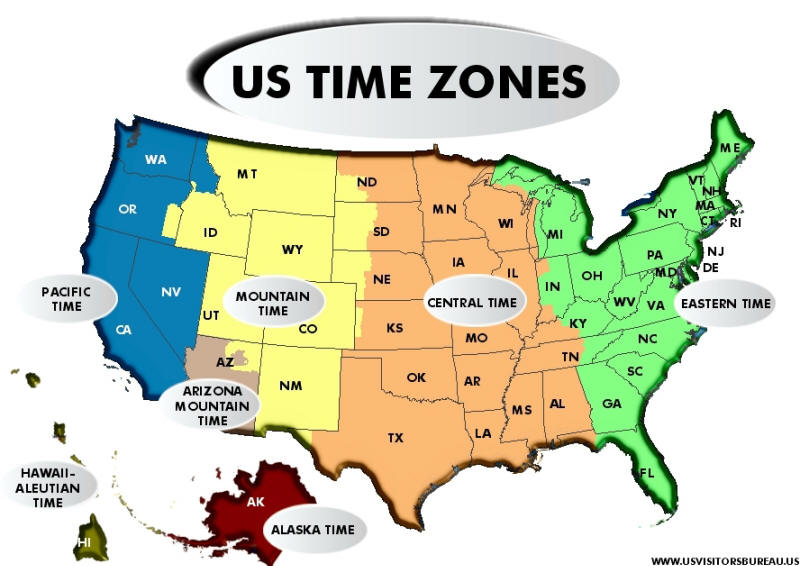
The Rangers were already out of place. All you have to do is look at this time zone map to see what this author means:

With the new alignment two-thirds of the Astros and Rangers away games will start two hours later than their time zone. That's not only stupid, but bad for the teams' fans and bad for the players' logistics. Comments on the linked post above also seem to indicate the change might go against the Astros lease agreement with their stadium.

So now we have two teams badly placed in divisions. We wrench the Astros away from a league they have played in for fifty years and the equal but uneven number of teams in each league will mean constant interleague play, a feature not exactly in this Fan's happy spot.

It's a poor plan that is poorly executed and no change would have been better than this change. Golly...

BBA Link Fest - General Foods for Thought

Welcome to another Thursday. Thursdays around here mean another trip around the Baseball Bloggers Alliance General Chapter and more links from this great group of colleagues. So get your mouse (or clicker or whatever) ready and off we go!

We'll start over at The Baseball Index where we find a post about the Houston Astros. The Astros have been in the news a lot lately. Unfortunately, the news is never about the actual team on the field. You get some here.

Over at Diamond Hoggers, TheNaturalMevs (will have to ask someday what that stands for) gives us a fine update on the pending MLB labor agreement.

The Golden Sombrero has been a great place to go lately with all their prospect breakdowns which are really well done. But in between those, this Fan really liked their slow motion breakdown of Tim Lincecum's delivery.

Old Time Family Baseball has been busy and their latest post concerns the next Brewers' utility player. OTFB is Zelous about baseball!

It's not a baseball post, but Left Field gives us the post of the week from the perspective of a Penn State alumni. It's a must read.

Sully of Sully Baseball doesn't thinks that Robin O'Connor was the biggest thief in San Francisco Giant history. Oh, that Sully.

When The Platoon Advantage has four great writers, it's always hard to pick a favorite post of the week. But this Fan loves nostalgia and Bill's new post about Tony Cloninger hit all the right notes.

Pro Sports Wrap is thrilled about the Dodgers tying up their center fielder.

Daniel over at The Ball Caps Blog has to be in hog heaven with all the uniform changes we've been seeing. He has his opinion of the Marlins' new cap this week.

For Baseball Junkies gives us the tale of two relief pitchers and keeps us hanging for the answer. Argh!

The Padres get far too little ink in national headlines. Through the Fence Baseball rectifies that some with a trade proposal in this great post.

The Hall of Very Good talks about the Cubs new manager. And proposes the next great blog name.

You need to read both halves of Grubby Glove's "What's Wrong With This Card" series. You really do.

Baseballism rings in with their opinion of the Jonathan Papelbon signing. The Fan's only question is whether the Fan will hate him as much on the Phillies.

Matt Whitener ponders the Cardinals' new manager. As usual, we get the Cheap.Seats.Please.

There is no big surprise in the AL Cy Young Award winner for Eugene Tierney over at 85% Sports. Nor should there be.

Sooze over at Babes Love Baseball is impressed with how wealthy Matt Kemp is going to be.

One of this Fan's favorite pieces of the week was posted the other day at Replacement Level Baseball Blog. Terrific read.

As the award start to roll out from MLB, Theo over at Hot Corner Harbor gives us his rational explanations for his picks. Good stuff.

MLB Dirt's heart and soul, Jonathan Mitchell, debates this Fan on Jeremy Hellickson. He's wrong of course.

Peter Stein over at MLB Reports wrote the ultimate Fantasy Baseball article on stolen bases. Wow!

This baseball Fan has certainly loved Blaine Blontz's Arizona Fall League Recaps over at Call to the Pen.

Ken over at The Baseball Hall of Shame has a great take on the Cardinals new manager.

Ryan Sendek is certainly impressive. Love his stuff. Of course it doesn't hurt that he supports some of the ideas this author has about what the Cardinals should do. Check out his post on Analysis Around the Horn.

Christopher Carelli is just as impressive as Sendek! What great new additions these guys are to the General Chapter. Carelli's latest over at The Baseball Stance is terrific.

Mario Salvini over at Che Palle! cheers the return of the cartoon Oriole. The Fan agrees.

Dugout 24, our other overseas baseball blog gives us a coaching drill on pitching effectively with a fastball.

Chris Papas of Number One Baseball gives us some off season notes.

That's a wrap! See you next time for the BBA Link Fest and have a good week.

Vlad is Dethroned

Free swingers roam the earth despite the earth shift toward working the count and raising your on base percentage. The fact is that such players always existed and always will. For every Mickey Mantle, there was an Andre Dawson. For years, the free swinging champion was Vladimir Guerrero. Everyone knows that Vlad will swing at anything. He had his competitors. Ivan Rodriguez, Alfonso Soriano, Miguel Olivo and A.J. Pierzynski come to mind as challengers and as expected, for the last three years, all of these players are in the top ten for the highest O-Swing in baseball. Vlad is on top, of course. But he was beaten in 2011. Who dethroned the Impaler? Pablo Sandoval.

Leave it to someone with just as much of a cool nickname as the Impaler to finally beat the great Vladimir. Well, a Panda is quite a bit more warm and fuzzy as an Impaler is. But anyway, the Panda beat the old man and it wasn't as if the old man wasn't trying. Vlad swung at 47.4 percent of pitches outside the strike zone. It was the "best" mark of his career. Guerrero's always been known as a free swinger. But he's gotten freer the older he has gotten. Heck, when he was younger, his rates were in the mid-thirties for a percentage. But age apparently has made Vlad even less patient than his younger years.

And so Vlad had his most impatient season ever. But he was defeated by Pablo Sandoval. The Panda swung at a mind-numbing 47.6 percent of pitches outside the strike zone. Well, sure, it's only two small percentage points different than Vlad's, but still. You have to celebrate what you can in baseball.

Despite all the swings, Sandoval had a very good year. In 117 games (he had a large stint on the DL) he compiled an OPS of .909. The slimmed-down dude also had his best year with the glove at third and compiled the highest WAR of his career. He hit over .300 for the third time in his four year career. So somehow, Sandoval makes it work.

And perhaps that's a point to be taken here. Guerrero is a borderline Hall of Fame player. He's compiled a lifetime OPS of .931 despite being a free swinger his entire career. Now that he is older, it works less for him of course and anyone who continues to employ him is probably a little daft for doing so. But for the most part, Guerrero has made his free swinging lifestyle work. Sandoval seems to be his heir. It's not a lifestyle that pleases the analysts, but those swings deliver contact that more often than not, find a safe haven among or over the fielders.

Tomorrow we'll have part two of the free swinging life (sounds kinky doesn't it?) as we examine free swingers and post season success.

Wednesday, November 16, 2011

More Montero Please

The enlightened male is a myth. Try as this thinking man might, the sight of a pretty girl changes breathing patterns and messes up normal ways of thinking. Is there anything less wholesome than a man around a comely female? It does little to soothe the ego that scientists have confirmed that female attractiveness changes physiologically in men on sight. It's a DNA thing. To somehow get this post back on track for its intended purpose, the opening sets up what it's like hoping for a prospect to break into the line up or rotation. 

The metaphor goes like this: You are waiting in line behind twenty people for service. Handling the service are three guys, an old woman and a comely female. All the while the line in front of you is getting shorter and you are doing mental calculations on your odds of getting waited on by the fab female. Finally, your turn is next and both a male and the pretty girl are just wrapping up their last transactions. You start to fidget and the nerves are kicking in to see if who you will get. The girl finishes first and you do this inward huzzah kind of thing. And then...and then...she puts her "on break" sign, smiles at her coworkers and heads away from the counter. Nooooooo!!!

Yes, that's the metaphor of waiting for a prospect to get his chance. No, he's not as pretty as the girl. But the anticipation is just the same. Especially if he is Jesus Montero, the hottest Yankee prospect in a gazillion years. Montero came to Spring Training last season. Russell Martin had been signed, which was a surprise. Jorge Posada was told he was done catching. That wasn't a surprise. But Martin had trouble with his knees following an off season surgery and Francisco Cervelli was hurt too. Montero got lots of playing time along with Austin Romine. Joe Girardi said nice things about Montero. Could it be? Can we get the pretty girl in the line? Nope. The season broke and Martin and Cervelli went north and Jesus Montero headed to the minor league camp.

Montero said all the right things. He needed to work on some things and would wait his turn. Except that it didn't appear that his actions held up what he was saying. He started slowly in Triple A. He looked like he was regressing. There were whispers that he was bored. His normal good patience at the plate evaporated. Crap. The pretty girl went on break.

Thankfully, about mid-year, Jesus Montero started looking like a prospect again and came out of his funk. He did enough to warrant a September call up. We all salivated. No more freakin' Cervelli, we thought. The problem was (and is) that Joe Girardi and his bench coach, Tony Pena, are old school catchers. They were the prototypical, "good defense, little offense" type of catchers. What matters is calling games and receiving the ball properly behind the plate. It was more than ironic that Jorge Posada's career came to an end under Girardi after Posada won the job over his manager as a great hitting, weak defense catcher back in the glory days of Yankee championships. By the fourth championship in 2000, it was Girardi who was out and Posada who was it. So that makes it doubly hard for a weak defensive catcher to crack the line up no matter how good he hit.

And make no mistake about it. Jesus Montero can hit! His September was amazing. In 69 plate appearances, Montero put up a .328/.406/.590 slash line. But he didn't catch. Well, he caught three games and he DHed the other fourteen. Austin Romine, on the other hand, caught eight games in September. He's more of an old school catcher like Girardi and Pena. He could be trusted. Not Montero. But at least we got a taste. Then we hoped he would get on the post season roster. He was. Super! But then he didn't play. Well, he did get two at bats...and got two hits. Meanwhile, Russell Martin went 3 for 17 in the series against the Tigers. You can't fault the decision to DH Posada. The old catcher had a fabulous last hurrah. But it wasn't enough because Montero wasn't to be trusted. The Yankees scored nine runs in their three losses. And as good as Martin might be behind the plate, he didn't really help C.C. Sabathia and Ivan Nova in those last two losses, did he?

So now we head into 2012. Martin will be resigned before he's offered arbitration or perhaps after. But he will be the starting catcher. Posada is gone to either retirement or banishment. God love him, Cervelli will probably be back though shouldn't be. And what of Montero? Well, the Yankees need a DH. And when Girardi wants fifty games to rest regulars, Montero will probably sit. It won't matter if he's hitting like .350 or something because...well...you know...he ain't that good a catcher.

In this author's perfect world, that girl would not have gone on break. Jesus Montero would catch two days a week and DH the other five. He would bat in 162 games and put up a .900 OPS and hit his fair share of opposite field homers into the right field bleachers.  But this perfect world will never happen because his team is managed by a no-hit, good glove catcher who has a no-hit, good glove bench coach. Montero might get 300 plate appearances. Or he might be traded once the Yankees panic when they are six games behind the Bay Rays. When it comes to Montero, this author becomes some kind of Dickens character: "May I have some more please?"

Tuesday, November 15, 2011

Cards Need to Find Allen Craig an Every Day Home

The St. Louis Cardinals were robbed a bit of their glory. They won the World Series for crying out loud, but soon after Tony LaRussa retired and speculation about a new manager and the ever present story of what Albert Pujols will do have all taken over the spotlight. Baseball readers never really got to sit in the gravis of what we just witnessed. Certainly, the managerial situation and Pujols are huge stories. And now that Mike Methaney has been hired as manager, that story has been magnified. But again, wasn't the post season run of the Cardinals somehow forgotten in the wake?

History will remember the 2011 World Series for David Freese and rightly so. His heroics in Game Six of the World Series will be rightly featured for years to come. But it was just as much a post season for other heroes like Lance Berkman, Albert Pujols (for one game anyway), Chris Carpenter and Allen Craig. The two biggest surprise stars of Freese and Craig should only be one surprise. Freese is a very good player when healthy (which hasn't been often) but we know what he's about. There is a certain sample size to his career. So the way he came up big was a surprise. But the Allen Craig display shouldn't be a surprise at all. He's been playing like that for quite a long while.

A long while? Why yes. Though he just burst on the major league scene, Craig is going to be 27 in 2012. Only an eighth round draft choice in 2006, Craig put in 517 games over six seasons in the minor leagues. To this writer's mind, that was 150 games too many. Craig was a killer in the minors. After ripping up Double A, Craig played 219 games in Triple A and put together this slash line: .320/.379/.545.

Craig was given a limited chance in 2010. He did manage to get into 44 big league games good for 124 plate appearances. But it really wasn't much of a shot. And so he was given more time in Triple A to start the 2011 season. Once he got the call back to the majors in 2011, he showed what he can do. He got into 75 games in 2011 good for 219 plate appearances and put up the following slash line: .315/.362/.555. Look familiar? Look at the last paragraph. So it really was no surprise that he put up a 1.005 OPS during the entire post season.

But he's still a player without a position. One of this author's favorite writers, Daniel Shoptaw, over at C70 Baseball indicates that Daniel Descalso is going to be given the second base position. So where does that leave Craig? The Cardinals already have Clank and Clank (Berkman and Holliday) starting at the outfield corners. You swallow hard when the ball is hit to them, but they are such good offensive players and are making so much money that you have to play them there (assuming Pujols is resigned). Allen Craig has shown some versatility in his playing positions, but he's not a center fielder. Besides, John Jay has shown he can handle that position and can hold his own offensively. Freese is established at third. So what about Craig?

May this author suggest that one of two scenarios works quite well. Craig held his own in brief appearances at second base. Well, at least baseball-reference.com thought he did. Fangraphs disagrees. Craig's numbers in brief appearances in center are fine but he lacks range and with those two corner positions already manned by sloths, you have to have a center fielder with range in the middle of them. But if the Cardinals could live for years with Skip Schumaker at second, can't they with Craig?

So what's the second scenario? Um...dare the Fan say it? Sure, why not. Let Pujols walk, put Berkman at first and Craig in right field. There. There, the Fan said it. What was Albert Pujols' fWAR in 2011? 5.1. What was Craig's in less than half the playing time? 2.6. Wouldn't it be reasonable for Craig to project over five in WAR over a full season? His splits are fine, so that's not a problem. And he'd be just a bit cheaper. It certainly possible for Pujols to come back with another monster year. But it's just as possible for Craig to do so too. The most it could cost the Cardinals is two wins. Plus, without having to pay Pujols, you could get Jimmy Rollins to play short. Wouldn't that be cool?

All this writer knows is that Allen Craig needs to be in the Cardinal line up every day. Somehow. His time has come and he is a unique talent that needs to be showcased...every single day.

Monday, November 14, 2011

Aaron Hill And Predictability

After a player has put in seven years of service encompassing 908 games, you have a pretty good gauge on what kind of player he is. Things like luck can cause minor spikes and contrasts, but normally a baseline can be reached. You can forget all about that with Aaron Hill. His career reads like a stock market chart. He started his career as a low strikeout, low power kind of guy. Then suddenly he's hitting 62 homers in two years. Then he goes back to no power again. What the heck? Take a look at just two statistics, his ISO and his wOBA over the course of his career. The following charts give you a visual representation.


How are you supposed to get a feel for what kind of player Hill is by looking at that mess? And those aren't the only statistics that drive you crazy with Aaron Hill. Take his line drive percentage. Here is a list of his line drive percentages during his career: 23.1, 19.2, 20.8, 17.3, 19.6, 10.6 and 21.2. See any pattern there? No, not here either. 

There are a couple of trends you can see though. When he first came up, he hit more ground balls than fly balls. His first three years, his ratio of ground balls to fly balls were 1.5, 1.33 and 1.04. Since 2008, that trend disappeared and he's become a batter who hits more balls in the air. That same ratio since 2008 looks like this: 0.74, 0.96, 0.65 and 0.87. At the same time, after three years of single digits in infield fly pops his rate exploded starting in 2008 and has been in double digits every year since. Perhaps he figured out that chicks dig the long ball. Well, the long ball is fine as long as all the other numbers look pretty along with the homers.

But that's not the case after his breakout year in 2009. He did still hit 26 homers in 2010, but everything else tanked. You would think that the longer Hill plays in the majors that his plate discipline would get better and better. But it's just the opposite with Hill. When he first came up, his O-swing rates (swings at pitches outside the strike zone) were excellent at 15.4 and 18.7 percent his first two season. In his last two seasons, that has ballooned to 31.3 and 29.5 percent--easily the highest of his career. 

You can't even get a read on Hill by looking at his pitch type values. Those are valuations against various pitch types as compiled by Fangraphs (among others). Some years he's good against fastballs. Other years, he's terrible. Some years, he's good against curves. Other years he isn't and so on with every pitch type. Over the years, it seems he's had more success with the curve than against any other pitch type. Strange.

All these thoughts came about because this author was trying to decide if the Arizona Diamondbacks did a smart thing by signing Hill for two years at just above $10 million. The answer really becomes, "We'll have to wait and see." It could pay off big as Hill has compiled a value (per Fangraphs) of $58.4 million in seven years or an average of $8.4 million a season. That means that Hill has a lot of upside on making a little over $5 million a season. But it also seems a crap shoot because Hill's valuation through those years has been all over the place. 

Completely Confused Concerning Jeremy Hellickson

Two and a half hours from now, MLB will announce the winners of the Rookie of the Year Awards for 2011. Many big time writers predict the AL winner will be Jeremy Hellickson. That projection is confusing this writer. Two of the major stat sites don't help either. Fangraphs pegs Hellickson's 2011 fWAR at 1.4. Baseball-reference.com offers their opinion via their rWAR which pegs Hellickson at 4.2. That's a pretty wide swing of valuation opinion, is it not?  Baseball Prospectus is a little higher than Fangraphs but still much lower than B-R and give Hellickson 1.9 WARP. If these sites can't all agree, what are we supposed to make of it all?

Casually looking at Hellickson's 2011 season at face value, we can make the following easy judgments. His WHIP, Hits per nine innings and ERA were all good. His homers per nine, walks per nine, strikeouts per nine, strikeout to walk ratio and SIERA were all less than good. Digging a little deeper, his BABIP of .223 and his strand rate of 82 percent are unsustainable. The low BABIP, high strand rate, low strikeout rate take his actual ERA and translate into a SIERA of 4.63 or a differential of -1.68.

Hellickson's strikeout rate of 5.7 is confusing all by itself. The rate is so far lower than his 2010 rate and his rate all through the minors that this observer is left scratching his head. To make it more confusing, Hellickson was in the top 25 for all qualifying pitchers on swinging strikes percentage. His 9.7 percent rate in that statistic is not that far below the leaders either who came in just above 11 percent. So why did that not translate into more strikeouts? The one thing that seems to stand out for Hellickson on that leaderboard is that among pitchers in the top 25 in swinging strike percentage, only Hellickson and Gio Gonzalez had an O-Swing percentage under 30 percent. O-Swing percentage is the amount of pitches swung at when the pitcher throws the pitch out of the strike zone. Does that tell us anything?

It does separate Hellickson in this writer's mind from Wade Davis. Davis also lost his ability to strike out batters after his first year in the majors. The difference is that Wade Davis was in the bottom 25 of qualified starters in swinging strike percentage at 5.9. But it is a head-scratcher that both pitchers have seemingly lost their historic ability to strike batters out. Does this come from a different pitching strategy at the major league level (coaching staff, manager) than at the minor league level?

Also confusing to this writer is Hellickson homer rate. He gave up a homer per nine innings, which isn't all that great considering he pitches half his games in a pitcher's park (Tropicana). And yet, he limited batters overall to a slugging percentage against of .373. Part of that is from giving up so few hits overall. Hellickson is a fly ball pitcher. His fly ball percentage is much higher than his ground ball percentage. His home run to fly ball percentage is not bad at 8.8 percent, but with a greater rate of fly balls in general, that rate will lead to a high home run per nine innings rate.

So what's to make of Jeremy Hellickson? This writer simply does not agree that he should be the Rookie of the Year. But going forward, what can we expect? With his swinging strike percentage, his strikeouts should rebound (unlike Davis). His extremely low BABIP should result in some ERA regression. But if he continues with a high infield fly rate (16.2 percent), perhaps his BABIP isn't all luck (plus, he has a great defense behind him). Hellickson's success in the majors isn't guaranteed, but he does still appear to be a candidate for one of the top starters in baseball. With only one full season in the books, we'll have to look closely as his body of work builds to see which of his 2011 stats were flukish and which are long term trends going forward.

Sunday, November 13, 2011

Fourth Annual David Ortiz Pondering

This off season will mark the fourth straight this writer (and a billion others) will be pondering what the Red Sox should do with David Ortiz.  In the first annual pondering, the Red Sox were encouraged to break ties with Ortiz. That was after his 1.9 ($8.4 million) fWAR season 2008. The second annual version was the same as Ortiz was even worse and had a 0.3 ($1.2 million) fWAR season in 2009. The third annual edition changed its tune after Ortiz posted a 2.6 ($10.4 million) fWAR season in 2010. That edition said that the Red Sox should pick up his option for 2011 but not sign him to a new long-term contract. That's exactly what the Red Sox did. Now, in this fourth annual edition, Ortiz is coming off his best season in quite a long while where he was worth $18.8 million with a 4.6 fWAR season. So what should the Red Sox do?

Ortiz could again hit a fastball again in 2011. He could hit lefties again and he led the league off of them. That was after three straight seasons of being fairly pathetic against southpaws. You could no longer pound him inside to get him out. He had his best line drive percentage since 2005. He had sixty-two less strikeouts than the year before. Unlike the previous four seasons, David Ortiz had positive runs over average against every pitch type thrown at him. So again, what should the Red Sox do?

Ortiz has made $13 million or so the past several seasons. That doesn't seem like a lot of money for the threat that David Ortiz gives a line up. If you add up his last four seasons and divide them by four, Ortiz has earned an average of $9.7 million of this $13 million salary. Do you go by that or go solely by his last year's production worth $18.8 million? You have to go with the four year average, right? And you have to consider that David Ortiz will turn 36 five days from now. Clearly, you have to figure his best days are behind him rather than in front of him.

And as good as his season was a year ago, it didn't end well. He hit all of one homer the entire month of September and drove in only eight runs. That has to figure into the equation doesn't it? Ortiz reversed his recent trend of starting terribly and finishing strong to starting well and finishing with a dud of a month. A month which we all know what happened to the Boston Red Sox.

Ben Cherington, Boston's new GM says that a lot of their off season strategy will depend on if David Ortiz "is here" or not "here."  In other words, after last year's post season splurge, there are limited funds and if the Red Sox give a big chunk of change to Ortiz, there is less to do other things. Ortiz is a big part of the Red Sox mystique. He has the persona as a professional assassin, especially in the clutch. How does that figure into Cherington's plans or does it at all? Frankly, that's all a bunch of talk and the only relevant facts here are the numbers, which you have already been given.

Okay, it's time to get to the bottom line. Last year, this observer said the Red Sox should pick up the last year of Ortiz's option. It was a good investement, earning more than $5 million more than his paychecks. The recommendation here is a one year deal only with perhaps an option year for no more than $12 million. That is higher than his four year average, but gives him the benefit of the doubt based on last year. The one year does not tie the Red Sox up for years to come.

That's what the Red Sox should do. It's unclear as to what they will do. Ortiz will ultimately feel slapped in the face with such an offer. Ball players aren't very realistic about their own worth. Perhaps he'll grumble and take it to stay in Boston for another year. If he stupidly gets a higher offer somewhere else, be sure he will take it. But that doesn't mean that the Red Sox should try to match a higher offer if some sort of bidding war develops. His future is not long, nor bright--not when he's 36 and can't play a position in the field. Cherington seems somewhat ambivalent or perhaps he is simply not optimistic that Ortiz will take a reasonable offer. The Red Sox would love to have David Ortiz back. But it should only be on their terms no matter how good he was in 2011.

Friday, November 11, 2011

What Would You Offer Jimmy Rollins?

The free agent market has two elite shortstops. One is younger but has injury concerns. The second is going to be 33 at the end of this month and has injury concerns. The older one is the better defender while the younger one has a more potent bat. The younger one has compiled 9.9 fWAR the past three seasons despite the injuries while the older one has compiled a 9.3 fWAR despite some injuries but more playing time the past three seasons. The younger one, Jose Reyes, seems poised to make a lot of money. The older one, Jimmy Rollins, seems poised to be disappointed. What is Jimmy Rollins worth and what would you offer him?

Rollins' defense will make him sorely missed if the Phillies let him walk. With a pitching staff of aces three deep and another on the cusp, it would seem that there is a case in protecting them with one of the premier fielding shortstops in baseball and paying him accordingly. But the Phillies face a similarly hard choice as the Yankees in that Rollins is in many respects the face of the Phillies and has come to the stage of his career where you have to be concerned over the length of his deal. Rollins is going to want five or six years. From his current age, three years would seem to be the intelligent offer length.

And Rollins has a point in wanting to make some money at this stage of his career. He's been vastly underpaid for his entire career. His last five years at $8.0 to $8.5 million has been one of the best deals for a team in baseball. It would seem from that perspective that Rollins would have no interest in giving the Phillies a home town discount. And he would have a case. And yet, offering him a substantial raise after three troubling seasons would seem to dampen his team's enthusiasm to go longer than three years. Perhaps they could be creative and offer him three guaranteed years and two option years. But again, it seems hard to imagine Rollins accepting that kind of offer.

Further complicating the Phillies' position is the loss of Ryan Howard who is looking at a huge loss of playing time to at least the early part of 2012 if not more due to his Achilles tendon injury. Jayson Werth was missed in the line up even if he faltered in Washington. The Phillies struggled on offense to some degree in 2011 and losing Rollins to any other shortstop not named Jose Reyes would be a further erosion of that offense. Despite a dreadful 2009 and an injury riddled 2010, Rollins did bounce back some on offense this past season, though he isn't the hitter he was in his younger days. Rollins was a force on offense from 2006 to 2008 but after six seasons in a row of slugging .420 or higher, Rollins has come in at .374 and .399 the last two seasons with his ISO dipping to .131 the last two seasons after a career of averaging .160.

As attractive a place as Philadelphia is to hit, the home/road splits are decent for Jimmy Rollins, so there are no real worries that his home park would add many bennies to his current value. We can take that out of the equation. What is more worrisome is that after five seasons of double-digit triples and two others that were close, Rollins only hit two of them last year and only 22 doubles in 631 plate appearances. But at least his home run to fly ball ratio remains stable as does his walk percentage and strikeout percentage. If Rollins were to have a few seasons in a row where his legs rebound to good condition, his offense could again improve to somewhat of his former levels. He is still an elite base stealer. But again, after his last three years, which is the real Jimmy Rollins, the post 2008 Rollins or the pre-2008 Rollins? Logic would seem to dictate that it's the former and not the latter.

So what would you offer him? This observer thinks that three years at $40 would be fair market value with a couple of mutual options. Anything higher than that or a longer guaranteed period would be stretching the boundaries of good sense. But good sense hasn't ruled free agent signings in quite a while. Here is a WAR chart comparing Rollins to Jeter and Reyes. The Fangraphs chart gives you a visual (click on the chart to see it better. Rollins is the blue line, Reyes is the green) of what GMs are dealing with. It's a tough one, isn't it?

Thursday, November 10, 2011

Putting on the Fritz

Memories are the soul of a baseball fan. Images of our baseball past always float consciously and subconsciously wherever we are and through whatever we are doing. The baseball present is as good as it gets because the action is right in front of us in a visceral way. We are cheering as hard as we can for our teams and players. But always just beneath the surface are little jolts of things we've witnessed before. There is a lot of similarity with music as current songs and melodies remind us of melodies of the past and how those made us feel.

For this writer, the past was the Yankees beginning from around age six in New Jersey. That's not really the truth. Dad took us to a game and watched them on television but they were usually Mets games. It doesn't seem as if the Yankees became the entire baseball reality until about 1967 and after Dad died. Those were Police Athletic League years when the coach would take us to Yankee Stadium or days when Mom had to work on Saturday and gave us two young boys five dollars each to take mass transit to Yankee Stadium rather than sitting home with no one to take care of us. 

The faith of a child is unlike that of being an adult. There was always hope during Yankee games despite the teams being mediocre at best and awful at worst. At that age, we didn't really have a big world view of the standings. Each game was an event in and of itself, whether at the ballpark or watching on the old black and white television in our bedroom. Each of these events was hosted by Phil Rizzuto on the television or by Bob Sheppard at the stadium. Rizzuto was our uncle and Sheppard was God.

Since each game was an event, it was baseball fandom at its purest. We didn't really care that Horace Clarke or Tom Tresh were awful in their entirety. All we cared about is that their double or single happened to win the event we were watching at the time. The love of statistics takes away some of that purity. Now, we don't really swoon at a single by Ramiro Pena because we know he is awful. If he hits a single and wins the game, we are flush for the team and not by Pena. It was the reverse in the early life of this Fan. 

Oh perhaps we had a peripheral idea that Horace Clarke wasn't a very good baseball player. After all, we watched him every day and he failed far more often than he succeeded. Most Yankee hitters during that time stunk. Heck, the 1968 team had a slash line of .214/.292/.318. Yup, that was the 1968 Yankees. The year before that, they hit .225 and in 1969, the team hit .232. It was kind of hard to find hitting heroes back in those days. It was the pitchers that stood the tallest. Mel Stottlemyre, Fritz Peterson, Stan Bahnson, Lindy McDaniel and others. They were very good pitchers. And they kept their team in the game often enough to keep us young fans interested.

For years, the top two were Stottlemyre and Peterson. Sure, the former was always the favorite with his clean, All-American looks. He looked like what a ball player and a dad should look like. But the latter was our second favorite and why not? He was out there 35 to 37 times a year and we didn't miss watching very many of them. Between 1966 and 1972 (seven seasons), the pair combined for 491 starts and 3,551 innings. Combined, they threw 180 complete games over that time span and induced (combined) 48 double plays a season. When a pair of pitchers averaged 70 combined starts a season, 507 innings and 26 complete games a season, they were going to be a big part of your fan life. And they were very good on teams that did not field very well or hit very well. And you know what? They were pretty good hitters too.

Stottlemyre got more accolades. He was a part of five All Star teams. Fritz Peterson only pitched in one. Stottlemyre won twenty games three times. Peterson only once. But you really can't pick one over the other. Stottlemyre finished his career with a 2.97 ERA and Peterson at 3.22. But Peterson really fell off the table (he must have had a bad arm) after 1972. Stottlemyre had almost double the career rWAR. But between 1966 and 1972, they were equally terrific. And some of Peterson's numbers are eye-popping.

Fritz Peterson pitched over 2200 innings in his career and finished with a career walks per nine inning rate of 1.7. He is the only left-handed pitcher since 1900 that can say that. He led the league in WHIP twice in a row in 1969 and 1970. He was the last pitcher to throw more than 270 innings in a season and finish with a WHIP under one (1969 - 0.996). He led the league in fewest walks per nine innings five straight seasons. All of them were under 2. In 1968 he walked only 29 batters in 212.1 innings.

Mel and Fritz were our heroes. Between 1966 and 1972, they combined for 214 wins (a combined 31 per season). For fans who lived in the moment when each game was an event, these two pitchers always made it an entertaining and close game. And despite the team being mediocre to terrible for most of those years, they gave us plenty to cheer about. The cool thing is that all these years later, their stats live on baseball-reference.com and they were as good as they are remembered to be.

P.S. For a great interview recorded with Fritz Peterson two years ago, click this link and enjoy.

BBA Link Fest - Style in General

The world has gone nuts this past week. Between the sad case of a kidnapped catcher and the sad case of the Penn State football program, our heads are spinning. Much prayers are offered for the safe resolution of the former and the same goes for the children involved in the latter's case.

Meanwhile, writers in the Baseball Bloggers Alliance General Chapter are still cranking out great work. Don't believe the Fan? Then check out these links.

MLB Reports had so much good stuff this week that it was hard to choose. So you are offered two. The first is speculation on what lies ahead for Johan Santana. Remember him? The second is about how a subtraction could ruin the Texas Rangers.

Mike Schwartze of MLB Dirt makes predictions on where the top fifty free agents end up. We need to keep score and see how Mike does.

Major League A-Holes likes having the Chicago White Sox fly under the radar. Good stuff.

Right out of Left Field, we have ourselves a new All Star team. See what the Fan did there?

Theo over at Hot Corner Harbor goes all Ken Tremendous on us. Nah, Theo is much, much better.

Did you know that CBS's Survivor has a baseball player involved this season? The Hall of Very Good fills us in. Hey guys, it looks like he screws up next week.

Grubby Glove has a fun feature called, "What's Wrong With This Card." Check out this week's installment.

Daniel Clark's choice of prospects to feature this week over at the Golden Sombrero is Michael Choice. That makes this link sort of symmetrical.

The Baseball Index reports on the Arizona Diamondbacks this week. How about that Willie Bloomquist signing?

In a fun exercise, For Baseball Junkies compiled an All-decade team for the 1970s. Here is their
AL version.

Dugout 24 discusses their favorite baseball movie and the news it made this week.

TheNaturalMev wants to cleat up after listening to that leaked Ron Washington speech over at Diamond Hoggers.

The terrifically reliable Call to the Pen keeps putting out great reads. This one by Tim Holland takes us back to the 1981 strike. [[shiver]]

Robinson Cano is a Taiwanese rock star. Don't believe it? Baseballism has the story.

Christopher Carelli over at The Baseball Stance is concerned about some franchises in flux. Terrific read.

Ken and Eric over at Baseball Hall of Shame have their own free agent predictions. This is fun. We should have a general chapter contest!

Sooze of Babes Love Baseball is having a great week. Her take on Jorge Posada is especially entertaining.

So cool! More free agent predictions. This one is from Analysis Around the Horn.

Are you new to how free agency works in MLB? Eugene Tierney has just the post for you over at 85% Sports.

Jesse McGrath has a great recipe for how the San Francisco Giants can reclaim their thrown over at Through the Fence Baseball.

Sully of Sully Baseball gives us his "brilliant" analysis of the recent trade between the Royals and Giants.

Pro Sports Wrap thinks the MVP Award is a no brainer. Indeed.

The terrific @Bill_TPA, one of the stalwarts of The Platoon Advantage earlier in the week snubbed Ken Boyer for the Hall of Fame. Bill then tells us that third basemen are overlooked. Color the Fan confused. :)

Old Time Family Baseball shows us the Padres new uniforms. This Fan is not impressed...wait...with the uniforms! OTFB is always impressive.

That's the links this week folks. Have a good weekend. Pray for Wilson Ramos and think about our veterans tomorrow.

Wednesday, November 09, 2011

Unique Talent of Jose Reyes

Jose Reyes has already compiled the third highest fWAR of all shortstops since he began his career in 2003. Only Derek Jeter (41) and Jimmy Rollins (39.3) have compiled more than the 33.4 that Reyes has put up. But when you consider that Reyes missed most of 2009 and only played half the year in 2003 and 2004, Reyes has compiled his WAR in almost 300 less games played than those other two. And while Jeter is in his late thirties and Rollins is 32, Jose Reyes at 28 should be in his prime and that's a bonus fact for any team now considering the free agent shortstop.

Let's face it, the talent level at shortstop isn't deep. And considering that the position is considered one of the most important positions on the field, Reyes will be getting a nice chunk of change for his services. The one hesitation on everyone's mind is the trouble Reyes has had with injuries the last three years. But when he has been on the field, the man changes the game.

When looking at Jose Reyes, you have to go beyond the mere batting title he won this past season and look at the totality of his game. While not the defensive shortstop Rollins has been, Reyes is certainly better in the field that Jeter. The excitement he generates is incredible. His 99 triples compiled before his 5,000th career plate appearance hasn't been accomplished since 1927. His rate of scoring per game of 70 percent since he began his career is two percentage points above Rollins in that same time frame and just slightly ahead of Jeter. Reyes has already stolen 370 bases in his career, seventy more than Rollins in that same time frame. During his career, his ten percent strikeout rate is third among all shortstops during that time period with only Omar Vizguel and Orlando Cabrera striking out less. And you certainly wouldn't put Reyes in the same batting company as those two long-time shortstops.

The only two dim spots for Reyes statistically are that his home run power has diminished, which considering where he has played the last few years makes that understandable. The other is his walk rate, which for a guy with his speed, would really add to his game. His fielding metrics have slipped to the slightly negative range the last two seasons.

Reyes is an infectious and joyous player to watch. His energy on the field seems to lift his team and it certainly makes him a fan favorite. It will be hard for Mets' fans to see him go. The odds of Reyes resigning with the Mets seem astronomical. They are a team that has already acknowledged that they won't be competitive in 2012. The ownership has been in scrambling mode for the past year financially. If Reyes were to re-up with the Mets, it would be a shock.

So where will he go? We've already heard his name in rumors all over the league. His name has been linked to the Brewers and the Marlins. Every writer around baseball is making predictions. This writer might as well throw his hat into the ring. Jose Reyes will sign with the Miami Marlins. That team is suddenly looking to spend money (it must be one of those every ten year things), have a new ballpark opening up this season and have a shortstop with all kinds of talent that doesn't seem to fit the position anymore (Hanley Ramirez). Ramirez can move to third which is already a position of weakness for the Marlins and in the process, the Marlins would strengthen both infield positions on the left side of the diamond.

Why would Reyes go there? He is from the Dominican Republic and a warm weather team would seem to suit him. The warmer climate would be easier on this legs. It's hard to imagine a player with his birth place to consider the northern clime of Milwaukee over Florida if the money was close.

Wherever Reyes ends up, that fan base will get one of the most thrilling ballplayers in baseball today. Reyes is a unique talent who is a game changer and therefore a franchise changer.

Tuesday, November 08, 2011

Yankees Rotation Options for 2012

Before the 2011 season started, mass hysteria swept among Yankee fans and those fans that root against them for perceived rotation woes. They whiffed on Cliff Lee. Andy Pettitte rode off into the sunset. They didn't get any other options signed or traded and instead cobbled a rotation around two over-the-hill, high mileage pitchers, Bartolo Colon and Freddie Garcia. Those two pitchers out pitched all other competitors in spring training. Dillin Betances and Manny Banuelos got all the ink, but the old farts got the job. And somehow, it all worked. Garcia was solid all season and Colon was great for the first two-thirds of the season before regression hit (or he ran out of gas). It would be hard to imagine the Yankee brain trust to want to go into 2012 with such an unstable situation again. But what are their options?

The way this writer sees it, only two rotation spots are secure. C.C. Sabathia is one of the best in the game and the Yankees took care of his opt out business quickly and efficiently. And Ivan Nova has shown that he is a big league pitcher and can give the Yankees solid innings. His leg injury in the playoffs is a bit of a concern and will be until we see what the spring brings. So the question really concerns what comes after these two.

A.J. Burnett is signed long term and finished the 2011 season on a bit of an uptick, but two terrible years overall has to leave a bad taste in everyone's mouth. For a guy who is supposed to have great stuff, his fastball was rated to be the worst pitch in all of baseball last year. With $33 million still owed the pitcher for the next two years, it's hard to believe the Yankees will just cast him off, but if they could trade him for any kind of value, they darn well should.

Phil Hughes is another puzzle. Many experts viewed his 2010 season with a bit of skepticism. He won eighteen games, but had a high homer rate (the new Yankee Stadium was particularly unkind to him) and he faded at the end of the season. Then last year, he had lost velocity and much movement on his fastball and after a few disastrous starts to start the season, he was sent to build up his arm. His second half was more promising and his September was actually encouraging. But here's the problem. After building him up via pitch counts and inning limitations, he's back to the beginning again and will have to be monitored. And the Yankees have never seemed committed to him starting and waffle slightly with his usefulness out of the bullpen. A lot will be told when we see how the Yankees approach Hughes when Spring Training starts.

And then what? Sign C.J. Wilson? Baseball writers are really torn about Wilson. He's had two really good years in a small ballpark and his team has gone to the World Series twice. But for the kind of money he is asking, there is huge risk in being stuck with another Burnett contract. If the Yankees could land Wilson for two years with a third year option, that would be ideal. But the odds of that happening are as good as Penn State getting good publicity in the next month or so. Mark Buehrle's game would fit well into Yankee Stadium, but the odds heavily favor him returning to Chicago. Chris Capuano built up some value with his solid season for the Mets last season. But his injury history is scary and his penchant for giving up homers is even scarier.

What of internal choices? Banuelos and Betances showed last year that they are not ready. Both had impressive strikeout numbers but equally unimpressive walk numbers. They both need to show that they can consistently throw strikes before they can be trusted on a big league mound. Adam Warren and David Phelps seem the two likeliest options at this point. Both have been stretched out to the 150+ inning level in Triple A and both have decent arms. Phelps has better control from the numbers and throws slightly more strikeouts. Both should receive a Spring Training invite to see what they can do.

A sleeper pick for this writer would be Shaeffer Hall. He's 23, has been stretched out to 150+ innings and he's a lefty. If the Yankees fail to acquire a left-handed starter, this would be a good person to look at for a spring invite. Hall pitched most of the season in Double A, but did pitch a game in Triple A at the end of the season. He's not a big strikeout guy, but he has excellent control and seems to keep the ball in the park. D.J. Mitchell is another sleeper pick with a solid season in Triple A last season.

There might be slightly less pressure this off season for the Yankees to make a free agent splash. The Rays are amazing but consistently have to play the low-salary game. The Red Sox seem to be in a bit of a flux this off season with question marks of their own. Brian Cashman has built up his farm system and has collected quite a few prized arms. The question is whether their ever quest for a title can allow them to go with young talent.

Personally, after watching this team a lot last season and into the post season, this team really missed Andy Pettitte more than anyone else. A left handed starter behind Sabathia seems so important when the team plays half its games in Yankee Stadium. If the Yankees can't land one, then Schaeffer Hall should be given a shot. Even without the lefty aspect, the Yankees have a system stacked with arms and could go with a youth movement. Warren and Phelps could be given shots as well as Hall or Mitchell. It just seems so unlikely that the Yankees would have the guts to go such a route. To be sure, they will be interesting to watch this off season.

Monday, November 07, 2011

Barry Bonds Still Causes Us Heartburn

The next baseball season will put us five years removed from the last season that Barry Bonds played in the majors. And yet, more than any other player, his career continues to be a bucket of water on top of the door waiting for us to walk in and get wet. We can't, in light of events that were perceived to occur, put his career in perspective. At least with Mark McGwire, we have his admission to his steroid use to put his career in some kind of box. But McGwire was really a two trick pony. He walked and he hit homers. Bonds was a superstar in all aspects of the game. Thus his alleged use of PEDs seemed to elevate all facets of his game (except defense). The seasons he had from 2001 to 2004 leave us staggered for some sort of reality other than the one we have to live.

By the age of 35, Barry Bonds was having a Hall of Fame career. He had already won three MVP Awards. But his career WAR path was decidedly below the paths of Babe Ruth and Hank Aaron. See the WARgraph below courtesy of Fangraphs. As you can see by the graph, Bonds at 35 was below Ruth and below Aaron though on a similar trajectory. Starting at age 36, which includes the record homer year of 2001 and the next three seasons, Bonds makes a change in his trajectory as it shoots up and overtakes Henry Aaron. It is that late life jump in trajectory that drives us crazy. If Bonds had the seasons he had between 2001 and 2004 as a younger man, it might not affect us the same. Why? Because every conventional wisdom we have indicates that players regress from the age of 30 and onward. Bonds not only did not regress, he had the best years of his career.

2001 was the year that Bonds broke the single season home run record with 73. The record had stood from 1961 and Roger Maris to 1998 when both Mark McGwire and Sammy Sosa topped Maris for a single season. But McGwire's record was eclipsed just three years later. We have the famous story where Bonds supposedly told Ken Griffey Jr. that he was upset that lesser players were getting all his accolades and he was going to use the stuff they were using to get his attention back. And he did get it back. But at what cost?

As hard on our sensibilities as 2001 was, at least in was Bonds on his own making the history. Barry Bonds after 2001 wasn't the only complicit party. Starting in 2002, managers around baseball became part of the story and became just as guilty in creating the records that Barry Bonds later set. For example, after 2001, Bonds had the single season homer record. But his season that year still came in just behind Babe Ruth's single season OPS record set in 1920. But managers in baseball are just as complicit in allowing Bonds to surpass both his own 2001 OPS with the OPS compiled in 2002 and 2004, both years of which flew by the Ruth record.

How was Bonds able to have better OPS seasons in 2002 and 2004 than the year he hit 73 homers? Intentional walks. A superstar like Bonds was going to get his share of intentional walks. And year after year, managers walked him from between 14 times to a peak of 43 in 1993. But after 2001 (35 intentional walks), it got downright silly. He was intentionally walked 68 times in 2002, 61 the following year and an unbelievable 120 times in 2004. Those intentional walks allowed Bonds to beat Ruth's OPS record in 2002 and then break it again and set the all time mark in 2004. To this writer, those 120 intentional walks in 2004 are a bigger stain on the game than anything Bonds did to improve his play. Those walks are a stench that will never leave these nostrils.

Can we extrapolate the data to see what kind of year Bonds would have had in 2004 without those 120 walks? Perhaps. Those 120 plate appearances can be broken up this way. With Bonds career walk percentage, he would have walked 24 of those plate appearances. With the 96 plate appearances remaining, hitting at a .362 clip like he was, Bonds would have had 35 more hits. Of those 35 hits, at the rate Bonds was hitting doubles, triples, sac flies and homers, he would have had thirteen more homers, seven more doubles and another sac fly and triple. Bonds' actual slash line that season was .362/.609/.812. If you do the math as this writer has done, the slash line becomes, .362/.517/.783. Instead of the 1.412 OPS that Bonds actually accumulated, it would have been 1.300 or below Ruth's record of 1.3791. Similar results are constructed with his 2002 totals if you take away those 68 intentional walks.

Of those 120 intentional bases on balls in 2004, 79 of them were from within his own division. And on face value, you can say that their aim was to limit the damage Bonds could do on their chances to win the division. And you can even say it worked as the Giants failed to make the post season in 2004. But did it really work? Giants number five hitters only had a .705 OPS and number six hitters had a .767 OPS for the Giants that year. so perhaps it can be perceived as good strategy. But also consider that the number five and number six hitters combined for 219 combined runs batted in (many of them Bonds on base with a free pass or those ahead of Bonds already on base when he walked). So the strategy seems a wash in this writer's book. 

The statistical part of this writer knows that intentionally walking batters increases a team's ability to score. The old school part of this writer considered such a strategy an act of cowardice. But could it go beyond just those two thoughts? Was it planned? Can the conspiracy theory be at work here? A friend on Twitter brought up the conspiracy theory when discussing the freeze out of Bonds in the majors after his last season in 2007. Bonds still wanted to play, but he never got an offer. Colleagues of this friend brought up that Bonds was probably too much of a headache at that point and plus, was 43 years old at the time. Yes, that could explain things. But at age 42, Bonds was still able to put up a 1.045 OPS. Sure, an American League team would have loved production close to that at the DH, right? What if the freezing out of Bonds in baseball after the 2007 was organized? What if the intentional walks from 2002 to 2004 were as part of a plan to keep Bonds from breaking Aaron's career homer mark? We'll never know of course. But it sure smells.

Personally, this Fan will never get over what happened between the 2001 to 2004 seasons. They altered the landscape of statistics. With the arc of speculation involved with what Bonds did to enhance his performance, those numbers will never feel real. They created records that may never be broken. The game will endure and as the magical season and post season of 2011 showed, the game is as healthy as ever. But a shadow exists and we will never really come out of that shadow. Well, maybe we will, but it won't be for a long time.

Saturday, November 05, 2011

Why You Have to Root for Chien-Ming Wang

Wait. That heading sounds way too much like a command. You don't have to root for Chien-Ming Wang. Perhaps the truth of the matter is that this writer has to root for Chien-Ming Wang. You might have heard that he recently signed with the Washington Nationals for another season for $4 million. It's a rather small and safe investment on the Nationals' part and from the sounds of things, it's where Wang wanted to be because he was grateful that the Nationals stuck with him through his long injury ordeal. And that's just one reason to root for Wang to succeed. Actually, that's two in one. Before this gets too confusing, perhaps the best way to get these thoughts out are in list form. Therefore, in no particular order, here's why this writer roots for Chien-Ming Wang.

1. The Fan is a sucker for a comeback story. Wang was heading for his typical season for the Yankees in 2008. Perhaps he was heading for his best season yet after winning nineteen games for two years in a row in 2006 and 2007. He was 7-2 after a seven inning gem against the Oakland A's on June 10, 2008. The Yankees moved into interleague play after the Oakland series and headed to Houston to play the Astros in a National League park. That meant that pitchers had to hit. Chien-Ming Wang squared up against the Astros' best pitcher, Roy Oswalt, on June 15. Wang struck out on his first two at bats. But the Yankees had built a 3-0 lead on Oswalt heading into the sixth inning. Wang had thrown five shutout innings. Those were the last five innings he pitched in 2008.

In the top of the sixth inning on that day in June, Jorge Posada and Robinson Cano had led off the inning with singles. After a fly out, Wang was asked to bunt. His bunt wasn't exceptional and Posada was thrown out at third. Unfortunately, that left Wang on first base. Johnny Damon hit a ground ball and Wang ran hard to second and again, unfortunately, the shortstop made an error and everybody was safe. Wang was on second and the bases were full when Derek Jeter came to the plate. Jeter hit a single. Cano scored and Wang scored behind him. In the process, Wang blew out a tire and that injury effectively killed his season. George Steinbrenner, in the last acts of his bluster, blasted baseball for making pitchers hit in interleague games (a point which gets an agreement from this observer). Wang got the win for the game and he finished the season at 8-2.

Jump forward to the spring of 2009. You could tell right from the beginning that Wang wasn't right after missing the last half of the 2008 season. On April 8, 2009, Wang made his season debut and gave up seven runs on twelve base runners in three and two-thirds innings. Five days later, he lasted an inning and gave up nine base runners and eight runs. Five days later, the same thing happened: one and a third innings and eight runs. After three starts, his ERA was 34.50. The Yankees pulled the plug. They tried to pitch him at various times during the year and after all was said and done, he pitched twelve times including nine starts and finished 1-6 with an ERA of 9.64. To anyone who had eyes to see, there was something clearly wrong with Chien-Ming Wang. The problem was his shoulder and a July 30 operation ended his 2009 season.

At the end of the 2009 season, the Yankees, despite winning the World Series that season, had little charity in their heart for a pitcher that had pitched so well for them for two full seasons and two partial seasons. In the dynastic world of Yankee baseball, winning is all that matters and Wang was jettisoned. The Nationals signed Wang to a free agent contract, but Wang was simply not ready and after much speculation, the Nationals finally announced that he would miss the entire 2010 season. And that leads us to reason Number 2.

2. The Nationals could have washed their hands of Chien-Ming Wang after getting nothing for their money in 2010. Yes, they non-tendered him, but then signed him to a one year contract for less money than the previous contract and he started the 2011 season on a formal rehab assignment. Kudos to the Nationals for sticking with the pitcher and giving him another chance. The move was not altogether altruistic. After all, Wang was a winner in his Yankee years and if he could get somewhat back to what he used to be, he could be useful.

To be honest, the Fan followed Wang during his minor league rehab starts and the results were mixed. But the Nationals were seeing a return of Wang's velocity and were convinced he was ready for major league action. Wang made his first major league start for the Nationals on July 29. He missed by a day starting on his two year anniversary of his shoulder surgery. And this Fan remembers how many naysayers there were on Twitter especially when people found out Wang was going to start a big league game. The naysayers sure sounded like soothsayers in Wang's first two starts, both losses. In those first two starts, Wang pitched a total of nine innings and gave up twelve runs, six of them earned on fifteen hits (one a homer), two walks and two strikeouts. The comeback story looked like a failure. But then we get to reason Number 3.

3. Things picked up with his third start of the season. He blanked the Cubs for six innings to get his first win. Then he pitched six more innings and gave up four runs against the Reds but got his second win. Wang's next five starts were uneven and he lost one of them and received four no-decisions. They weren't great starts. But Wang closed out his season with two straight wins, the last one a six-inning, one-run performance against the Braves on September 24 that did considerable damage to their wild card hopes.

In total for 2011, Wang made eleven starts, finished with a positive 4-3 record and a respectable 4.04 ERA. Wang finished his sixth season in the majors with his fifth winning record. But the thing about Wang is that he doesn't strike out anyone. He finished 2011 with a paltry sum of 3.61 strikeouts per nine innings. This isn't extraordinary for Wang. The two years he won nineteen games for the Yankees, his K/9 rates were 3.14 and 4.70 respectively. Wang has only had one season (his aborted 2008 season) where his FIP was lower than his actual ERA. And that leads us to reason Number 4 to root for Chien-Ming Wang.

4. Wang is the anti-analyses pitcher. He defies all the definitions we currently have for what a pitcher is supposed to be to be effective in the major leagues. Don't get the Fan wrong. This writer loves these newfangled statistics as much as anyone (perhaps more than most). But isn't it cool to have one guy who defies all that logic? Besides Chien-Ming Wang, name one other pitcher in the last fifty years who has logged more than 110 big league starts, has a winning percentage north of .600 and a strikeout per nine rate for his career less than 4.2. Go on, the Fan will wait. Think of one? Give up? There isn't any. Chien-Ming Wang has made 111 career starts, has a winning percentage of .670 (!) and yet has a career K/9 rate of 4.17. There has never been anyone like him in the last fifty years.

Since his debut in 2006, with a minimum of 700 innings pitched, only three other pitchers have a higher ground ball percentage than Wang. They are Brandon Webb, Derek Lowe and Tim Hudson. But Webb struck out 7.26 batters per nine, Lowe, 5.94 and Hudson, 6.11. Wang doesn't come close to any of those guys. He is an anomaly. You have to go all the way back to the 1950s to find anyone like him (Bob Lemon and Eddie Lopat) with that kind of winning percentage despite that low a K/9.

Put it all together and this Fan has four big reasons for rooting for Chien-Ming Wang. First, he's on the comeback trail. Second, he's signed out of loyalty to a team that has treated him far better than the Yankees did. Third, he had a somewhat successful comeback. And lastly, his success defies all the logic today's valuation stats have for a successful pitcher. No, this writer isn't coming up with some sort of, "he just knows how to win," stuff and no, this writer isn't dumb enough not to understand that run support has a lot to do with his success. But still. It sure is fun to see how long he can keep it going. This Fan of major league baseball hopes Chien-Ming Wang wins nineteen games again this season. Wouldn't that be a gas?