Saturday, November 26, 2011
New Post Up Over at MLBDirt
Hey folks. This writer has a major show today and tomorrow. As such, the Fan could only write one piece and it's over at MLBDirt. Enjoy and see you tomorrow.

Friday, November 25, 2011
Jonny Venters - A Danger to Worms Everywhere
Jonny Venters is a walking, talking anomaly. And it isn't just because he spells his first name funny. In two years pitching out of the bullpen for the Atlanta Braves, Venters has allowed 410 ball hit in play (not including bunts). In those 410 balls in play, 290 have been hit on the ground. Being a worm that lives in the infield of Turner Field has to be a terrifying prospect. Venters leads the majors in ground balls percentage over the past two years at 70.5 percent. His teammate, Peter Moylan, is second at 69.2 percent. Nobody else is even close.
In simplistic terms, the trajectory of a batted ball can affect a batter's success. There are a lot more factors as a comment by Robbie Knopf on another recent post correctly suggests. The speed of the ball off the bat makes a difference too. What is counted as a line drive can be just as much a soft hump-backer to the shortstop as it can be a rope into the gap. But in general and simplistic terms, it's pretty hard to hit a ground ball into a homer. Perhaps an inside the park homer is possible, but if a batter hits the ball on the ground, it isn't going to go over the fence.
A ground ball has to be fielded of course. And that is often out of the pitcher's hands. But if you induce ground balls, good things can happen. They've happened a lot for Jonny Venters. The Braves have leaned on him heavily. He led all relievers in appearances in 2011 with 85. The year before, Venters pitched in 79 games. The Braves were criticized at the end of 2011 for burning out the bullpen, but when you have the likes of Venters, Moylan, Kimbrel and O'Flaherty at your disposal, it must be a hard temptation to resist. And Venters has been amazingly reliable in his first two years in the majors.
Venters' numbers are eye-popping. In his two years, his ERA has been 1.95 and 1.84 respectively. He's given up only three homers in 171 innings of work for an astounding 0.2 homers per nine inning rate. He's only given up six hits per nine innings and was even stingier in that category in 2011 with a 5.4 rate. Venters has fanned batters at a 9.9 per nine inning clip for his short career. His only statistic that is a detriment is his 82 walks, good for a 4.3 walks per nine rate. He's also hit 13 batters, so his control could be better. His walks are one reason for his FIP to come in at 2.74 or +.85 for his career. But geez, you'll take that from a reliever, right? Especially when 22 of his 206 base runners have been erased with double plays.
But there is more. While the high ground ball rate limits fly balls, Jonny Venters also does a great job of limiting line drives. Batters against him only delivered a 13.7 percent line drive rate against him in 2011 and his career rate is 14.4 percent in that category. League average during that time span is 18.7 percent. Venters' WPA was an excellent 4.28 which means he shared a good part of win probability for the Braves whenever he pitched. Is Venters' low BABIP rate for his career of .264 a product of his lack of line drives and large numbers of ground balls or just luck? It would easy to argue the former.
If 70.5 percent of Venters' balls allowed in play result in a .221 batting average against and a .245 slugging percentage, that means that eight out of ten batters against him are going to lead to good results (the other one being a strikeout). Indeed, Venters has been favored by a .530 OPS against for his career. Amazing.
While it remains to be seen how the stress of all those appearances will work against Venters in the long run, what we've seen from him in his two years in the majors has been remarkable. If he can withstand the high usage and continue getting pitch values of 12 runs above average on his fastball and 11.9 runs above average on his slider, we can continue to expect a bunch of worms to be traumatized for years to come.
Thursday, November 24, 2011
Tipping the Cap to Bruce Chen
After thirteen years in the big leagues, the Panamanian-born Bruce Chen finally got the payday of his life. Chen signed a two year deal with the Kansas City Royals valued at $9 million with another million and a half in attainable performance bonuses. Chen has been worth (according to Fangraphs) $12.4 million to the Royals over the last two seasons and though it was better for the Royals to get that kind of performance at a couple of million a season instead of perhaps five and a half, the Royals could still come out ahead in this deal so it's hard to fault the team for making it. After all, someone has to pitch for the Royals and Chen has gotten the job done for them over a two year span and while the Royals' line up has come alive with new blood, the rotation has continued to struggle. At least Chen gives them a decent chance to win on most nights.
And that's why you have to tip your cap to the guy. He's an anti-analyst hero. Again, just so this writer doesn't get into hot water, that isn't a slam on analysts, but a smile for a guy that just doesn't get his share of outs in the typically loved way. Chen will zip his two-seam fastball up to the plate at an 84 MPH clip. He doesn't strike out a lot of guys and he doesn't have pinpoint control. His homer per nine inning rate has never been pretty. Without the blow-them-away stuff, he doesn't induce a ton of ground balls. More of his batted ball are hit into the air. Several have compared Bruce Chen to Jamie Moyer (here's one) and the comparison is apt. Old school baseball folks would call him a "crafty left-hander."
The Royals are Bruce Chen's tenth team. A little more than half of his 317 career appearances have been starts. Chen has never been spectacular. At times he's been absolutely brutal. He's pitched for Bobby Cox, Terry Francona and Bobby Valentine but he's never pitched in the post season. His career ERA+ is almost average. His career Game Score is exactly average. He's had four seasons where his fWAR was over one and four where it was in the negative category. He's the typical journeyman who has finally found a home with the Kansas City Royals and after a series of one year contracts, finally has a multi-year deal.
So yeah, Bruce Chen has defied the odds. He has hung in there and taken his lumps. He's never been great but has sometimes been pretty good. And after all this time and after all that moving around, Bruce Chen has found a home and will get paid a pretty good amount of money. Good for you, Bruce Chen. Good for you.
A Thanksgiving Story
Today is Thanksgiving. It's a day to sit back and give thanks for the many good things you've experienced in your life. It's a time to enjoy family and good food and perhaps a football game. The day is a good reminder to step back and think about things. After saying all that...why are you here reading this thing? Okay, this Fan will give you the benefit of the doubt. Perhaps you did a Google Search on the Thanksgiving story. Maybe you want to know what this day is all about. This is the Thanksgiving story.
Once upon a time there were a group of people who once lived in the most powerful place on earth. Their voices were heard by massive amounts of people. As such, they became the keepers of the narrative. They didn't just report the story, they became part of the story. These leaders drove the story. Painting pictures with cultured prose, they plied their craft and held onto a few cherished ideas. A pitcher was judged by how many games he won and batters were judged by how many runs they drove home and by their batting average. The narrative was about the nobleness of the contests and about clutch performances. They weren't just the keepers of these precepts, they were the guardians of the truth.
And then there was a famine across the land. They found themselves in a shrinking world of slow sales and new ideas. The New World was the Internet and over in that place, there was bounty and freedom unheard of in the Old World these leaders came from. This New World was where people were spending their hard earned money now. Few people preferred newspapers anymore. Temples like the Sporting News were toppling as Internet content started starving out the leaders of the old world. Churches of the old world were closing in record numbers. Industry analysts predicted only gloom and doom.
Finally, these old world leaders felt they had no choice but to hop on a ship to the New World. They sailed the Mayflower to the New World and continued to try to write articles instead of posts. And once they landed in the New World, they found the natives.
These natives knew the New World. It wasn't new to them. Armed with spreadsheets and web design savvy, they could build a fire without a tinder box. They understood the landscape and how to search and be searched. Their methods were strange to the old world leaders and they had different deities than batting average and wins. It was sacrilegious. And at first, the old world leaders didn't want anything to do with them.
The old world leaders settled near the open waters and build their settlements based on their previous ideas. They built new churches and created towns. But they couldn't survive that first winter. They were starving. They wanted to get paid for their content like in the old world. But in the New World, nobody believed in money. And the natives didn't care. Their livelihoods weren't based on their strange ideas. They already lived off the fruits of other labors. Some of the chiefs in the New World took pity on the old world leaders and tried to help them. The chiefs tried logic. They had pow wows with the old world leaders. But the chiefs and their people would never be anything but unwashed heathen. The old world leaders accepted the smallest of help but held rigid in their precepts. They became the Puritans and turned their noses up at the chiefs and the native people.
And this is where the story gets interesting. Because in this Thanksgiving story, the Puritans did not take over the New World. And they never would. The native people grew numerous and simply organized. Their mobility in the rough terrain was more nimble. The Puritans became outnumbered on a massive scale. They became walled in their fortresses of piety. The New World natives would forget about them and joke at the old world leaders' expense. The New World natives had tools that couldn't be defeated. When the tools weren't perfect, they tinkered with them and made them better. Heck, even a pitcher with one win over .500 won a Cy Young Award.
The Puritans held onto the wrong ideas. The New World natives knew that batting average meant little and neither did wins by a starting pitcher. Clutch was often random and small sample sizes were to be ignored. Data ruled the New World. And anyone with just a little sense could understand these New World ideas. Because they made sense. Oh, a few of the old world leaders were smart enough to adapt. The rest will die off of starvation and neglect. They may rant from a rooftop with what's left of their strength but few people are listening.
And so it was that even a poor native in the far-flung reaches of what became northern Maine could through the snow and ice find a way to attract over eleven thousand people to his tepee each month. While certainly not the sharpest tool in the native shed, this native is wise enough to not build a foundation on sand and stand rigid on ideas only partly understood. This New World still has a lot to teach us and this native will continue to strive to learn as many pathways through this land as possible.
For those of you who stop by to hear this old native speak, much thanks is given. To be able to write about something so loved is a wonderful thing. To be able to reach an audience is truly amazing and thanksgiving is every day. There is also much thanks to other natives that write so well and teach this old native so much. For one thing this old native understands is that art exists in the New World just as much as it did in the old world. And a powerful artist will always be appreciated.
Perhaps this retelling of an old story didn't hold true to the original. But it's this Fan's Thanksgiving story and this is this Fan's place. And that's the whole grand idea in the first place.
Wednesday, November 23, 2011
Wade LeBlanc and Line Drives
Just to illustrate how slim news is about Major League Baseball around Thanksgiving, this writer finds himself writing about John Baker and Wade LeBlanc. The catcher and pitcher (respectively) were swapped in a deal between the San Diego Padres and Miami Marlins yesterday. Baker was an effective offensive player for the Marlins in 2008 and 2009 but scored weakly on defense as far as we can tell from catching defensive metrics. Baker underwent Tommy John surgery in 2010 and is trying to build back to his previous levels. The Marlins have already moved on in the catching department which made Baker expendable. But Baker is only 30 as a catcher when that position stays in relatively high demand so he could help the Padres. But Wade LeBlanc?
The catch phrase when LeBlanc pitched in 2011 was, "Duck!" Batted ball trajectories have been tracked since 2002 and since that time, no pitcher in baseball has thrown at least 70 innings in a season and has given up the 32.8 percent line drives LeBlanc gave up in 2011. Think about that for a second. Almost one out of every three batters that put the ball in play off of Wade LeBlanc hit a rope somewhere. Why is this a bad thing? The average of all major league pitchers (in 130,940 balls in play) in 2011 was 18.7 percent line drives allowed. Why is this important? Because the collective OPS for major league batters on all line drives in 2011 was 1.689 with a batting average of .722 (!) and a slugging percentage of .971. Yikes! In other words, line drives will kill you. Line drives are how most hitters get paid.
Certainly, this can be a fluke statistic. LeBlanc's line drive percentages each season since 2008 go like this: 21.9 percent, 16.7 percent, 19.2 percent and then the 32.8 percent last year. But there is enough other stuff to paint a bleak pitcher picture. LeBlanc has a career ERA of 4.54 and a FIP of 4.85 despite pitching half his games in a pitchers park in San Diego his entire career. His home run per nine inning rate for his career is 1.35. That's not good. His hits per nine rate for his career stands at 9.4 and his career WHIP is 1.425.
And those numbers just mentioned are pretty compared to LeBlanc's away splits. Wade LeBlanc has a career ERA at San Diego of 2.97. On the road, his ERA for his career is 6.16. Oof. To top it all off, LeBlanc isn't a power arm and he isn't a finesse pitcher. He has historically only struck out batters at a 6.29 per nine clip. In 2011, that figure fell to 5.76. A guy with a fastball around 86.6 MPH needs to throw strikes, right? But LeBlanc has a career walks per nine of 3.47.
Add it all up and LeBlanc isn't a very good pitcher. That he's pitched parts of four years in the majors might be chalked up to the Padres selecting him in the second round once upon a time and the fact that he throws from the left side. In 291 career innings, Wade LeBlanc has a fWAR of -0.3 and an OPS+ of 81. The Marlins must have seen something they like to trade for him. But for this observer, right-handed pitchers who throw like Wade LeBlanc don't last as long as left-handers do. And if he has another season for the Marlins in 2012 like he did for the Padres in 2011, the Marlins' fielders better put some extra padding in their gloves just in case.
Tuesday, November 22, 2011
Jacoby Ellsbury Still This Fan's MVP
Congratulations to Justin Verlander for winning both the Cy Young Award and the MVP. His award is not without justification and will not go down in history as some kind of stupid vote. This writer simply feels that Jacoby Ellsbury had a season unlike few others in Major League history. That's why he was this writer's Stan Musial Award pick for the BBA. Jose Bautista won the award for the BBA and there was really no screaming at that result either.
This writer simply thinks that Jacoby Ellsbury had no peers in 2011. His combination of 30 homers, 30 stolen bases, 100+ runs scroed, 100+ RBI has only been done 33 times in baseball since 1901. Add in more than 45 doubles and now you are talking about something only seven players have done. Add in his 200+ hits and that's something only four players have ever done. Plus Ellsbury played nearly flawless in the field in 2011.
As good as Verlander was--and he was outstanding--and as good as Jose Bautista was, Jacoby Ellsbury was the most valuable player of 2011.
Nathan Signing Comes With Marginal Risk
The Texas Rangers again struck hot in the free agent market by signing Joe Nathan, the former Twins' closer to a two year $14.5 million contract. The move is not about Neftali Feliz's problems closing out Game Six of the World Series. If anything, Joe Nathan's post season record is even spottier than Feliz's. This is not about Feliz not having enough "steel" in big moments as Jon Heyman suggested in a tweet last night. Feliz is hardly the first closer to give up a series-clinching opportunity. Even the great Mariano has done that. This is more a deal about wanting Feliz to start games instead of close them. But the move is not without risk.
There is little risk for adding Joe Nathan as your closer. Last year was his first off of Tommy John surgery and Nathan struggled out of the box. But that is normal in having to build up the trust in his elbow and the strength needed to throw the ball 95 MPH. Nathan showed in the second half of last year that he was all the way back to form. His strikeout to walk ratio in the second half was at 4.40, higher than any of his salad days except for 2006 when he was nearly unhittable. Nathan's second half OPS against was .654. His fastball wasn't quite back to where it was in 2009 in either velocity or movement. But with another winter to build up his strength, he should be back to 2009 levels (although he is 37 years old).
Nathan needs to be nearly as good as he was in 2009 to earn his salary, so that's a pretty minimal risk. The risk is basically replacing C.J. Wilson, a proven commodity with Neftali Feliz, who hasn't started since he was a very young prospect in the Rangers' minor league system. The Rangers have had terrific success converting relievers to starters the last two season. C.J. Wilson made the move two years ago and has gone 31-15 since while compiling 10.5 fWAR. Then in 2011 Alexi Ogando made the switch and compiled 3.6 fWAR covering 29 starts and two relief appearances. Most importantly, Ogando maintained his velocity during the course of the season.
So the Rangers do have a track record of making this happen successfully. If they can hit the jackpot again with Feliz in the rotation in 2012, they basically trade Wilson's $20 million (if his asking price is to believed) salary for about $8 million for both Nathan and Feliz combined. If it all works out perfectly, then the Rangers won't lose too much performance and save themselves $14 million a year. Not a bad thing.
If Feliz can't make the transition successfully, then they might toast one of the best arms in their system. The Rangers sill have Scott Feldman under contract for one more season and Feldman could be more than adequate in the rotation as a Plan B. Feldman mitigates some of the risk and if it doesn't work out for Feliz, too many arms in the bullpen isn't exactly a bad thing. If Feliz can successfully make the switch, Feldman will make nice trade bait for needed pieces.
At least the Rangers are being aggressive and going after what they want. Jon Daniels did a good job of not terribly overpaying Nathan, especially with the market prices we've seen lately. The move allows him to keep from bidding against himself for Wilson's services and cushions the loss if Wilson signs elsewhere. Not a bad day's work for one of the best general managers in the business.
Monday, November 21, 2011
Chase Utley's Alarming 2011
The 2009 World Series is still fresh in the mind of this Fan. The Yankees beat the Phillies, of course, in that series, but Chase Utley was on top of the world. He hit five homers that series and seemed unstoppable. The post season of 2009 was the icing on the cake for Chase Utley who might have been the best player in the majors in 2008 and 2009. He could field like few others at second. He hit for power. He walked a lot. He was a fantastic runner on the bases. He could do it all. Flash forward two years to 2011 and there are serious concerns about what kind of player Chase Utley is now and will be in the coming seasons.
Utley's situation after two injury plagued seasons is at a crossroads. Sure, he was still a valuable player in 2011. In only 103 games played, he still compiled a 3.9 fWAR (2.9 bWAR and 2.9 bWARP on the other two sites) and you could project that out over a full season and still have a terrific player. But you do have to figure durability into valuation equations and Utley has only played 115 games in 2010 and 103 in 2011. He was still very good in the field and on the base paths, which helped add value. But he was far from the hitter he was in 2008 and 2009.
The question that will need to be answered is how much his injuries contributed to his batting decline and if he will bounce back for more healthy campaigns moving forward. With Ryan Howard perhaps missing a large chunk of time in 2012 and the unsure status of free agent, Jimmy Rollins, Utley's return to form is a key to the Phillies this coming season. Sure, the Phillies have that golden rotation. But they do have to score once in a while. Utley in some ways symbolizes the Phillies' offense the past three years. In 2009, when Utley was flying, the Phillies finished second in the National League in OPS. In 2010 they fell to fifth. In 2011, they fell to seventh.
There really wasn't any part of Utley's offense in 2011 that provoked optimism. His ability to take a walk was still very good and led to a .344 OBP, but even that ability was down a bit from his career norms (8.6 percent in 2011 compared to the 9.7 of his career). His ISO of .169 and .166 the past two years respectively do not compare well to his .215 career average or to the .236 and .244 rates he put up in 2008 and 2009. His wOBA was down forty points last season from his career norm. Utley's offense has always shown some favorable home splits but he was still terrific on the road too. His home/road splits in 2011 were much more extreme with a slugging percentage of .508 at home and .343 on the road.
There is one fluky number that really jumps off Utley's Fangraphs page. And this statistic may be totally due to his thumb injury. The statistic is Utley's line drive percentage. Utley for his career has hovered between 18.5 percent and 24.3 percent. His career line drive percentage is excellent at 20.2 percent. So then look at his 2011 number of 12.7 percent and it just makes your jaw drop. For all 2011 players with more than 400 plate appearances, only Vernon Wells had a lower line drive percentage than Chase Utley. That simply has to show that something was vastly wrong with Utley in 2011.
The other glaring number was his home run to fly ball percentage. Utley's career norm in that category is 12.8 percent. That means that 12.8 percent of all the fly balls Utley has hit in his career have gone over the wall. That figure tumbled to 6.7 percent in 2011.
Chase Utley will be 33 years old in December. He's already beyond his peak years. Regression is to be expected, but injuries have sped up that regression in an alarming way. The Phillies are on the hook for $15.3 million for Utley the next two seasons. If Utley can be 90 percent of the player he was in 2008 and 2009, he can certainly earn those dollars. But after his last two seasons and particularly his 2011 season, it will be interesting to see if Utley can pull it together and again take his place as among the elite second basemen in baseball.
Sunday, November 20, 2011
Jason Heyward's Lost Season
The Atlanta Braves do not seem to be taking the kind of heat for their September collapse that the Boston Red Sox are taking, but it was just as bad. For fans, it was head scratching because they should have been a juggernaut right through the season. But a sub-par season from Dan Uggla didn't help after the high expectations there. What few realize is that Jason Heyward was worse...much worse than Dan Uggla. Heyward's collapse is notable when you think back to the start of 2010 when he was the talk of baseball. He was the next big thing. He made the All Star team his rookie season. He was going to be a super star. So what happened?
The obvious fact is that he hurt his shoulder and the balky wing joint totally messed up his mechanics. There were whispers on Twitter that he had developed into the worse swing in baseball. His final 2011 slash line of .222/.319/.389 doesn't come close to showing how badly his season went. To get the total picture, you have to dig deeper into the numbers.
What numbers? Let's start with his line drive percentage of 13.1 percent, the third lowest in baseball for players in 2011 with 400 or more plate appearances. How about his infield fly ball rate of 21.8 percent which was the highest in baseball for all players in 2011 with 400 or more plate appearances. Add in his ground ball rate of 53.9 percent, the twelfth highest in baseball and you have a recipe for a lost season for a player that was supposed to be the next superstar. Heyward put the ball in play 328 times and 187 of them were either ground balls or weak pop ups. That's 57 percent of his balls in play. Add in his 20.4 percent strikeout rate and you have a much bleaker picture than his slash line would ever give you.
It got so ugly during the season that Heyward's manager, Fredi Gonzalez, benched Heyward for several games in favor of the great Jose Constanza. The only positive side to Heyward's season was his continued terrific defense in right field and his base running skills. Those two positives at least made him a 2.2 fWAR player despite his batting woes. But certainly, a 2.2 WAR isn't what the Atlanta Braves were hoping for after his 5.1 fWAR season in 2010, another season abbreviated a bit by injuries.
Heyward is aware of his predicament. The once top prospect in baseball has been whispered in trade rumors this off season. He needs to turn things around in 2012. An article over at MLB.com (which inspired this post) seems to show that he is committed to returning to form and that's a good thing. Heyward seems mature enough to understand that if he wants to succeed at the major league level, he has to work for it. This author admires his dedication and his positive attitude. But as always, the proof will be in the pudding in how he bounces back in 2012.
There are two things of concern though. The first is that he has a manager who does not believe in him. Even when Heyward was in the line up, he was frequently in the bottom third of it. The second is that either he didn't have coaching he needed to correct glaring flaws in his swing, or Heyward wasn't coachable enough to listen. Without inside access, the answer is unknown to which is the case. This author would speculate the former rather than the latter. But that is merely a guess.
The optimistic news for the Braves is that Dan Uggla and Jason Heyward played far below their ability in 2011. If both players return to form, the Braves could be a much better team without making any moves at all. It would be like trading for two great players. As a Fan of the game who got all excited when Jason Heyward made his baseball debut, it is hoped that Jason Heyward can get back to being the outstanding player he appeared to be in the first half of 2010. Heyward is important to baseball and he is important to the Atlanta Braves.
Saturday, November 19, 2011
Giants Lead the Way in Fewest Homers Allowed
The San Francisco Giants did not repeat as champions in 2011. In fact, they didn't even make the playoffs. But you can't blame the pitching staff. Giants' hurlers led the league in fewest hits allowed and were second in earned runs (and runs) and ERA. They were also second in the National League in strikeouts. But what the Giants do better than any other team is minimize damage due to the home run. As a staff, the Giants allowed only 96 homers all season. They were the only team in the majors to give up less than a hundred dingers for the season. And it's not like this is some kind of fluke. They've finished in the top five in this category since 2008. How do they do it?
Well obviously a part of their success is in striking people out. The Giants have finished either first or second in the majors in strikeouts every year since 2008. It doesn't take a genius to figure out that the less batters that hit the ball leaves fewer that can hit homers. But that's only part of the story. The Atlanta Braves led all of the majors in strikeouts in 2011 (just ahead of the Giants) but gave up 31 more homers. The Philadelphia Phillies struck out only seventeen less batters than the 2011 Giants but gave up 24 more homers.
Certainly a part of their success is that hitting a homer in AT&T Park isn't easy, especially for left-handed batters. And the Giants play a lot of road games in Los Angeles and San Diego--two other difficult homer parks. But the Giants' success at limiting homers isn't limited to their home park and those other two parks. Here is a rundown of their HR/9 in all the parks they played in for 2011:
- AT&T Park - 0.465 (!)
- Turner Field - 0.495
- Wrigley Field - 1.016
- Great America Ballpark - 0.635
- Coors Field - 0.807
- Comerica Park - 1.038
- Minute Maid Park - 1.000
- Dodger Stadium - 0.710
- Sun Life Stadium - 0.346
- Miller Park - .710
- Citi Field - 1.000
- Oakland Coliseum - 0.375
- Citizens Bank Park - 1.384
- Chase Field - 0.673
- PNC Park - 0.333
- Petco Park - 0.650
- Busch Stadium 3 - 0.730
- Nationals Park - 0.272
You can easily notice that the Giants only had problems in four of the eighteen stadiums they played in. The extremely high rate in Citizens Bank Park (Philidelphia) can in part be explained by small sample size and part of that small sample being a three-homer outing by Barry Zito who was by far the worst Giants pitcher at giving up homers (1.7 per nine). The major league average of homers allowed per nine innings was 0.941 (National League alone, 0.900). The Giants beat that rate in fourteen of eighteen stadiums, most of them by a significant margin.
Of the seventeen pitchers that pitched for the Giants in 2011, only Barry Zito, long reliever, Guillermo Mota and seldom used reliever, Steve Edlefsen had homer rates above 1.0 per nine innings. Matt Cain was amazing at 0.4 per nine, Tim Lincecum finished at 0.6, Madison Bumgarner at 0.5 and Ryan Vogelsong and Jonathan Sanchez finished at 0.8. The most oft used relievers were all terrific at preventing homers as well.
After several years in the top five in the majors in this category, you have to credit long-time pitching coach, Dave Righetti. Home run prevention has been one of the centerpieces of Righetti's tenure and it's probably no fluke that "Rags" finished his own career with a 0.6 homers per nine. In his own Rookie of the Year season in 1981, Righetti only gave up one homer in 105.1 innings of work. That's pretty astounding. Whatever Righetti was taught, he has passed on to his pitchers and it sure works. If this was a one year thing, you could call it a fluke. When it's been a pattern for five years or more, then it's something Righetti does really well.
Friday, November 18, 2011
Looking Beyond Bobby Valentine's Shock Value
The managerial process of the Boston Red Sox has been a bit odd, has it not? Even venerable observers such as Keith Law tweeted so. They interviewed several and Dale Sveum twice. All indications pointed to Sveum getting the job. But then Sveum joined the Cubs instead in what looks like a Theo Epstein triumph over his old team. The Red Sox then indicated they were starting over. And now the name being bandied about is Bobby Valentine. Bobby Valentine?
Even Valentine's name provoked strong reactions. A Twitter buddy who covers Boston sports typed out an, "No, no, Noooooo!" in response. Why does Bobby Valentine provoke such a shock value? It would be an interesting study to figure out his persona and how he is perceived by the public at large. With Billy Martin dead, Tommy Lasorda old and Lou Piniella sizzled and crispy fried, Valentine is one of the last of the big time managers who has a larger than life persona. It's no surprise that Valentine is a Lasorda acolyte.
Perhaps it was all those years as the manager of the New York Mets. He was the last Mets' manager to take that team to the World Series in 2000. He was the manager who wore the funny disguise in the dugout after getting thrown out of a game. New York is a big town and Bobby Valentine made the Mets relevant and occasionally got his team on the back page of the New York Daily News.
The Mets faltered after the 2000 World Series loss. And after two more years there, Bobby Valentine was dismissed. He ended up going to Japan to manage, his second stint over there. Supposedly, Valentine speaks fluent Japanese. When he returned, he found his way to ESPN as a baseball analyst and eventually to the Sunday Night telecast where again, his work has provoked strong responses both in the positive and the negative. Valentine is a lightening rod.
But would he be a good manager for the Boston Red Sox? It's obvious that he wants another shot at managing. He famously flew down to the Marlins after Edwin Rodriguez quit, saw the mess that franchise was in and got the heck out of there. Obviously, he still has the desire. At the age of 61, he's not too old to be relevant. But is he a good fit for the Red Sox?
On the one hand, he seems an awkward fit. Valentine seems as old school as they get. And the Red Sox jumped early on the analytic wave sweeping baseball. Heck, they even hired guru, Bill James. So would they want an old school guy? And secondly, can Valentine adapt to the new world? Judging Valentine from his persona (which is dangerous), it seems the man could adapt if he had to.
Could Bobby Valentine handle the Boston media. Well, geez, he handled the New York media for all those years, so that's a moot point. Bobby Valentine can handle the scrutiny of a million eyes on him the entire time. Like Lasorda, he would even thrive in such a pressure cooker. So no worries there.
But is he any good at managing? His record is mixed. His overall managing record is 1117-1072. A .510 mark isn't overly impressive. Though the Mets did get to the World Series, they did so as a wild card team and never did win the division in the seven years Valentine was there. The Mets also made the wild card in 1999 and lost to the Atlanta Braves in the NLCS. But the thing to remember is that Valentine managed the Mets during the Braves incredible run during the 1990s. They were a pretty impossible team to beat in the regular season. In the two years that Valentine got his team to the post season, he won three of the five series his team played. That's pretty darned good.
The longer that this writer thinks about Valentine back in the dugout, the more smiles the thought induces. It would be kind of fun to have him back in the game. He would lend a new and fresh dynamic to the Yankees - Red Sox rivalry. If nothing else, Valentine has always projected a positive energy and that's something quite lacking in the Red Sox universe right now. The Red Sox could make worse choices and it's unsure they could make better ones.
Thursday, November 17, 2011
Astros Deal is Done And it Stinks
Major League Baseball has announced that Jim Crane has been approved as the new owner of the Houston Astros. That's not the bad part. It is a good thing for the Astros future to be finalized so they can move on with the rest of their lives. The bad news is that the announcement coincides with an Astros move to the American League West in 2013 to join the Rangers. It's the first realignment in baseball since the Brewers switched from the American League to the National League.
This decision stinks for several reasons. First, the Astros have a fifty year history in the National League. When the Brewers moved to the NL, they were a relatively new franchise that didn't have as much vested in history. That's not the case with the Astros. The Rockies and Diamondbacks are both newer franchises than the Astros and would have had a better case for making the switch, not to mention that both of those franchises are already in a western division. The goal of any realignment plan should be to at least make geographically correct divisions. This move does not do that at all.
The Rangers were already out of place. All you have to do is look at this time zone map to see what this author means:
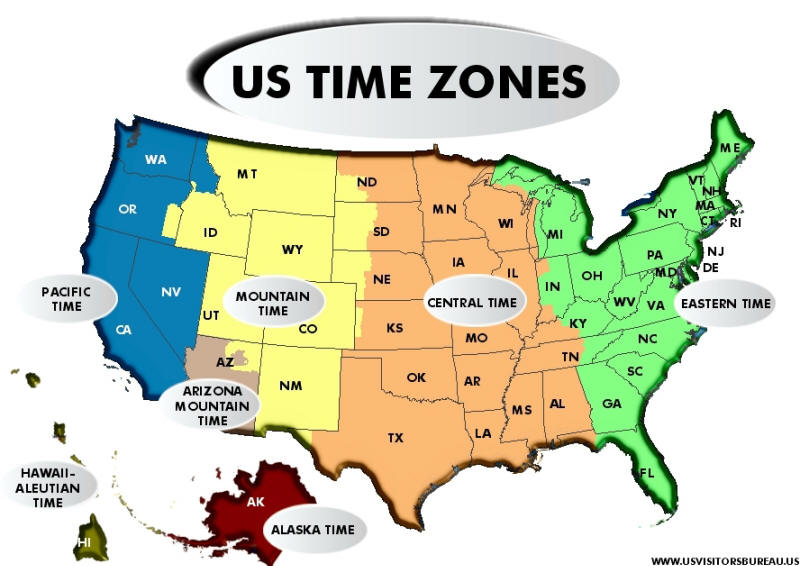
With the new alignment two-thirds of the Astros and Rangers away games will start two hours later than their time zone. That's not only stupid, but bad for the teams' fans and bad for the players' logistics. Comments on the linked post above also seem to indicate the change might go against the Astros lease agreement with their stadium.
So now we have two teams badly placed in divisions. We wrench the Astros away from a league they have played in for fifty years and the equal but uneven number of teams in each league will mean constant interleague play, a feature not exactly in this Fan's happy spot.
It's a poor plan that is poorly executed and no change would have been better than this change. Golly...
BBA Link Fest - General Foods for Thought
Welcome to another Thursday. Thursdays around here mean another trip around the Baseball Bloggers Alliance General Chapter and more links from this great group of colleagues. So get your mouse (or clicker or whatever) ready and off we go!
We'll start over at The Baseball Index where we find a post about the Houston Astros. The Astros have been in the news a lot lately. Unfortunately, the news is never about the actual team on the field. You get some here.
Over at Diamond Hoggers, TheNaturalMevs (will have to ask someday what that stands for) gives us a fine update on the pending MLB labor agreement.
The Golden Sombrero has been a great place to go lately with all their prospect breakdowns which are really well done. But in between those, this Fan really liked their slow motion breakdown of Tim Lincecum's delivery.
Old Time Family Baseball has been busy and their latest post concerns the next Brewers' utility player. OTFB is Zelous about baseball!
It's not a baseball post, but Left Field gives us the post of the week from the perspective of a Penn State alumni. It's a must read.
Sully of Sully Baseball doesn't thinks that Robin O'Connor was the biggest thief in San Francisco Giant history. Oh, that Sully.
When The Platoon Advantage has four great writers, it's always hard to pick a favorite post of the week. But this Fan loves nostalgia and Bill's new post about Tony Cloninger hit all the right notes.
Pro Sports Wrap is thrilled about the Dodgers tying up their center fielder.
Daniel over at The Ball Caps Blog has to be in hog heaven with all the uniform changes we've been seeing. He has his opinion of the Marlins' new cap this week.
For Baseball Junkies gives us the tale of two relief pitchers and keeps us hanging for the answer. Argh!
The Padres get far too little ink in national headlines. Through the Fence Baseball rectifies that some with a trade proposal in this great post.
The Hall of Very Good talks about the Cubs new manager. And proposes the next great blog name.
You need to read both halves of Grubby Glove's "What's Wrong With This Card" series. You really do.
Baseballism rings in with their opinion of the Jonathan Papelbon signing. The Fan's only question is whether the Fan will hate him as much on the Phillies.
Matt Whitener ponders the Cardinals' new manager. As usual, we get the Cheap.Seats.Please.
There is no big surprise in the AL Cy Young Award winner for Eugene Tierney over at 85% Sports. Nor should there be.
Sooze over at Babes Love Baseball is impressed with how wealthy Matt Kemp is going to be.
One of this Fan's favorite pieces of the week was posted the other day at Replacement Level Baseball Blog. Terrific read.
As the award start to roll out from MLB, Theo over at Hot Corner Harbor gives us his rational explanations for his picks. Good stuff.
MLB Dirt's heart and soul, Jonathan Mitchell, debates this Fan on Jeremy Hellickson. He's wrong of course.
Peter Stein over at MLB Reports wrote the ultimate Fantasy Baseball article on stolen bases. Wow!
This baseball Fan has certainly loved Blaine Blontz's Arizona Fall League Recaps over at Call to the Pen.
Ken over at The Baseball Hall of Shame has a great take on the Cardinals new manager.
Ryan Sendek is certainly impressive. Love his stuff. Of course it doesn't hurt that he supports some of the ideas this author has about what the Cardinals should do. Check out his post on Analysis Around the Horn.
Christopher Carelli is just as impressive as Sendek! What great new additions these guys are to the General Chapter. Carelli's latest over at The Baseball Stance is terrific.
Mario Salvini over at Che Palle! cheers the return of the cartoon Oriole. The Fan agrees.
Dugout 24, our other overseas baseball blog gives us a coaching drill on pitching effectively with a fastball.
Chris Papas of Number One Baseball gives us some off season notes.
That's a wrap! See you next time for the BBA Link Fest and have a good week.
We'll start over at The Baseball Index where we find a post about the Houston Astros. The Astros have been in the news a lot lately. Unfortunately, the news is never about the actual team on the field. You get some here.
Over at Diamond Hoggers, TheNaturalMevs (will have to ask someday what that stands for) gives us a fine update on the pending MLB labor agreement.
The Golden Sombrero has been a great place to go lately with all their prospect breakdowns which are really well done. But in between those, this Fan really liked their slow motion breakdown of Tim Lincecum's delivery.
Old Time Family Baseball has been busy and their latest post concerns the next Brewers' utility player. OTFB is Zelous about baseball!
It's not a baseball post, but Left Field gives us the post of the week from the perspective of a Penn State alumni. It's a must read.
Sully of Sully Baseball doesn't thinks that Robin O'Connor was the biggest thief in San Francisco Giant history. Oh, that Sully.
When The Platoon Advantage has four great writers, it's always hard to pick a favorite post of the week. But this Fan loves nostalgia and Bill's new post about Tony Cloninger hit all the right notes.
Pro Sports Wrap is thrilled about the Dodgers tying up their center fielder.
Daniel over at The Ball Caps Blog has to be in hog heaven with all the uniform changes we've been seeing. He has his opinion of the Marlins' new cap this week.
For Baseball Junkies gives us the tale of two relief pitchers and keeps us hanging for the answer. Argh!
The Padres get far too little ink in national headlines. Through the Fence Baseball rectifies that some with a trade proposal in this great post.
The Hall of Very Good talks about the Cubs new manager. And proposes the next great blog name.
You need to read both halves of Grubby Glove's "What's Wrong With This Card" series. You really do.
Baseballism rings in with their opinion of the Jonathan Papelbon signing. The Fan's only question is whether the Fan will hate him as much on the Phillies.
Matt Whitener ponders the Cardinals' new manager. As usual, we get the Cheap.Seats.Please.
There is no big surprise in the AL Cy Young Award winner for Eugene Tierney over at 85% Sports. Nor should there be.
Sooze over at Babes Love Baseball is impressed with how wealthy Matt Kemp is going to be.
One of this Fan's favorite pieces of the week was posted the other day at Replacement Level Baseball Blog. Terrific read.
As the award start to roll out from MLB, Theo over at Hot Corner Harbor gives us his rational explanations for his picks. Good stuff.
MLB Dirt's heart and soul, Jonathan Mitchell, debates this Fan on Jeremy Hellickson. He's wrong of course.
Peter Stein over at MLB Reports wrote the ultimate Fantasy Baseball article on stolen bases. Wow!
This baseball Fan has certainly loved Blaine Blontz's Arizona Fall League Recaps over at Call to the Pen.
Ken over at The Baseball Hall of Shame has a great take on the Cardinals new manager.
Ryan Sendek is certainly impressive. Love his stuff. Of course it doesn't hurt that he supports some of the ideas this author has about what the Cardinals should do. Check out his post on Analysis Around the Horn.
Christopher Carelli is just as impressive as Sendek! What great new additions these guys are to the General Chapter. Carelli's latest over at The Baseball Stance is terrific.
Mario Salvini over at Che Palle! cheers the return of the cartoon Oriole. The Fan agrees.
Dugout 24, our other overseas baseball blog gives us a coaching drill on pitching effectively with a fastball.
Chris Papas of Number One Baseball gives us some off season notes.
That's a wrap! See you next time for the BBA Link Fest and have a good week.
Vlad is Dethroned
Free swingers roam the earth despite the earth shift toward working the count and raising your on base percentage. The fact is that such players always existed and always will. For every Mickey Mantle, there was an Andre Dawson. For years, the free swinging champion was Vladimir Guerrero. Everyone knows that Vlad will swing at anything. He had his competitors. Ivan Rodriguez, Alfonso Soriano, Miguel Olivo and A.J. Pierzynski come to mind as challengers and as expected, for the last three years, all of these players are in the top ten for the highest O-Swing in baseball. Vlad is on top, of course. But he was beaten in 2011. Who dethroned the Impaler? Pablo Sandoval.
Leave it to someone with just as much of a cool nickname as the Impaler to finally beat the great Vladimir. Well, a Panda is quite a bit more warm and fuzzy as an Impaler is. But anyway, the Panda beat the old man and it wasn't as if the old man wasn't trying. Vlad swung at 47.4 percent of pitches outside the strike zone. It was the "best" mark of his career. Guerrero's always been known as a free swinger. But he's gotten freer the older he has gotten. Heck, when he was younger, his rates were in the mid-thirties for a percentage. But age apparently has made Vlad even less patient than his younger years.
And so Vlad had his most impatient season ever. But he was defeated by Pablo Sandoval. The Panda swung at a mind-numbing 47.6 percent of pitches outside the strike zone. Well, sure, it's only two small percentage points different than Vlad's, but still. You have to celebrate what you can in baseball.
Despite all the swings, Sandoval had a very good year. In 117 games (he had a large stint on the DL) he compiled an OPS of .909. The slimmed-down dude also had his best year with the glove at third and compiled the highest WAR of his career. He hit over .300 for the third time in his four year career. So somehow, Sandoval makes it work.
And perhaps that's a point to be taken here. Guerrero is a borderline Hall of Fame player. He's compiled a lifetime OPS of .931 despite being a free swinger his entire career. Now that he is older, it works less for him of course and anyone who continues to employ him is probably a little daft for doing so. But for the most part, Guerrero has made his free swinging lifestyle work. Sandoval seems to be his heir. It's not a lifestyle that pleases the analysts, but those swings deliver contact that more often than not, find a safe haven among or over the fielders.
Tomorrow we'll have part two of the free swinging life (sounds kinky doesn't it?) as we examine free swingers and post season success.
Wednesday, November 16, 2011
More Montero Please
The enlightened male is a myth. Try as this thinking man might, the sight of a pretty girl changes breathing patterns and messes up normal ways of thinking. Is there anything less wholesome than a man around a comely female? It does little to soothe the ego that scientists have confirmed that female attractiveness changes physiologically in men on sight. It's a DNA thing. To somehow get this post back on track for its intended purpose, the opening sets up what it's like hoping for a prospect to break into the line up or rotation.
The metaphor goes like this: You are waiting in line behind twenty people for service. Handling the service are three guys, an old woman and a comely female. All the while the line in front of you is getting shorter and you are doing mental calculations on your odds of getting waited on by the fab female. Finally, your turn is next and both a male and the pretty girl are just wrapping up their last transactions. You start to fidget and the nerves are kicking in to see if who you will get. The girl finishes first and you do this inward huzzah kind of thing. And then...and then...she puts her "on break" sign, smiles at her coworkers and heads away from the counter. Nooooooo!!!
Yes, that's the metaphor of waiting for a prospect to get his chance. No, he's not as pretty as the girl. But the anticipation is just the same. Especially if he is Jesus Montero, the hottest Yankee prospect in a gazillion years. Montero came to Spring Training last season. Russell Martin had been signed, which was a surprise. Jorge Posada was told he was done catching. That wasn't a surprise. But Martin had trouble with his knees following an off season surgery and Francisco Cervelli was hurt too. Montero got lots of playing time along with Austin Romine. Joe Girardi said nice things about Montero. Could it be? Can we get the pretty girl in the line? Nope. The season broke and Martin and Cervelli went north and Jesus Montero headed to the minor league camp.
Montero said all the right things. He needed to work on some things and would wait his turn. Except that it didn't appear that his actions held up what he was saying. He started slowly in Triple A. He looked like he was regressing. There were whispers that he was bored. His normal good patience at the plate evaporated. Crap. The pretty girl went on break.
Thankfully, about mid-year, Jesus Montero started looking like a prospect again and came out of his funk. He did enough to warrant a September call up. We all salivated. No more freakin' Cervelli, we thought. The problem was (and is) that Joe Girardi and his bench coach, Tony Pena, are old school catchers. They were the prototypical, "good defense, little offense" type of catchers. What matters is calling games and receiving the ball properly behind the plate. It was more than ironic that Jorge Posada's career came to an end under Girardi after Posada won the job over his manager as a great hitting, weak defense catcher back in the glory days of Yankee championships. By the fourth championship in 2000, it was Girardi who was out and Posada who was it. So that makes it doubly hard for a weak defensive catcher to crack the line up no matter how good he hit.
And make no mistake about it. Jesus Montero can hit! His September was amazing. In 69 plate appearances, Montero put up a .328/.406/.590 slash line. But he didn't catch. Well, he caught three games and he DHed the other fourteen. Austin Romine, on the other hand, caught eight games in September. He's more of an old school catcher like Girardi and Pena. He could be trusted. Not Montero. But at least we got a taste. Then we hoped he would get on the post season roster. He was. Super! But then he didn't play. Well, he did get two at bats...and got two hits. Meanwhile, Russell Martin went 3 for 17 in the series against the Tigers. You can't fault the decision to DH Posada. The old catcher had a fabulous last hurrah. But it wasn't enough because Montero wasn't to be trusted. The Yankees scored nine runs in their three losses. And as good as Martin might be behind the plate, he didn't really help C.C. Sabathia and Ivan Nova in those last two losses, did he?
So now we head into 2012. Martin will be resigned before he's offered arbitration or perhaps after. But he will be the starting catcher. Posada is gone to either retirement or banishment. God love him, Cervelli will probably be back though shouldn't be. And what of Montero? Well, the Yankees need a DH. And when Girardi wants fifty games to rest regulars, Montero will probably sit. It won't matter if he's hitting like .350 or something because...well...you know...he ain't that good a catcher.
In this author's perfect world, that girl would not have gone on break. Jesus Montero would catch two days a week and DH the other five. He would bat in 162 games and put up a .900 OPS and hit his fair share of opposite field homers into the right field bleachers. But this perfect world will never happen because his team is managed by a no-hit, good glove catcher who has a no-hit, good glove bench coach. Montero might get 300 plate appearances. Or he might be traded once the Yankees panic when they are six games behind the Bay Rays. When it comes to Montero, this author becomes some kind of Dickens character: "May I have some more please?"
Tuesday, November 15, 2011
Cards Need to Find Allen Craig an Every Day Home
The St. Louis Cardinals were robbed a bit of their glory. They won the World Series for crying out loud, but soon after Tony LaRussa retired and speculation about a new manager and the ever present story of what Albert Pujols will do have all taken over the spotlight. Baseball readers never really got to sit in the gravis of what we just witnessed. Certainly, the managerial situation and Pujols are huge stories. And now that Mike Methaney has been hired as manager, that story has been magnified. But again, wasn't the post season run of the Cardinals somehow forgotten in the wake?
History will remember the 2011 World Series for David Freese and rightly so. His heroics in Game Six of the World Series will be rightly featured for years to come. But it was just as much a post season for other heroes like Lance Berkman, Albert Pujols (for one game anyway), Chris Carpenter and Allen Craig. The two biggest surprise stars of Freese and Craig should only be one surprise. Freese is a very good player when healthy (which hasn't been often) but we know what he's about. There is a certain sample size to his career. So the way he came up big was a surprise. But the Allen Craig display shouldn't be a surprise at all. He's been playing like that for quite a long while.
A long while? Why yes. Though he just burst on the major league scene, Craig is going to be 27 in 2012. Only an eighth round draft choice in 2006, Craig put in 517 games over six seasons in the minor leagues. To this writer's mind, that was 150 games too many. Craig was a killer in the minors. After ripping up Double A, Craig played 219 games in Triple A and put together this slash line: .320/.379/.545.
Craig was given a limited chance in 2010. He did manage to get into 44 big league games good for 124 plate appearances. But it really wasn't much of a shot. And so he was given more time in Triple A to start the 2011 season. Once he got the call back to the majors in 2011, he showed what he can do. He got into 75 games in 2011 good for 219 plate appearances and put up the following slash line: .315/.362/.555. Look familiar? Look at the last paragraph. So it really was no surprise that he put up a 1.005 OPS during the entire post season.
But he's still a player without a position. One of this author's favorite writers, Daniel Shoptaw, over at C70 Baseball indicates that Daniel Descalso is going to be given the second base position. So where does that leave Craig? The Cardinals already have Clank and Clank (Berkman and Holliday) starting at the outfield corners. You swallow hard when the ball is hit to them, but they are such good offensive players and are making so much money that you have to play them there (assuming Pujols is resigned). Allen Craig has shown some versatility in his playing positions, but he's not a center fielder. Besides, John Jay has shown he can handle that position and can hold his own offensively. Freese is established at third. So what about Craig?
May this author suggest that one of two scenarios works quite well. Craig held his own in brief appearances at second base. Well, at least baseball-reference.com thought he did. Fangraphs disagrees. Craig's numbers in brief appearances in center are fine but he lacks range and with those two corner positions already manned by sloths, you have to have a center fielder with range in the middle of them. But if the Cardinals could live for years with Skip Schumaker at second, can't they with Craig?
So what's the second scenario? Um...dare the Fan say it? Sure, why not. Let Pujols walk, put Berkman at first and Craig in right field. There. There, the Fan said it. What was Albert Pujols' fWAR in 2011? 5.1. What was Craig's in less than half the playing time? 2.6. Wouldn't it be reasonable for Craig to project over five in WAR over a full season? His splits are fine, so that's not a problem. And he'd be just a bit cheaper. It certainly possible for Pujols to come back with another monster year. But it's just as possible for Craig to do so too. The most it could cost the Cardinals is two wins. Plus, without having to pay Pujols, you could get Jimmy Rollins to play short. Wouldn't that be cool?
All this writer knows is that Allen Craig needs to be in the Cardinal line up every day. Somehow. His time has come and he is a unique talent that needs to be showcased...every single day.
Monday, November 14, 2011
Aaron Hill And Predictability
After a player has put in seven years of service encompassing 908 games, you have a pretty good gauge on what kind of player he is. Things like luck can cause minor spikes and contrasts, but normally a baseline can be reached. You can forget all about that with Aaron Hill. His career reads like a stock market chart. He started his career as a low strikeout, low power kind of guy. Then suddenly he's hitting 62 homers in two years. Then he goes back to no power again. What the heck? Take a look at just two statistics, his ISO and his wOBA over the course of his career. The following charts give you a visual representation.


How are you supposed to get a feel for what kind of player Hill is by looking at that mess? And those aren't the only statistics that drive you crazy with Aaron Hill. Take his line drive percentage. Here is a list of his line drive percentages during his career: 23.1, 19.2, 20.8, 17.3, 19.6, 10.6 and 21.2. See any pattern there? No, not here either.
There are a couple of trends you can see though. When he first came up, he hit more ground balls than fly balls. His first three years, his ratio of ground balls to fly balls were 1.5, 1.33 and 1.04. Since 2008, that trend disappeared and he's become a batter who hits more balls in the air. That same ratio since 2008 looks like this: 0.74, 0.96, 0.65 and 0.87. At the same time, after three years of single digits in infield fly pops his rate exploded starting in 2008 and has been in double digits every year since. Perhaps he figured out that chicks dig the long ball. Well, the long ball is fine as long as all the other numbers look pretty along with the homers.
But that's not the case after his breakout year in 2009. He did still hit 26 homers in 2010, but everything else tanked. You would think that the longer Hill plays in the majors that his plate discipline would get better and better. But it's just the opposite with Hill. When he first came up, his O-swing rates (swings at pitches outside the strike zone) were excellent at 15.4 and 18.7 percent his first two season. In his last two seasons, that has ballooned to 31.3 and 29.5 percent--easily the highest of his career.
You can't even get a read on Hill by looking at his pitch type values. Those are valuations against various pitch types as compiled by Fangraphs (among others). Some years he's good against fastballs. Other years, he's terrible. Some years, he's good against curves. Other years he isn't and so on with every pitch type. Over the years, it seems he's had more success with the curve than against any other pitch type. Strange.
All these thoughts came about because this author was trying to decide if the Arizona Diamondbacks did a smart thing by signing Hill for two years at just above $10 million. The answer really becomes, "We'll have to wait and see." It could pay off big as Hill has compiled a value (per Fangraphs) of $58.4 million in seven years or an average of $8.4 million a season. That means that Hill has a lot of upside on making a little over $5 million a season. But it also seems a crap shoot because Hill's valuation through those years has been all over the place.
Completely Confused Concerning Jeremy Hellickson
Two and a half hours from now, MLB will announce the winners of the Rookie of the Year Awards for 2011. Many big time writers predict the AL winner will be Jeremy Hellickson. That projection is confusing this writer. Two of the major stat sites don't help either. Fangraphs pegs Hellickson's 2011 fWAR at 1.4. Baseball-reference.com offers their opinion via their rWAR which pegs Hellickson at 4.2. That's a pretty wide swing of valuation opinion, is it not? Baseball Prospectus is a little higher than Fangraphs but still much lower than B-R and give Hellickson 1.9 WARP. If these sites can't all agree, what are we supposed to make of it all?
Casually looking at Hellickson's 2011 season at face value, we can make the following easy judgments. His WHIP, Hits per nine innings and ERA were all good. His homers per nine, walks per nine, strikeouts per nine, strikeout to walk ratio and SIERA were all less than good. Digging a little deeper, his BABIP of .223 and his strand rate of 82 percent are unsustainable. The low BABIP, high strand rate, low strikeout rate take his actual ERA and translate into a SIERA of 4.63 or a differential of -1.68.
Hellickson's strikeout rate of 5.7 is confusing all by itself. The rate is so far lower than his 2010 rate and his rate all through the minors that this observer is left scratching his head. To make it more confusing, Hellickson was in the top 25 for all qualifying pitchers on swinging strikes percentage. His 9.7 percent rate in that statistic is not that far below the leaders either who came in just above 11 percent. So why did that not translate into more strikeouts? The one thing that seems to stand out for Hellickson on that leaderboard is that among pitchers in the top 25 in swinging strike percentage, only Hellickson and Gio Gonzalez had an O-Swing percentage under 30 percent. O-Swing percentage is the amount of pitches swung at when the pitcher throws the pitch out of the strike zone. Does that tell us anything?
It does separate Hellickson in this writer's mind from Wade Davis. Davis also lost his ability to strike out batters after his first year in the majors. The difference is that Wade Davis was in the bottom 25 of qualified starters in swinging strike percentage at 5.9. But it is a head-scratcher that both pitchers have seemingly lost their historic ability to strike batters out. Does this come from a different pitching strategy at the major league level (coaching staff, manager) than at the minor league level?
Also confusing to this writer is Hellickson homer rate. He gave up a homer per nine innings, which isn't all that great considering he pitches half his games in a pitcher's park (Tropicana). And yet, he limited batters overall to a slugging percentage against of .373. Part of that is from giving up so few hits overall. Hellickson is a fly ball pitcher. His fly ball percentage is much higher than his ground ball percentage. His home run to fly ball percentage is not bad at 8.8 percent, but with a greater rate of fly balls in general, that rate will lead to a high home run per nine innings rate.
So what's to make of Jeremy Hellickson? This writer simply does not agree that he should be the Rookie of the Year. But going forward, what can we expect? With his swinging strike percentage, his strikeouts should rebound (unlike Davis). His extremely low BABIP should result in some ERA regression. But if he continues with a high infield fly rate (16.2 percent), perhaps his BABIP isn't all luck (plus, he has a great defense behind him). Hellickson's success in the majors isn't guaranteed, but he does still appear to be a candidate for one of the top starters in baseball. With only one full season in the books, we'll have to look closely as his body of work builds to see which of his 2011 stats were flukish and which are long term trends going forward.
Sunday, November 13, 2011
Fourth Annual David Ortiz Pondering
This off season will mark the fourth straight this writer (and a billion others) will be pondering what the Red Sox should do with David Ortiz. In the first annual pondering, the Red Sox were encouraged to break ties with Ortiz. That was after his 1.9 ($8.4 million) fWAR season 2008. The second annual version was the same as Ortiz was even worse and had a 0.3 ($1.2 million) fWAR season in 2009. The third annual edition changed its tune after Ortiz posted a 2.6 ($10.4 million) fWAR season in 2010. That edition said that the Red Sox should pick up his option for 2011 but not sign him to a new long-term contract. That's exactly what the Red Sox did. Now, in this fourth annual edition, Ortiz is coming off his best season in quite a long while where he was worth $18.8 million with a 4.6 fWAR season. So what should the Red Sox do?
Ortiz could again hit a fastball again in 2011. He could hit lefties again and he led the league off of them. That was after three straight seasons of being fairly pathetic against southpaws. You could no longer pound him inside to get him out. He had his best line drive percentage since 2005. He had sixty-two less strikeouts than the year before. Unlike the previous four seasons, David Ortiz had positive runs over average against every pitch type thrown at him. So again, what should the Red Sox do?
Ortiz has made $13 million or so the past several seasons. That doesn't seem like a lot of money for the threat that David Ortiz gives a line up. If you add up his last four seasons and divide them by four, Ortiz has earned an average of $9.7 million of this $13 million salary. Do you go by that or go solely by his last year's production worth $18.8 million? You have to go with the four year average, right? And you have to consider that David Ortiz will turn 36 five days from now. Clearly, you have to figure his best days are behind him rather than in front of him.
And as good as his season was a year ago, it didn't end well. He hit all of one homer the entire month of September and drove in only eight runs. That has to figure into the equation doesn't it? Ortiz reversed his recent trend of starting terribly and finishing strong to starting well and finishing with a dud of a month. A month which we all know what happened to the Boston Red Sox.
Ben Cherington, Boston's new GM says that a lot of their off season strategy will depend on if David Ortiz "is here" or not "here." In other words, after last year's post season splurge, there are limited funds and if the Red Sox give a big chunk of change to Ortiz, there is less to do other things. Ortiz is a big part of the Red Sox mystique. He has the persona as a professional assassin, especially in the clutch. How does that figure into Cherington's plans or does it at all? Frankly, that's all a bunch of talk and the only relevant facts here are the numbers, which you have already been given.
Okay, it's time to get to the bottom line. Last year, this observer said the Red Sox should pick up the last year of Ortiz's option. It was a good investement, earning more than $5 million more than his paychecks. The recommendation here is a one year deal only with perhaps an option year for no more than $12 million. That is higher than his four year average, but gives him the benefit of the doubt based on last year. The one year does not tie the Red Sox up for years to come.
That's what the Red Sox should do. It's unclear as to what they will do. Ortiz will ultimately feel slapped in the face with such an offer. Ball players aren't very realistic about their own worth. Perhaps he'll grumble and take it to stay in Boston for another year. If he stupidly gets a higher offer somewhere else, be sure he will take it. But that doesn't mean that the Red Sox should try to match a higher offer if some sort of bidding war develops. His future is not long, nor bright--not when he's 36 and can't play a position in the field. Cherington seems somewhat ambivalent or perhaps he is simply not optimistic that Ortiz will take a reasonable offer. The Red Sox would love to have David Ortiz back. But it should only be on their terms no matter how good he was in 2011.
Friday, November 11, 2011
What Would You Offer Jimmy Rollins?
The free agent market has two elite shortstops. One is younger but has injury concerns. The second is going to be 33 at the end of this month and has injury concerns. The older one is the better defender while the younger one has a more potent bat. The younger one has compiled 9.9 fWAR the past three seasons despite the injuries while the older one has compiled a 9.3 fWAR despite some injuries but more playing time the past three seasons. The younger one, Jose Reyes, seems poised to make a lot of money. The older one, Jimmy Rollins, seems poised to be disappointed. What is Jimmy Rollins worth and what would you offer him?
Rollins' defense will make him sorely missed if the Phillies let him walk. With a pitching staff of aces three deep and another on the cusp, it would seem that there is a case in protecting them with one of the premier fielding shortstops in baseball and paying him accordingly. But the Phillies face a similarly hard choice as the Yankees in that Rollins is in many respects the face of the Phillies and has come to the stage of his career where you have to be concerned over the length of his deal. Rollins is going to want five or six years. From his current age, three years would seem to be the intelligent offer length.
And Rollins has a point in wanting to make some money at this stage of his career. He's been vastly underpaid for his entire career. His last five years at $8.0 to $8.5 million has been one of the best deals for a team in baseball. It would seem from that perspective that Rollins would have no interest in giving the Phillies a home town discount. And he would have a case. And yet, offering him a substantial raise after three troubling seasons would seem to dampen his team's enthusiasm to go longer than three years. Perhaps they could be creative and offer him three guaranteed years and two option years. But again, it seems hard to imagine Rollins accepting that kind of offer.
Further complicating the Phillies' position is the loss of Ryan Howard who is looking at a huge loss of playing time to at least the early part of 2012 if not more due to his Achilles tendon injury. Jayson Werth was missed in the line up even if he faltered in Washington. The Phillies struggled on offense to some degree in 2011 and losing Rollins to any other shortstop not named Jose Reyes would be a further erosion of that offense. Despite a dreadful 2009 and an injury riddled 2010, Rollins did bounce back some on offense this past season, though he isn't the hitter he was in his younger days. Rollins was a force on offense from 2006 to 2008 but after six seasons in a row of slugging .420 or higher, Rollins has come in at .374 and .399 the last two seasons with his ISO dipping to .131 the last two seasons after a career of averaging .160.
As attractive a place as Philadelphia is to hit, the home/road splits are decent for Jimmy Rollins, so there are no real worries that his home park would add many bennies to his current value. We can take that out of the equation. What is more worrisome is that after five seasons of double-digit triples and two others that were close, Rollins only hit two of them last year and only 22 doubles in 631 plate appearances. But at least his home run to fly ball ratio remains stable as does his walk percentage and strikeout percentage. If Rollins were to have a few seasons in a row where his legs rebound to good condition, his offense could again improve to somewhat of his former levels. He is still an elite base stealer. But again, after his last three years, which is the real Jimmy Rollins, the post 2008 Rollins or the pre-2008 Rollins? Logic would seem to dictate that it's the former and not the latter.
So what would you offer him? This observer thinks that three years at $40 would be fair market value with a couple of mutual options. Anything higher than that or a longer guaranteed period would be stretching the boundaries of good sense. But good sense hasn't ruled free agent signings in quite a while. Here is a WAR chart comparing Rollins to Jeter and Reyes. The Fangraphs chart gives you a visual (click on the chart to see it better. Rollins is the blue line, Reyes is the green) of what GMs are dealing with. It's a tough one, isn't it?

Subscribe to:
Posts (Atom)